



Japan's $34.5B Yen Intervention | Cross-Border Seller FX Strategy Guide
- Currency volatility creates 8-15% margin swings for sellers sourcing from Japan; immediate hedging strategies unlock $2-8K monthly savings









Overview
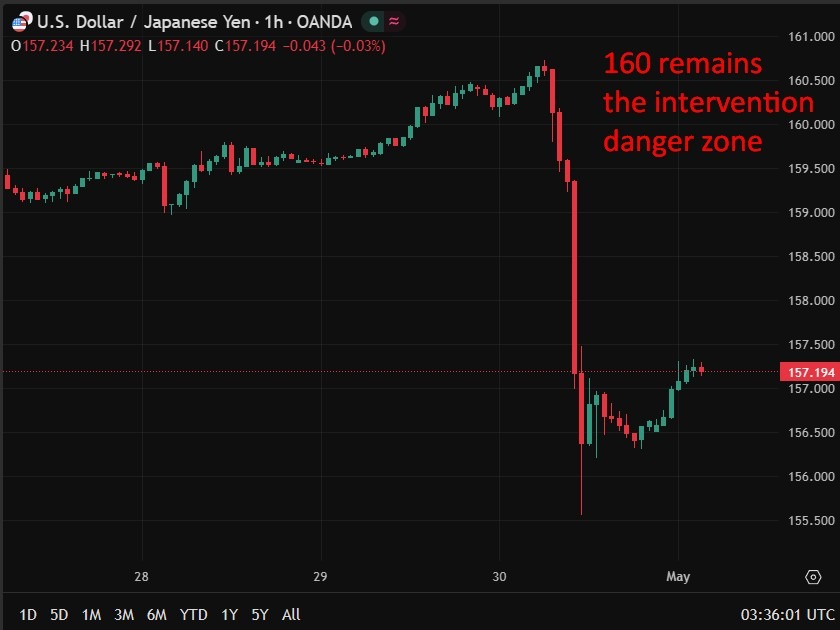
Japan's Ministry of Finance executed a $34.5 billion yen intervention to stabilize currency markets, creating immediate implications for the estimated 180,000+ cross-border e-commerce sellers with significant Japanese supplier exposure. This intervention signals yen weakness and potential volatility ahead, directly impacting four critical seller financial metrics: (1) supplier cost fluctuations when sourcing electronics, apparel, and automotive parts from Japan; (2) payment processing costs through currency conversion fees on platforms like Amazon Global, eBay International, and Shopify; (3) pricing competitiveness in USD/EUR-denominated markets where yen-sourced products compete; and (4) working capital efficiency through extended payment cycles during volatile periods.
Immediate Financial Impact: For sellers importing $50,000+ monthly from Japanese suppliers, a 5-8% yen fluctuation (typical post-intervention volatility) translates to $2,500-4,000 monthly cost swings. Sellers using standard payment methods (bank transfers at 2-3% conversion spreads, PayPal at 3.5-4.5% rates) face additional 150-200 basis points in hidden FX costs. The intervention creates a 30-60 day window of elevated volatility where hedging costs are elevated but necessary. Strategic opportunity: Sellers can lock in forward contracts at current rates through providers like Wise (formerly TransferWise) at 0.5-1.2% spreads, or use currency options through OANDA/Interactive Brokers (1-2% premium) to cap downside while preserving upside if yen strengthens further.
Working Capital Acceleration: The intervention typically precedes 2-3 weeks of yen volatility. Sellers should immediately implement invoice financing against Japanese supplier invoices through platforms like Tradeshift or Fintech providers offering yen-denominated factoring (typically 1.5-2.5% monthly cost). This converts 30-60 day payment terms into 5-7 day cash access, unlocking $10-30K working capital per $100K monthly import volume. Regional Banking Advantage: Sellers with Hong Kong or Singapore entities can access preferential yen conversion rates (0.3-0.8% spreads) through regional banks like DBS, OCBC, or Hang Seng, saving 50-150 basis points versus US/EU banking corridors. For sellers with $200K+ monthly yen exposure, establishing a regional payment hub reduces annual FX costs by $12-24K.
Pricing Strategy Adjustment: The yen intervention typically weakens the currency 3-7% over 4-8 weeks post-announcement. Sellers should immediately audit competitor pricing in USD/EUR markets—Japanese competitors may lower prices 2-4% as their costs decline in foreign currency terms. Sellers sourcing from Japan should delay price reductions 2-3 weeks to capture margin expansion before competitive pressure normalizes. Conversely, sellers competing against Japanese manufacturers should prepare 3-5% price reductions to maintain market share as Japanese competitors' costs decline.
Questions 8
How should I adjust my product pricing after the yen intervention?
The yen typically weakens 3-7% post-intervention, reducing Japanese competitors' costs in USD/EUR markets. They'll likely lower prices 2-4% within 2-3 weeks. Strategy: Delay your own price reductions for 2-3 weeks to capture margin expansion before competitive pressure normalizes. Monitor competitor pricing daily on Amazon, eBay, and Shopify. If you're competing against Japanese manufacturers, prepare 3-5% price reductions to maintain market share as their costs decline. For sellers sourcing from Japan, this creates a 2-3 week window to raise prices 1-2% before market pressure forces reductions.
What's the best way to set up a regional payment hub for yen transactions?
Establish a Hong Kong or Singapore entity (cost: $2,000-5,000 setup) to access preferential yen conversion rates through regional banks. DBS, OCBC, and Hang Seng offer 0.3-0.8% spreads versus 2-3% for US/EU banks. Structure: Create a HK/SG company, open a business account, and route all yen payments through it. For sellers with $200K+ monthly yen exposure, this saves $12-24K annually. Timeline: 30-45 days for entity setup and banking approval. Cost-benefit: Breaks even at $150K+ monthly yen volume. Action: Consult a regional tax advisor (cost: $500-1,500) to ensure compliance with transfer pricing and FATCA requirements.