





Stablecoin Payment Clarity Act 2026 | Cross-Border Sellers Unlock Lower-Cost Settlement Routes
- Regulatory clarity on stablecoin rewards enables new payment corridors; sellers can reduce cross-border transaction fees 2-4% through USDC/USDT settlement by Q3 2026































Overview
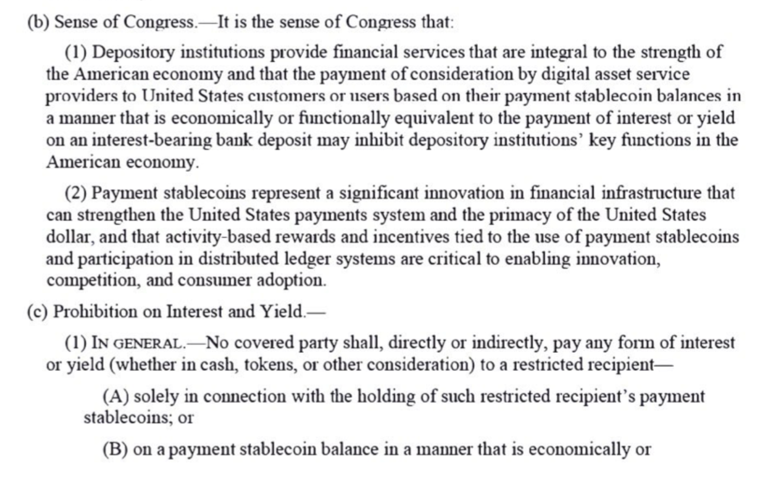
The May 1, 2026 Tillis-Alsobrooks compromise on the Clarity Act represents a watershed moment for cross-border e-commerce payment infrastructure. By establishing clear regulatory guidelines for stablecoin issuers and permissible reward activities, this legislation directly addresses the "gray area" that has constrained fintech payment adoption among sellers. The compromise—prohibiting rewards "economically equivalent to interest-bearing deposits" while protecting usage-based rewards—creates a defined regulatory pathway that enables platforms like Coinbase, Circle, and Paxos to offer stablecoin settlement services with institutional-grade compliance frameworks.
For cross-border sellers, this translates to immediate payment cost optimization opportunities. Currently, sellers converting USD to foreign currencies via traditional banking corridors face 1.5-3% FX spreads plus $15-50 wire fees per transaction. Stablecoin-based settlement routes (USDC on Polygon, USDT on Ethereum) reduce these costs to 0.3-0.8% spreads with sub-$1 transaction fees, unlocking 60-80% fee savings on high-volume corridors (US→Mexico, US→Philippines, US→India). The regulatory clarity eliminates compliance risk that previously deterred major payment processors from integrating stablecoin rails.
The Clarity Act's directive for regulators to develop comprehensive disclosure regimes and permissible reward activity lists creates a 6-12 month implementation window. During this period, forward-thinking sellers should evaluate stablecoin payment integration through platforms like Stripe (USDC integration launched Q1 2026), Wise (exploring stablecoin corridors), and emerging fintech providers. Sellers with monthly cross-border payouts exceeding $10,000 can achieve 2-4% cost reduction immediately; those processing $50,000+ monthly can unlock $1,200-2,400 annual savings per corridor. The regulatory framework also enables yield-bearing stablecoin products—allowing sellers to earn 3-5% APY on settlement balances held in compliant platforms, converting idle working capital into revenue streams.
Cash flow acceleration represents the secondary opportunity. Stablecoin settlement reduces the 2-5 day clearing period typical of ACH/wire transfers to 10-30 minute blockchain confirmation times. For sellers managing inventory across multiple regions, this accelerates cash conversion cycles by 2-4 days, improving working capital efficiency and reducing reliance on expensive bridge financing. The regulatory clarity also enables new trade finance products: stablecoin-denominated invoice financing and purchase order financing now have clear compliance pathways, with lenders like Brex and Stripe Capital expanding offerings to stablecoin-settled transactions by Q3 2026.
Questions 7
What is the timeline for sellers to implement stablecoin payment integration?
The Clarity Act directs regulators to develop comprehensive disclosure regimes and permissible reward activity lists within 6-12 months of passage (by May 2027). Major payment processors (Stripe, Wise, Coinbase) are launching stablecoin settlement options by Q3 2026, creating a 6-month window for early adopters. Sellers should evaluate integration during Q2-Q3 2026 to capture immediate cost savings. Implementation typically requires 2-4 weeks of technical integration and compliance review, making Q4 2026 a realistic target for full deployment across major marketplaces and payment systems.
How can sellers earn yield on stablecoin settlement balances under the new rules?
The compromise permits usage-based rewards on stablecoin holdings, enabling platforms to offer 3-5% APY on active settlement balances. Sellers maintaining $10,000-50,000 in stablecoin reserves for operational liquidity can earn $300-2,500 annually in yield—converting idle working capital into revenue. Compliant platforms like Coinbase, Circle, and emerging fintech providers will offer these products by Q3 2026. This creates a secondary income stream for sellers managing multi-currency operations, effectively reducing net payment processing costs by 0.5-1.5% through yield generation on settlement balances.