

McDonald's Removes Self-Serve Drinks by 2032 | Retail Experience Shift
- 14,000 U.S. locations transitioning to staff-controlled beverage service; creates $2B+ opportunity for premium beverage merchandise and experiential retail partnerships






Overview
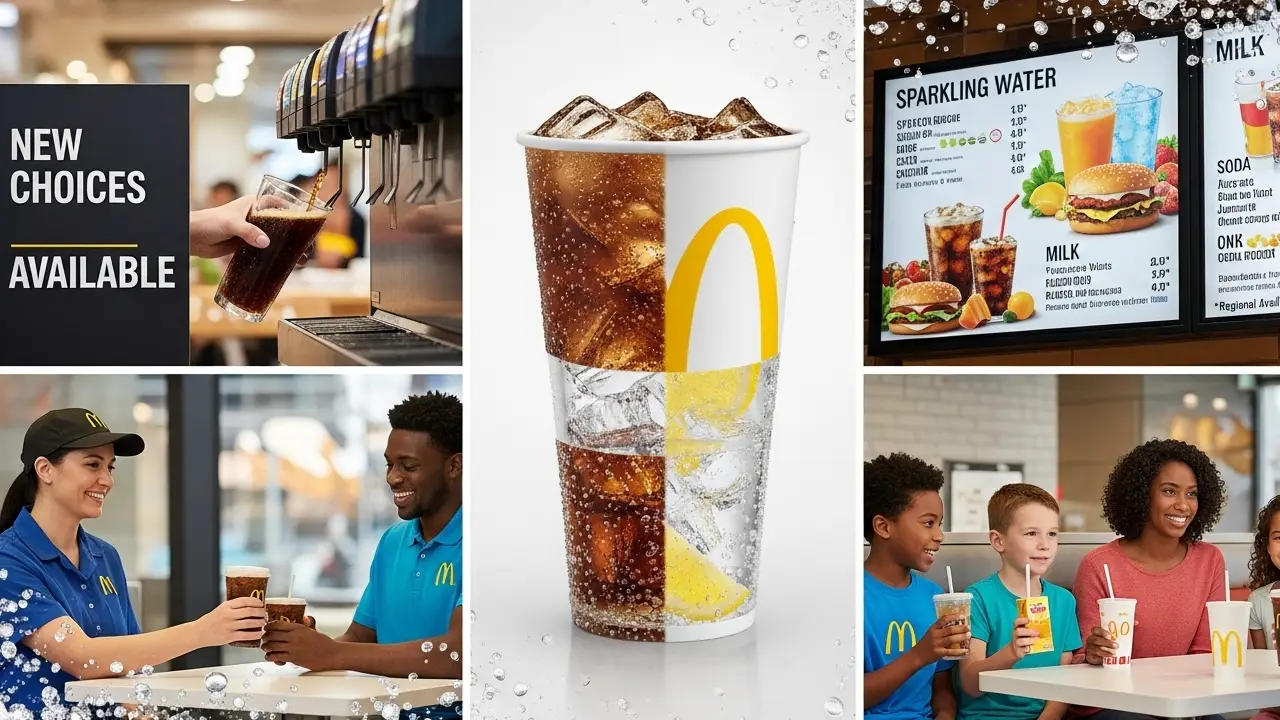
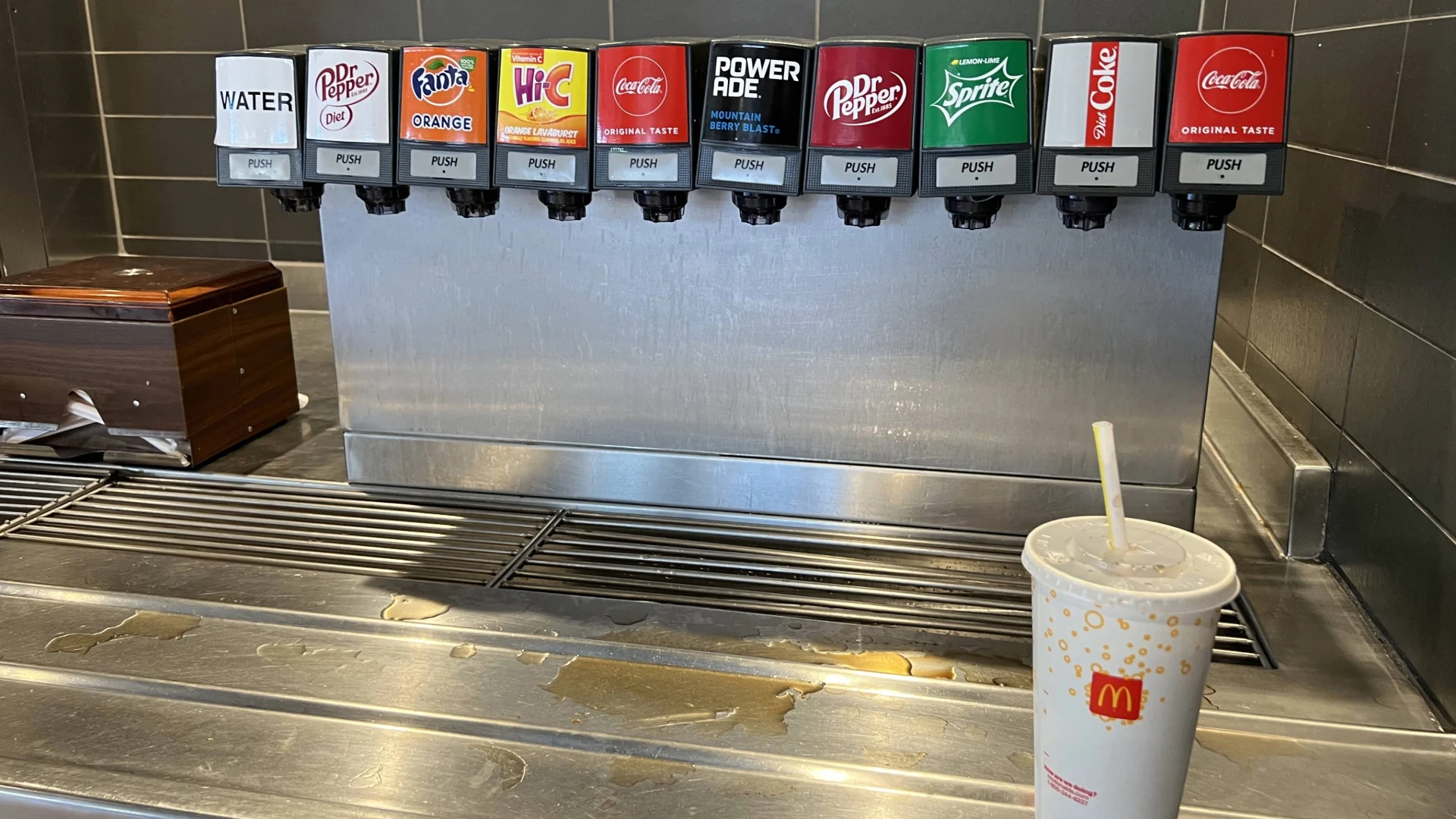
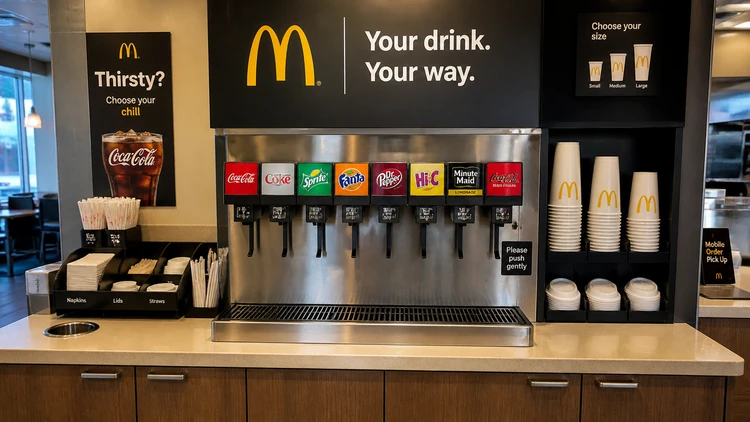
McDonald's systematic removal of self-serve beverage stations across all 14,000 U.S. locations by 2032 represents a fundamental shift in quick-service restaurant (QSR) operations with significant implications for retail experience design and O2O (Online-to-Offline) strategy. The company confirmed this phased rollout in 2023, with implementation tied to restaurant remodels rather than a single cutover date. This modernization reflects McDonald's strategic pivot toward digital-first ordering (drive-thru and app orders now represent 40% of domestic sales) and premium beverage positioning, as evidenced by the launch of six specialty drinks in May 2024—including three refreshers with caffeine and three crafted sodas with cold foam—evolved from the now-closed CosMc's experimental beverage-focused locations.
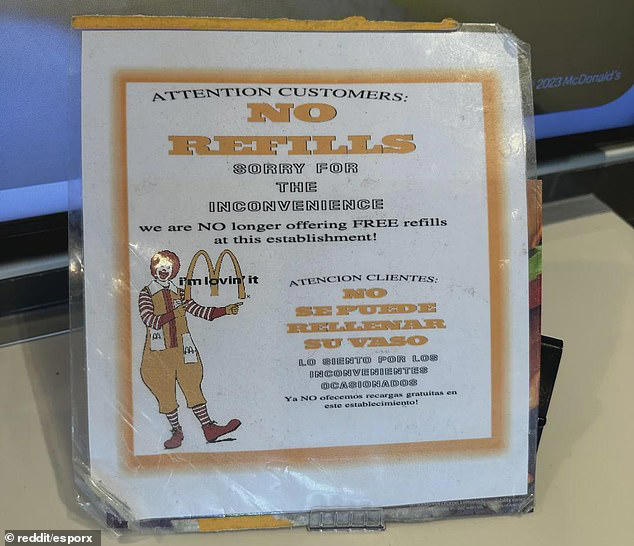
For retail operations experts, this shift creates three critical O2O opportunities: First, the elimination of self-serve stations signals McDonald's commitment to controlled brand experience across all touchpoints (McDelivery, app, kiosk, drive-thru, in-restaurant), creating demand for premium beverage merchandise that can be sold through pop-up experiences and retail partnerships. Texas alone operates 1,261 McDonald's locations (9% of U.S. total), representing a concentrated market for experiential retail testing. Second, the transition addresses operational efficiency—portion control, waste reduction, hygiene standardization, and maintenance cost reduction—which mirrors broader QSR industry trends toward automation. This creates partnership opportunities with beverage equipment suppliers, point-of-sale system providers, and staff training platforms seeking to capitalize on the 13,827-location retrofit cycle through 2032.
Third, consumer sentiment presents a critical insight: Reddit discussions (April 2026 onwards) reveal negative customer response to modernized locations, with users describing a "weird vibe" and minimal staff interaction. This backlash signals an underserved market for experiential retail concepts that emphasize human connection and customization—precisely where cross-border sellers of premium beverages, drinkware, and lifestyle products can differentiate. The phased 8-year rollout provides franchisees adequate transition time, but creates a window for sellers to establish pop-up showrooms in high-traffic McDonald's-adjacent locations (urban centers, shopping districts) to capture customers seeking premium beverage experiences. McDonald's CMO Alyssa Buetikofer's statement—"Our fans have an obsession with beverages—to them, drinks are more than just drinks"—validates the premium positioning strategy and suggests strong consumer willingness to pay for curated beverage experiences.
Questions 8
What are the lowest-cost ways to test offline presence near McDonald's locations?
Kiosk-based pop-ups in shopping centers and transit hubs adjacent to McDonald's offer 30-50% lower setup costs than full showrooms ($2,000-5,000 vs. $10,000-20,000 monthly). Retail partnerships with convenience stores, gas stations, and quick-service chains already near McDonald's locations eliminate real estate costs while providing foot traffic. Co-branded sampling events and in-store demonstrations at partner retailers require minimal infrastructure investment ($500-2,000 per event) while generating high brand awareness. Testing in Texas (1,261 locations) or other high-density regions allows sellers to validate O2O models before scaling nationally, reducing risk and capital requirements.
How can sellers use this trend to increase customer lifetime value through O2O strategy?
Sellers can establish pop-up showrooms in high-McDonald's-density cities to capture customers dissatisfied with the new impersonal experience, offering premium beverage products and customization services. Offline presence builds brand trust and awareness, typically increasing online conversion by 15-25% among customers who experience products in-store. Experiential retail concepts (tasting events, customization workshops) create memorable touchpoints that drive repeat purchases and higher average order values. Omnichannel integration—linking pop-up experiences to online platforms through QR codes, exclusive online discounts, and loyalty programs—can increase customer LTV by 30-40% compared to online-only sellers. The 8-year transition window provides adequate time to test and scale successful O2O models.