

Gaming GPU Market Shift 2025 | 16GB VRAM Becomes Standard, Entry-Level Pricing Pressure Intensifies
- RTX 5050 struggles at 0.17% adoption despite $249 launch price; 16GB VRAM GPUs approaching 24% market share signals major product category transformation for sellers





Overview
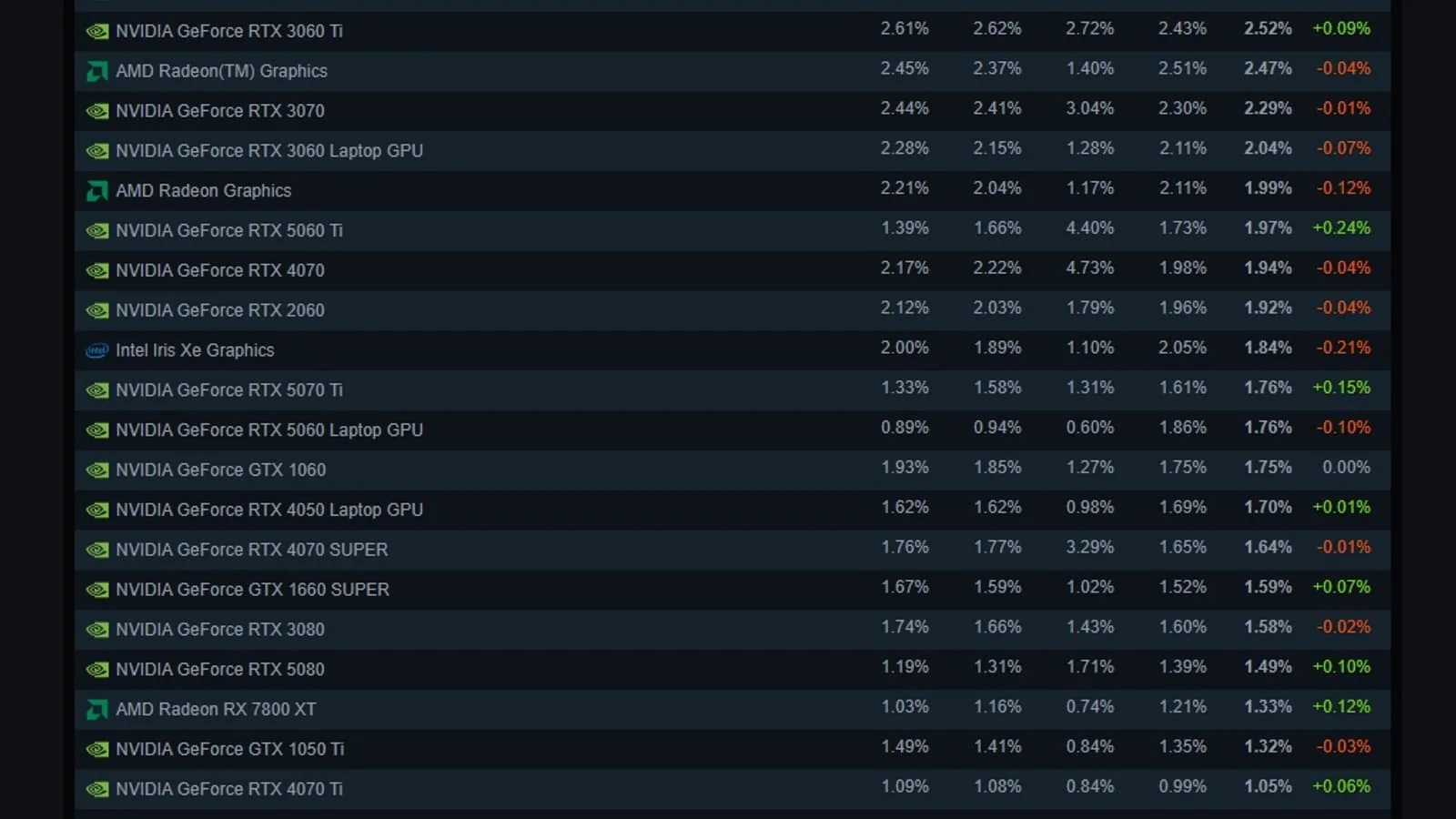
The gaming GPU market is undergoing a critical transformation that directly impacts e-commerce sellers in the computer hardware category. NVIDIA's RTX 5050, launched at $249 in mid-2025, has captured only 0.17% market share on Steam's Hardware Survey—significantly trailing the RTX 5070 (3% share) and barely edging AMD's Radeon RX 9070 (0.18% share). This pricing paradox reveals a fundamental shift in consumer hardware purchasing behavior: budget-conscious gamers are increasingly rejecting entry-level GPUs in favor of mid-range options offering superior performance-per-dollar value. The RTX 5060, priced near $300, demonstrates stronger market traction than the cheaper RTX 5050, indicating that a $50 price differential is insufficient to drive adoption when performance gaps exist.
More significantly, the Steam Hardware Survey data reveals a seismic shift in VRAM preferences that will reshape GPU product assortments throughout 2026. The 16GB VRAM configuration now represents 23.51% of surveyed hardware, rapidly approaching the 26.76% share held by traditional 8GB models. This convergence signals that 16GB is transitioning from premium to baseline specification. For e-commerce sellers, this trend creates immediate inventory and pricing challenges: products featuring 8GB VRAM will face declining demand, while 16GB variants command pricing power despite higher manufacturing costs. The data suggests that by Q2 2026, 16GB will become the standard expectation for gaming GPUs, forcing sellers to adjust product mix, update listings, and recalibrate pricing strategies.
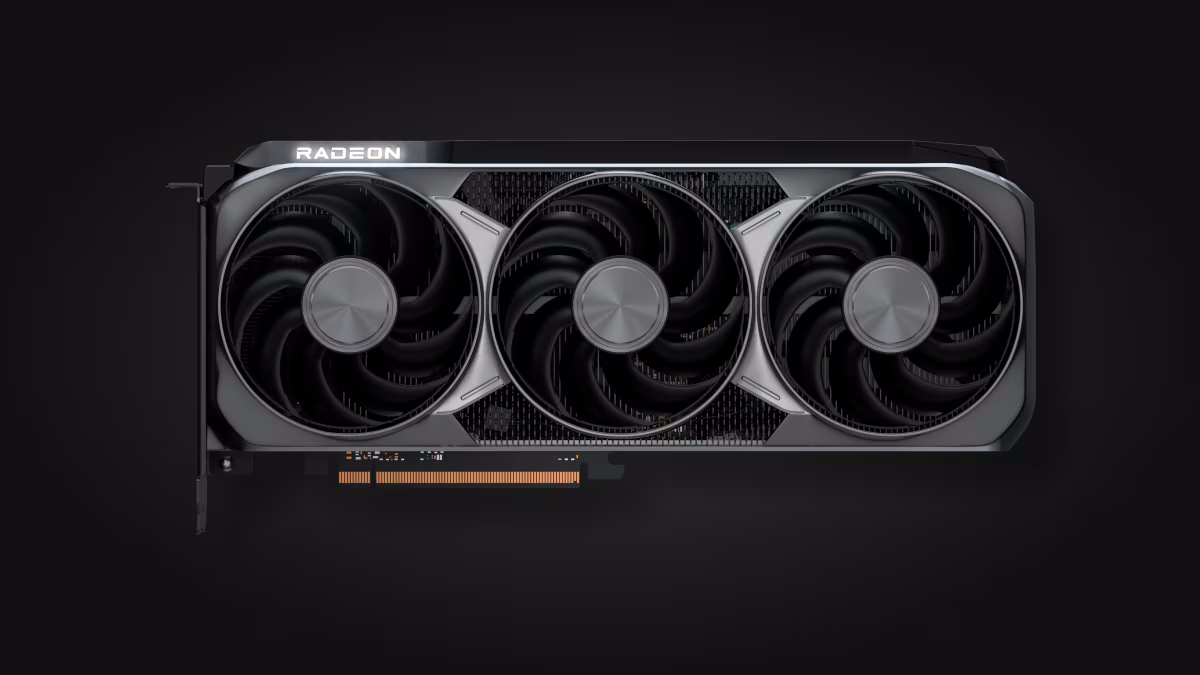
AMD's limited RDNA 4 visibility on Steam (only RX 9070 tracked at 0.18% share, with RX 9070 XT and RX 9060 absent) indicates delayed market penetration or supply constraints—creating a competitive opportunity for sellers to stock NVIDIA inventory while AMD builds distribution. However, the RTX 5050's weak adoption suggests that aggressive entry-level pricing alone cannot overcome consumer preference for better value propositions. Sellers must recognize that the gaming hardware market is consolidating around mid-range ($300-500) and high-performance ($500+) segments, with the sub-$250 category becoming increasingly commoditized and margin-compressed. The laptop GPU variant of RTX 5050 shows higher adoption than desktop, signaling that mobile gaming systems are driving hardware upgrades—a critical insight for sellers targeting laptop and portable gaming device categories.
Questions 8
What inventory risks should sellers monitor as the GPU market transitions to 16GB standard?
The primary risk is holding excess 8GB inventory as demand shifts to 16GB, potentially resulting in 15-25% margin compression during clearance periods. Sellers should immediately audit inventory levels and establish clearance timelines for 8GB products before the market fully transitions. Secondary risks include pricing pressure on entry-level GPUs (RTX 5050 demonstrates weak adoption despite aggressive pricing), suggesting that margin expectations for sub-$250 products should be reduced. Supply chain risks also exist: if 16GB becomes standard, manufacturers may reduce 8GB production, making it difficult to restock if demand persists longer than expected. Sellers should establish supplier relationships for 16GB variants now and negotiate volume commitments to secure favorable pricing before 16GB premiums increase. Finally, monitor AMD's RDNA 4 distribution closely—if AMD gains market share, NVIDIA inventory may face unexpected competitive pressure.
Which seller segments are most affected by the GPU market shift toward 16GB and mid-range pricing?
Three seller segments face the most significant impact: (1) Budget-focused retailers specializing in sub-$250 GPUs will experience margin compression and slower inventory turnover as consumers shift to mid-range options; (2) Sellers with heavy 8GB inventory exposure face clearance challenges and potential write-downs as 16GB becomes standard; (3) Laptop and portable gaming device sellers benefit most, as the data shows higher RTX 5050 laptop adoption, creating opportunities for bundled gaming laptop sales. Large-volume sellers (1000+ units monthly) should prioritize 16GB inventory transitions immediately, while smaller sellers can maintain mixed inventory longer. Regional sellers in gaming-focused markets (US, EU, Asia Pacific) should accelerate 16GB transitions faster than general retailers. Sellers should also consider their platform focus: Amazon and Newegg buyers likely prioritize performance-per-dollar (favoring mid-range), while specialty gaming retailers may maintain stronger entry-level demand.