





eBay Marketplace Consolidation Risk | Secondhand Apparel Sellers Face Platform Uncertainty
- GameStop's $55.5B non-binding eBay bid (May 2026) creates platform policy uncertainty for 135M+ active buyers and millions of resellers in $360B secondhand fashion market


















Overview
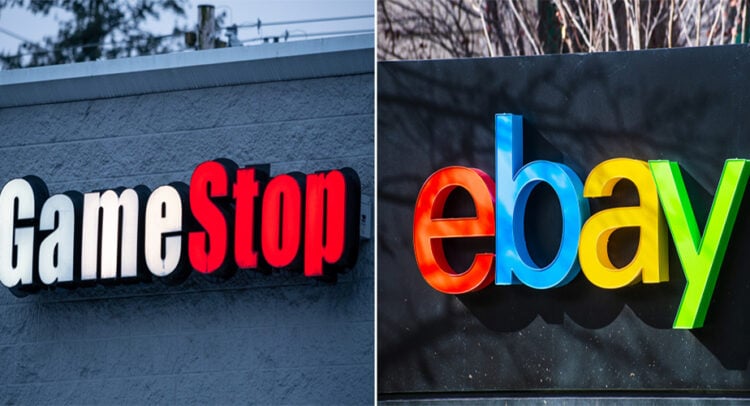
GameStop's unprecedented $55.5 billion non-binding acquisition proposal for eBay (announced May 3, 2026) represents the most significant e-commerce marketplace consolidation threat in recent history, with direct implications for cross-border sellers across collectibles, vintage goods, and secondhand apparel categories. The deal structure—half cash, half stock—faces severe skepticism from market participants: prediction markets assign only 15-26% probability of completion by 2026 (Polymarket: 15%, Kalshi: 26%), and GameStop's $11.9B market capitalization makes the $55.5B acquisition extraordinarily ambitious. CEO Ryan Cohen's vague financing explanations on CNBC ("we have the ability to issue stock") failed to address capital availability concerns, triggering an 8% GameStop stock decline while eBay surged 5.5%, signaling investor skepticism about deal viability.
The secondhand apparel market represents eBay's second-largest category and faces the highest uncertainty from potential ownership changes. According to Boston Consulting Group analysis, the global secondhand apparel market is projected to reach $360 billion by 2030—growing three times faster than traditional fashion retail. eBay dominates this segment with 135 million active buyers across 190 markets, unmatched by competitors ThredUp and The RealReal. Industry expert Iva Jestratijevic (University of Texas) emphasizes eBay's unique brand positioning: "From all platforms globally in secondhand fashion, eBay has the largest pool of active buyers" and combines enterprise trust with small-business appeal. A GameStop takeover could fundamentally alter this brand perception, as consumers currently distrust large corporations but view eBay as an exception.
GameStop's efficiency claims create operational uncertainty for sellers. The company argues it can save $2 billion in annualized costs within year one by leveraging 1,600+ physical stores and reducing eBay's $2.4 billion annual marketing spend (which added only 1 million net active buyers—0.75% growth). This suggests potential fee increases, reduced seller support, or platform policy changes if the acquisition succeeds. However, the low deal probability (15-26%) means sellers should focus on contingency planning rather than immediate operational changes. For eBay sellers in secondhand apparel, vintage collectibles, and specialty categories, the strategic imperative is platform diversification: establish presence on ThredUp, Poshmark, Mercari, and Shopify to reduce single-platform dependency during this consolidation uncertainty period.
Questions 8
What does GameStop's acquisition bid signal about eBay's current business performance?
GameStop's efficiency claims reveal eBay's operational challenges: the platform spent $2.4 billion on marketing last year but added only 1 million net active buyers (0.75% growth from 135 million total). This suggests eBay's buyer acquisition costs are rising while growth stalls—a vulnerability GameStop claims it can fix through cost reduction and physical store leverage. However, eBay's 135 million active buyers across 190 markets and dominance in secondhand apparel (growing 3x faster than traditional fashion) indicate strong underlying demand. The low deal probability suggests market participants believe eBay's challenges don't justify a $55.5B acquisition price, implying eBay's standalone value remains substantial.
How does this acquisition bid affect secondhand fashion market competition?
The acquisition bid creates competitive opportunity for ThredUp and The RealReal, as potential brand perception changes under GameStop ownership could drive sellers and buyers to alternative platforms. eBay's current competitive advantage—135 million buyers, 190 markets, and unique brand positioning as trusted-but-small-business-friendly—could erode if GameStop's retail identity dominates. The $360 billion secondhand apparel market is large enough to support multiple platforms, and growing 3x faster than traditional fashion. Sellers should view this consolidation uncertainty as an opportunity to test alternative platforms (ThredUp, Poshmark, Mercari) and build direct-to-consumer channels via Shopify while eBay's strategic direction remains unclear.