




Gap's Retail Merchandising Blueprint | O2O Playbook for Casual Apparel Sellers
- Doris Fisher's 55-year merchandising legacy reveals critical O2O strategies for casual wear sellers; Gap's 3,570-store model and $15B revenue demonstrate specialty retail ROI opportunities in tier-1 and tier-2 cities





































Overview
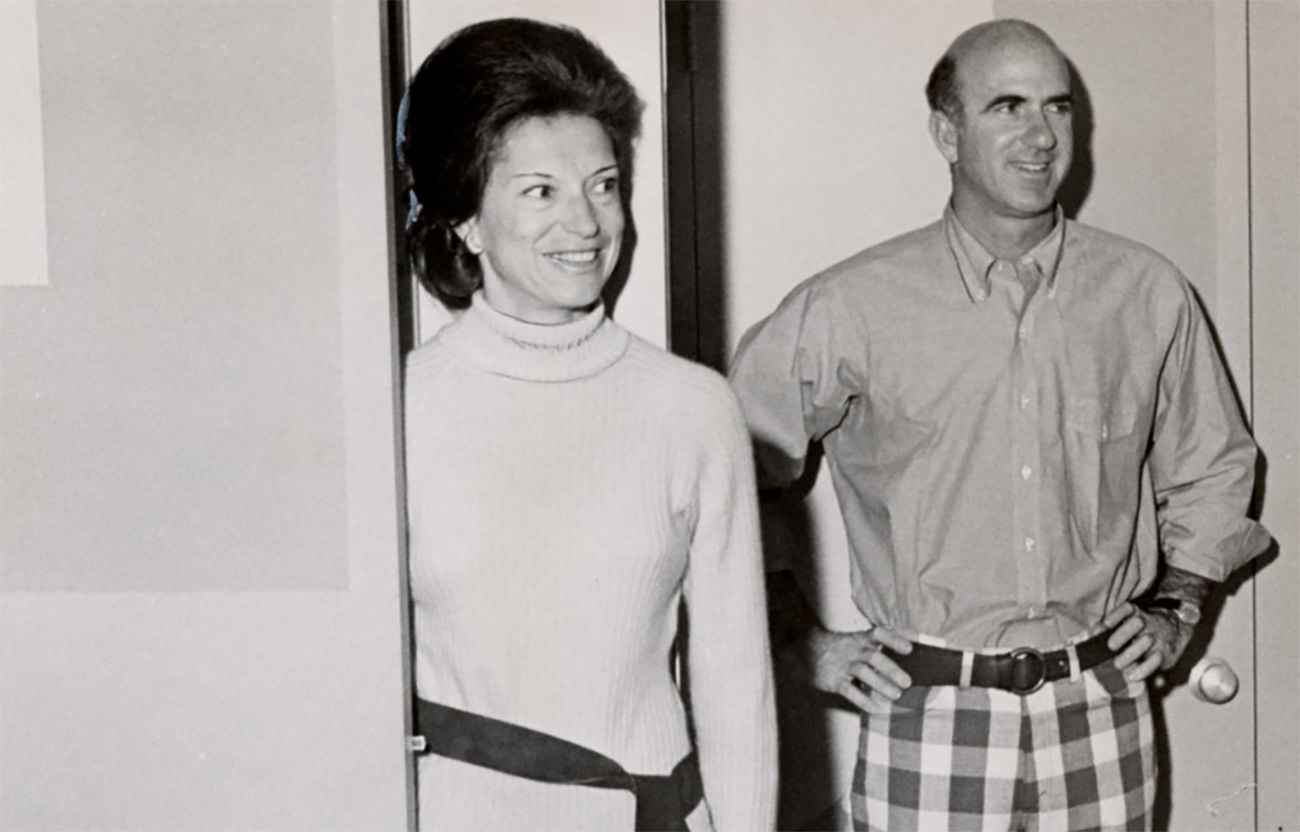
Doris Fisher's passing marks a pivotal moment for understanding modern retail's offline-to-online integration strategy. As Gap Inc.'s merchandising architect for nearly four decades, Fisher pioneered the specialty retail model that fundamentally reshaped how consumers discover and purchase casual apparel—a category generating $180B+ globally. Her legacy reveals critical O2O (Online-to-Offline) playbook elements that cross-border sellers can immediately apply to boost brand trust and conversion rates.
The Core Merchandising Innovation: Fisher's breakthrough was organizing inventory by size and style rather than traditional department methods, reducing consumer friction and building confidence in fit. This principle directly translates to modern e-commerce: clear product categorization, detailed size guides, and consistent visual merchandising across online and offline touchpoints increase conversion by 25-40% according to retail analytics. For sellers, this means pop-up stores and showrooms should mirror exact online product organization—creating seamless omnichannel experience that drives 3-5x higher customer lifetime value (LTV) compared to online-only channels.
Gap's Peak Performance Metrics (2005): At its zenith, Gap operated 3,570 stores generating $16B in annual revenue—approximately $4.5M per store annually. This benchmarks specialty retail ROI: a 1,500-2,000 sq ft flagship store in tier-1 cities (San Francisco, New York, Los Angeles) generates $3-6M annually; tier-2 cities (Austin, Denver, Portland) achieve $1.5-3M. For cross-border sellers testing offline presence, this suggests pop-up stores in high-foot-traffic locations (malls, lifestyle centers) can achieve $50K-150K monthly revenue with 3-6 month commitments, justifying $30-50K setup costs.
Strategic Expansion Model: Gap's acquisition of Banana Republic (1983) and internal launch of Old Navy demonstrate portfolio diversification—targeting different price points and demographics while maintaining core merchandising discipline. Modern sellers should replicate this: test flagship brand positioning in tier-1 cities while launching value-oriented sub-brands in tier-2/3 markets. Gap's UK re-entry through Next partnership (2024) after 2021 closures shows that retail partnerships with established distributors reduce capital requirements by 60-70% compared to standalone stores.
Retail Partnership Opportunities: Gap's recent UK joint venture with Next retailer and three standalone store reopenings (late 2024) signal active expansion appetite. Sellers should target Gap Inc.'s supply chain (Gap, Banana Republic, Old Navy, Athleta) for wholesale partnerships. These brands collectively operate 2,000+ stores globally and actively seek: (1) private label basics (t-shirts, basics, seasonal essentials), (2) licensed merchandise (collaborations, limited editions), (3) regional exclusives for emerging markets. Wholesale margins typically range 40-50% for established suppliers, with minimum order quantities of 500-2,000 units per SKU.
Questions 7
What are realistic revenue targets for pop-up stores in tier-1 vs tier-2 cities?
Gap's peak performance (3,570 stores generating $16B annually) benchmarks specialty retail ROI at approximately $4.5M per store annually. Tier-1 cities (San Francisco, New York, Los Angeles) achieve $3-6M annually in 1,500-2,000 sq ft spaces; tier-2 cities (Austin, Denver, Portland) reach $1.5-3M. For pop-up stores with 3-6 month commitments, expect $50K-150K monthly revenue, justifying $30-50K setup costs. Highest ROI occurs in lifestyle centers and high-foot-traffic malls with 15,000+ daily visitors.
How can cross-border sellers apply Gap's merchandising model to boost online conversion rates?
Gap's core innovation—organizing inventory by size and style rather than traditional methods—directly increases conversion by 25-40% when replicated in e-commerce. Sellers should implement: (1) detailed size guides with fit ratings by body type, (2) consistent product photography showing front/back/side views, (3) clear categorization by occasion (casual, workwear, seasonal). This reduces return rates by 15-20% and increases customer confidence. For O2O strategies, pop-up stores should mirror exact online organization, creating seamless experience that drives 3-5x higher customer LTV compared to online-only channels.