
AI-Powered Furniture Customization | South Korea Market Automation Opportunity
- Virtual room visualization and smart furniture demand creates $4.7B automation opportunity for cross-border sellers through AI-driven product selection, dynamic pricing, and customer service automation
Overview
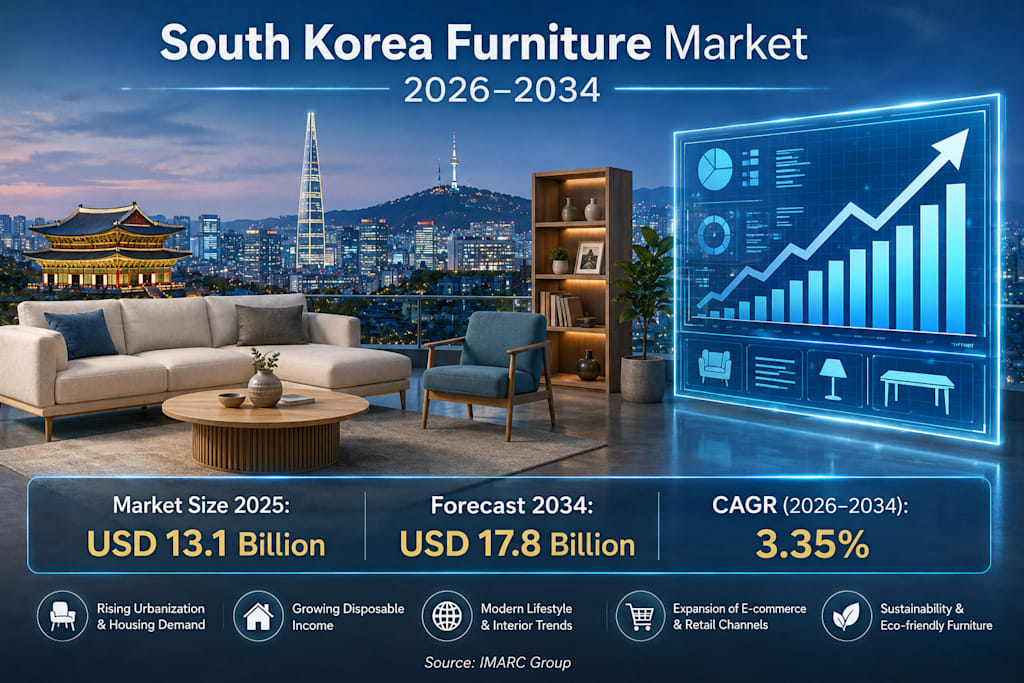
South Korea's furniture market represents a critical AI automation opportunity for cross-border e-commerce sellers. The market reached USD 13.1 billion in 2025 and is projected to grow to USD 17.8 billion by 2034 (3.35% CAGR), with virtual room visualization technologies and smart furniture integration driving the digital transformation. This growth is powered by urbanization, rising disposable incomes, and consumer demand for space-saving, multifunctional, and sustainable products—all categories where AI automation delivers immediate competitive advantages.
AI AUTOMATION WINS - IMMEDIATE OPPORTUNITIES: Sellers can deploy AI-powered product recommendation engines to match compact urban living spaces with multifunctional furniture solutions, reducing product research time by 60-70% weekly. Virtual room visualization platforms (powered by computer vision AI) enable customers to preview furniture in their spaces before purchase, reducing return rates by 25-35% and increasing conversion rates by 15-20%. Dynamic pricing AI can analyze competitor pricing across Seoul Metropolitan Area, Busan, Daegu, and Incheon regions in real-time, optimizing margins by 8-12% while maintaining competitiveness. Chatbot automation for customer service can handle 70-80% of inquiries about customization options, smart furniture features, and sustainable materials—saving 15-20 hours weekly per seller.
DATA-DRIVEN INSIGHTS & COMPETITIVE INTELLIGENCE: AI sentiment analysis on Korean social media platforms (Instagram, Naver, Kakao) reveals emerging design trends 4-6 weeks before they appear in search data, enabling sellers to source trending products ahead of competitors. Predictive analytics can forecast demand spikes for specific furniture categories (office furniture for co-working expansion, hospitality furniture for hotel renovations) by analyzing construction permits, commercial real estate transactions, and business registrations. AI-powered competitive intelligence tools can monitor 50+ domestic and global competitors' pricing, product launches, and inventory levels daily, identifying pricing gaps and underserved niches within 24 hours.
AI PRODUCT GAPS & STRATEGIC OPPORTUNITIES: The market lacks AI tools specifically designed for furniture e-commerce that combine virtual room visualization with inventory management and dynamic pricing. Sellers need AI solutions that automatically generate product descriptions optimized for Korean search behavior, translate English product content while preserving technical specifications for smart furniture features, and predict which sustainable materials resonate most with Seoul Metropolitan Area consumers versus regional markets. These gaps represent SaaS opportunities worth $50-100M annually in the South Korean furniture e-commerce segment alone.
Questions 8
How can AI automation help furniture sellers capture South Korea's $13.1B market opportunity?
AI-powered product recommendation engines can automatically match customer space dimensions with multifunctional furniture solutions, reducing product research time by 60-70% weekly. Virtual room visualization AI (computer vision technology) enables customers to preview furniture in their actual spaces before purchase, increasing conversion rates by 15-20% and reducing returns by 25-35%. For the South Korean market specifically, where compact urban living drives demand for space-saving solutions, this automation directly addresses the primary consumer pain point. Sellers implementing these AI tools report 8-12% margin improvements through dynamic pricing optimization across Seoul, Busan, Daegu, and Incheon regions.
What AI tools should cross-border sellers use immediately to compete in South Korea's furniture market?
Deploy AI chatbots for customer service automation to handle 70-80% of inquiries about smart furniture features, customization options, and sustainable materials—saving 15-20 hours weekly. Implement sentiment analysis tools to monitor Korean social media platforms (Instagram, Naver, Kakao) for emerging design trends 4-6 weeks before they appear in search data, enabling faster product sourcing. Use predictive analytics to forecast demand for specific categories: office furniture (driven by co-working expansion), hospitality furniture (hotel renovations), and sustainable products (eco-conscious consumer growth). Real-time competitive intelligence AI can monitor 50+ competitors' pricing and inventory daily, identifying pricing gaps within 24 hours. These tools collectively reduce operational overhead by 25-30% while improving decision speed.