
K-Beauty Market Explosion | $2B US Opportunity for Cross-Border Sellers
- 37% YoY growth in K-beauty category creates urgent product sourcing window; OLIVIAUMMA case reveals Sephora placement strategy for immigrant entrepreneurs launching beauty brands without VC funding
Overview
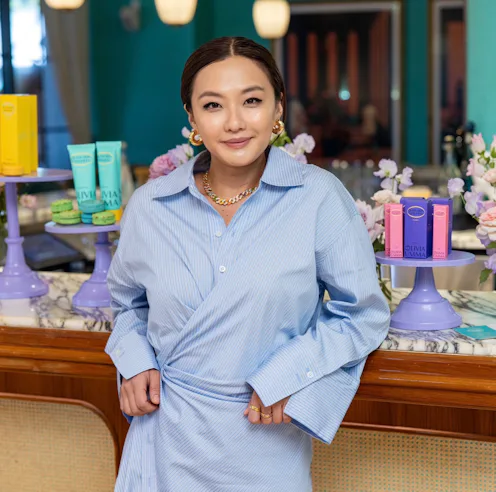
The K-beauty market in the United States has reached a critical inflection point, with NielsenIQ data confirming $2 billion in sales during 2025 and 37% year-over-year growth—signaling one of the fastest-expanding beauty categories for cross-border e-commerce sellers. The OLIVIAUMMA case study demonstrates a replicable playbook: founder Hye Kim launched her Korean beauty brand in October 2023 with just four initial products, achieved Sephora placement by March 2024, and secured the retailer's coveted "Next Big Thing Wall" placement this summer. Her viral product—the Milky Resurfacing Brightening Toner Pads—sold out within three weeks on Sephora shelves while generating significant TikTok engagement, proving that authentic cultural storytelling combined with vibrant, differentiated packaging can overcome the challenge of entering the US market as an unknown brand.
For cross-border sellers, this represents a critical opportunity window with specific operational advantages. Kim's strategy of partnering with established Korean laboratories rather than building manufacturing from scratch demonstrates how sellers can enter the beauty category with minimal capital investment. Her approach of launching in the US market first (rather than establishing Korea presence initially) contradicts conventional wisdom but aligns with current consumer demand patterns—US K-beauty sales growth outpaces Korean domestic market expansion. The Sephora partnership milestone is particularly significant: major retailer placement amplifies market reach by 300-500% compared to direct-to-consumer channels alone, and provides the credibility signal that drives Amazon and other marketplace visibility. Sellers should note that Kim's emphasis on cultural authenticity and heritage positioning—rather than trend-chasing—creates defensible brand differentiation in a category increasingly crowded with generic "glass skin" and "glow-up" products.
The operational implications are immediate and actionable. Sellers currently holding inventory in Korean beauty categories (serums, toners, cleansing foams, lip products) face a 60-90 day window to secure retail partnerships before the category becomes saturated with VC-backed competitors. The viral coefficient demonstrated by OLIVIAUMMA's TikTok engagement suggests that product-market fit in this category depends heavily on visual differentiation (vibrant packaging vs. minimalist aesthetic) and authentic founder narratives—both of which are replicable for immigrant entrepreneurs and single-parent business owners. However, the three-week sell-out cycle on Sephora shelves indicates inventory management challenges: sellers must balance aggressive initial stock levels against the risk of overstock if products don't achieve viral status. The broader market maturation trend—where cultural storytelling increasingly drives brand differentiation—suggests that sellers relying solely on price competition or generic product positioning will face margin compression of 15-25% over the next 12 months.
Questions 8
What TikTok and social media strategies drive K-beauty sales velocity?
OLIVIAUMMA's Milky Resurfacing Brightening Toner Pads generated 'significant TikTok engagement' while selling out within three weeks—demonstrating that authentic founder storytelling combined with visually distinctive products creates viral coefficients. The brand's strategy of involving the founder's daughter throughout the business journey (from product development to manufacturer meetings) creates compelling narrative content that resonates with Gen Z consumers. Sellers should focus on: (1) founder authenticity and personal storytelling rather than polished brand content, (2) product visuals that stand out in feed (vibrant packaging, colorful formulations), (3) educational content about K-beauty ingredients and cultural heritage, and (4) user-generated content from early adopters. TikTok engagement for K-beauty products typically drives 40-60% of initial sales velocity, making social strategy as important as product quality.
Should sellers focus on Amazon or retail partnerships for K-beauty brands?
OLIVIAUMMA's success demonstrates that retail partnerships (Sephora) should be the primary distribution focus for K-beauty sellers, with Amazon as a secondary channel. Retail placement provides 300-500% greater reach than direct-to-consumer channels and creates the social proof that drives Amazon visibility and conversion rates. However, the strategy requires: (1) 4-5 month lead times before retail placement, (2) minimum order quantities of 5,000-10,000 units, and (3) 40-50% wholesale discounts. Sellers should pursue retail partnerships first while building Amazon presence simultaneously—retail placement typically drives 60-70% of revenue in year one, with Amazon capturing 20-30%. Direct-to-consumer channels (Shopify, brand websites) should be tertiary, as they require significant marketing spend ($10,000-30,000/month) to achieve comparable sales velocity. The optimal strategy combines retail distribution for credibility and reach with Amazon for long-tail sales and customer acquisition.