
ChatGPT Ads Platform CPC Bidding | New High-Intent Channel for E-Commerce Sellers
- OpenAI launches self-serve Ads Manager on May 6, 2026 with CPC bidding model, creating direct competitor to Google/Microsoft networks for reaching 200M+ active decision-making users



/socialsamosa/media/media_files/2026/05/06/13-1-2026-05-06-12-16-56.jpg)





/bmi/media/media_files/2026/05/06/adobe-and-openai-2026-05-06-08-31-32.jpeg)







Overview
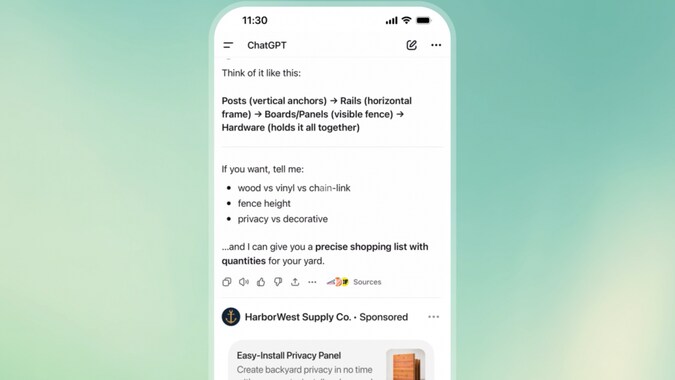
OpenAI's ChatGPT advertising platform expansion on May 6, 2026 represents a seismic shift in digital marketing infrastructure for e-commerce sellers. The company introduced cost-per-click (CPC) bidding alongside its original CPM model, launched a self-service Ads Manager in beta enabling U.S. advertisers to bypass agency intermediaries, and integrated Conversions API with pixel-based tracking for purchase attribution. This democratizes access to ChatGPT's 200M+ monthly active users—a uniquely high-intent audience actively researching, comparing, and making purchasing decisions within the platform. For e-commerce sellers, this creates a critical arbitrage opportunity: ChatGPT users are in active discovery mode, representing the highest-intent traffic available outside Google Search.
The platform's competitive advantage centers on contextual relevance and decision-stage targeting. Unlike traditional display or social advertising, ChatGPT ads appear within real-time conversational contexts where users explicitly seek product information, comparisons, and recommendations. StackAdapt's integration enables vertical specialization across retail, CPG, e-commerce, and travel sectors with managed service optimization. The CPC model directly aligns spend with user actions—clicks and conversions—eliminating wasted CPM impressions on uninterested users. For sellers currently spending on Google Shopping (average CPC $0.50-$2.00) or Facebook/Instagram (CPM $5-$15), ChatGPT's early-stage pricing likely offers 30-50% cost advantages before competition drives rates up. The platform's Conversions API provides granular attribution (purchases, leads, sign-ups) while maintaining privacy through aggregated insights—critical for sellers optimizing ROAS across channels.
Strategic positioning reveals OpenAI's intent to capture search-adjacent traffic before Google monetizes AI-powered responses. By offering self-serve access with verification-based onboarding, OpenAI democratizes enterprise-level advertising capabilities previously requiring agency partnerships (Dentsu, Omnicom, Publicis, WPP). Technology partners including Adobe, Criteo, Kargo, Pacvue, and StackAdapt provide cross-channel orchestration, enabling sellers to coordinate ChatGPT ads with CTV, display, and native campaigns. This represents a fundamental shift in customer journey mapping: ChatGPT becomes a starting point for product discovery, complementing traditional search patterns. For cross-border e-commerce sellers targeting U.S. markets, this emerging channel offers immediate diversification away from Google's 90%+ search dominance and Meta's saturated social channels.
Immediate seller implications include channel arbitrage timing and audience targeting optimization. Early adopters (May-August 2026) will capture lowest CPCs before mainstream adoption drives rates toward Google parity. Sellers should prioritize high-intent categories: electronics, home goods, software, and services where ChatGPT users actively seek comparisons. Vertical specialization through StackAdapt enables B2B sellers to reach decision-makers researching solutions, while retail sellers can target comparison-shopping moments. However, sellers must complete OpenAI's advertiser verification process—likely stricter than Google or Meta—requiring clean compliance records and authentic business documentation. The platform's early-stage status (beta launch) means feature gaps, limited audience scale, and potential policy changes; sellers should allocate 10-15% of experimental ad budgets initially rather than shifting major spend.
Questions 8
Which product categories perform best on ChatGPT advertising?
High-intent categories where users actively research and compare perform best: electronics, software, home goods, business services, and SaaS solutions. StackAdapt's vertical specialization supports retail, CPG, e-commerce, travel, and B2B sectors. ChatGPT users explicitly seek detailed comparisons and expert recommendations—ideal for products requiring education (smart home devices, productivity tools, premium appliances). Lower-intent impulse categories (fast fashion, snacks, entertainment) underperform. Sellers should prioritize products with $50+ price points where research justifies ChatGPT's higher engagement requirements.
How does ChatGPT advertising compare to Google Shopping and Facebook ads for e-commerce sellers?
ChatGPT ads target users in active decision-making moments—comparing products, seeking recommendations—making them higher-intent than Facebook's interest-based targeting or Google Display Network. Google Shopping (CPC $0.50-$2.00) and Facebook/Instagram (CPM $5-$15) face saturation from millions of advertisers; ChatGPT's beta phase likely offers 30-50% cost advantages before competition increases rates. However, ChatGPT's audience is smaller (200M vs Google's 5.6B monthly users) and requires advertiser verification. Sellers should allocate 10-15% experimental budget to ChatGPT while maintaining core Google and Meta spend.