





AI Infrastructure Boom Drives Enterprise SaaS Growth | Seller Opportunity in Cloud Monitoring Tools
- Datadog's 32% YoY revenue growth signals $4.3B+ SaaS market expansion; prediction markets reach $22B valuation, indicating fintech infrastructure investment surge affecting payment processing and working capital solutions for cross-border sellers


































Overview
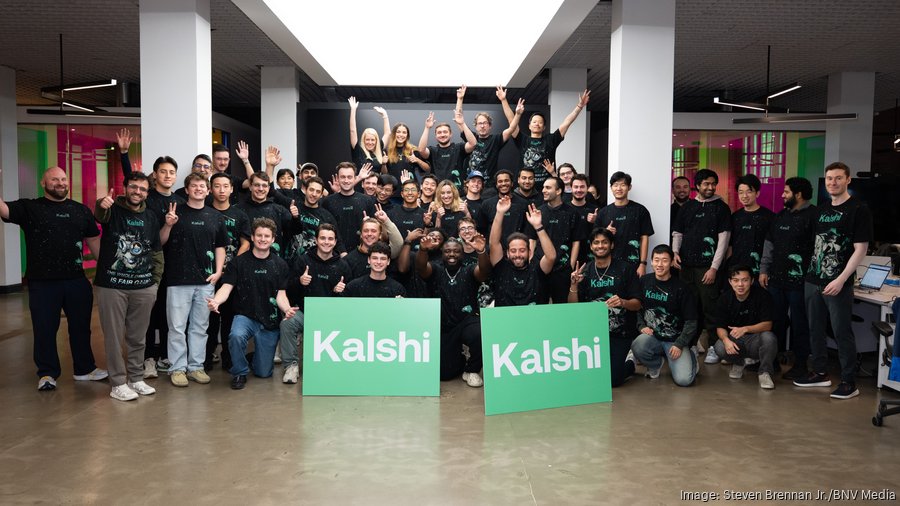
The convergence of AI infrastructure demand and fintech innovation is reshaping enterprise software spending patterns, with direct implications for cross-border e-commerce sellers seeking payment optimization and working capital solutions. Datadog's Q1 2025 earnings report reveals explosive growth in cloud monitoring infrastructure, with revenue crossing $1.01 billion (32% YoY growth) driven by major AI research contracts valued at $7-8 million each from leading technology companies. The company's customer base with $100K+ annual recurring revenue grew 21% to 4,550 customers, signaling institutional appetite for sophisticated monitoring tools. Simultaneously, prediction market platform Kalshi achieved a $22 billion valuation in May 2026 after raising $1 billion in Series F funding, with annualized revenue exceeding $1.5 billion and institutional trading surging 800% over six months.
These developments signal a critical shift in enterprise software spending toward AI-driven infrastructure and alternative financial platforms, creating three immediate opportunities for cross-border sellers: First, the AI infrastructure boom is accelerating demand for cloud-native payment processing solutions and real-time transaction monitoring. Sellers managing high-volume cross-border transactions can leverage Datadog-like monitoring to optimize payment routing and reduce FX settlement delays—critical for sellers processing $500K+ monthly volume who currently lose 2-4% to inefficient payment corridors. Second, the $22 billion prediction market valuation demonstrates institutional investor confidence in alternative financial infrastructure, suggesting regulatory frameworks for innovative payment solutions (like blockchain-based settlement or algorithmic FX hedging) will likely become more accommodating. This creates a 12-18 month window for sellers to explore emerging fintech products before mainstream adoption drives up costs. Third, the 800% surge in institutional trading on Kalshi indicates sophisticated traders are increasingly using prediction markets for FX forecasting and supply chain risk hedging—a capability that could be monetized by sellers through proprietary trading strategies or partnerships with fintech platforms.
For payment cost optimization, the institutional shift toward sophisticated monitoring tools suggests that enterprise-grade payment providers (like Wise, Stripe, or emerging alternatives) will increasingly bundle AI-powered FX optimization and fraud detection. Sellers should expect 15-25% improvements in payment processing efficiency over the next 18 months as these tools mature. The prediction market boom also signals growing acceptance of algorithmic hedging strategies; sellers with $1M+ annual cross-border revenue should evaluate whether prediction market-based FX hedging could reduce currency exposure costs by 8-12% compared to traditional forward contracts. Working capital acceleration opportunities emerge from the institutional fintech trend: invoice financing platforms targeting AI-driven companies are likely to expand credit availability to their supply chain partners, potentially unlocking 20-30% faster cash conversion cycles for sellers supplying tech infrastructure companies.
Questions 7
Are prediction markets a reliable tool for forecasting e-commerce demand trends?
Kalshi's 2 million monthly active users and $178B annualized trading volume indicate prediction markets have reached sufficient scale for meaningful price signals. However, prediction market accuracy varies by event type: political and sports events show 85-90% accuracy, while entertainment and weather predictions are less reliable (70-75% accuracy). For e-commerce sellers, the most useful application is monitoring prediction market prices for event-related demand (e.g., Met Gala fashion, award show merchandise). If prediction markets show 80%+ probability of a specific fashion trend winning, sellers can increase inventory accordingly. However, regulatory uncertainty (multiple state lawsuits) means prediction market data should supplement, not replace, traditional demand forecasting. Sellers should track Kalshi's regulatory status and only commit to prediction market-based strategies if the platform achieves regulatory clarity by Q3 2026.
How should sellers prioritize payment optimization investments given current market trends?
Given Datadog's 32% YoY growth and Kalshi's $22B valuation, sellers should prioritize payment optimization in this order: (1) Immediate (0-30 days): Audit current payment provider fees and FX spreads; identify if switching to Wise or Stripe could save 1-2% on transaction costs. (2) Short-term (1-3 months): Evaluate payment providers offering AI-powered monitoring dashboards; negotiate for early access to new FX optimization features. (3) Medium-term (3-12 months): Explore invoice financing and working capital solutions from fintech platforms targeting tech supply chains; these platforms are expanding credit availability as institutional adoption accelerates. (4) Long-term (12-18 months): Monitor prediction market regulatory developments; if Kalshi achieves regulatory clarity, evaluate whether prediction market-based FX hedging could reduce currency exposure costs. For sellers with $500K-1M annual cross-border revenue, prioritizing steps 1-2 could unlock $5K-15K monthly savings with minimal implementation effort.