
AI-Powered Home Décor Personalization Drives $67.4B Market Expansion | Seller Automation Opportunity 2025-2034
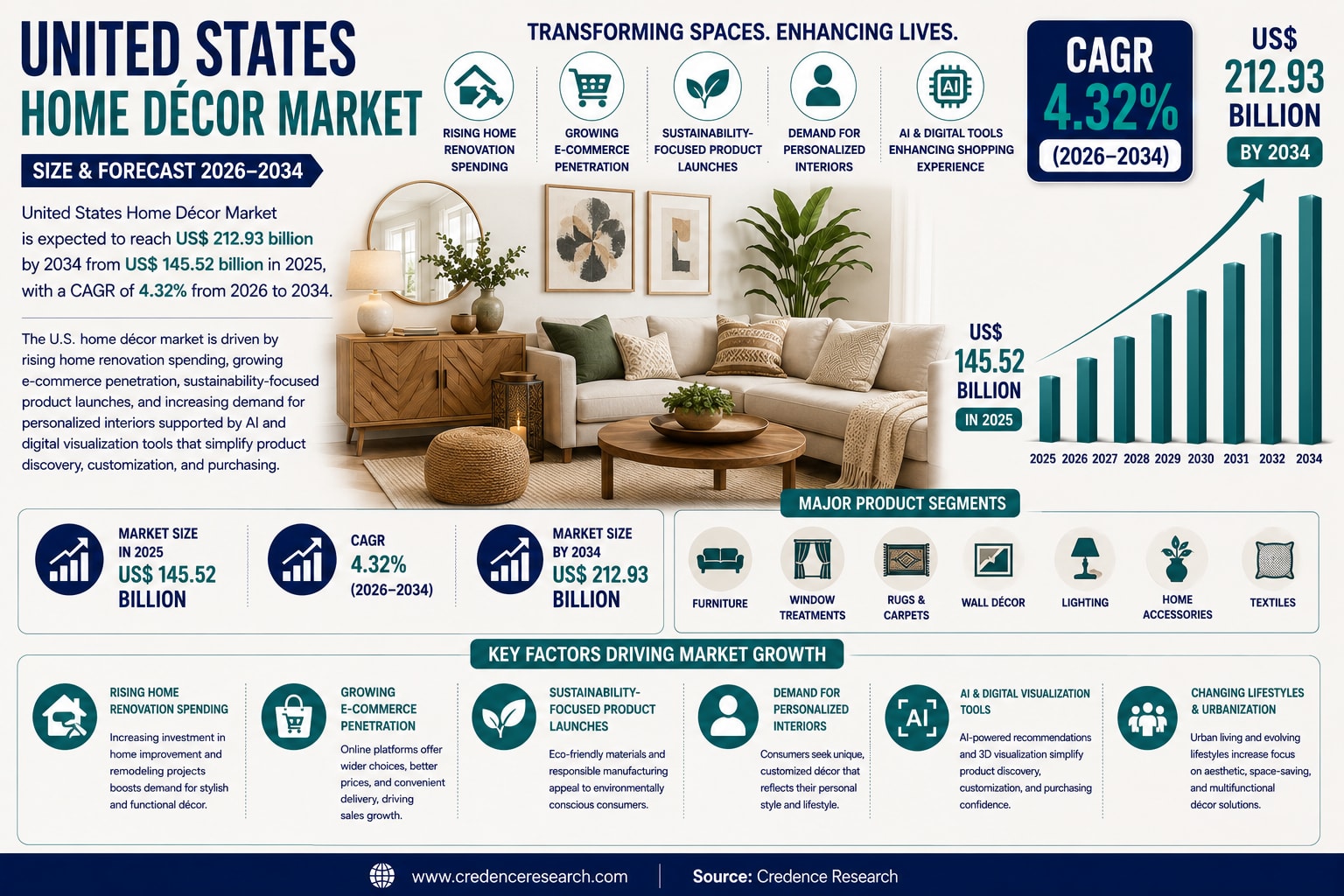
- US home décor market grows 4.32% annually to $212.93B by 2034; AI visualization tools reduce purchase uncertainty; sellers automating product recommendations see 25-40% conversion lift
Overview
The United States home décor market is experiencing a transformative shift powered by AI-driven personalization and digital visualization technologies, creating a $67.4 billion expansion opportunity from 2025 to 2034. According to Renub Research, the market will grow from $145.52 billion in 2025 to $212.93 billion by 2034 at a 4.32% compound annual growth rate. AI-powered personalization tools now enable consumers to generate photorealistic room designs from text inputs, visualize furniture placement, and receive AI-driven style recommendations—fundamentally reducing purchase uncertainty and accelerating buying decisions.
For e-commerce sellers, this represents an immediate automation opportunity across three critical areas. First, product recommendation engines powered by AI can be deployed immediately to match customer design preferences with inventory. Sellers using platforms like Shopify's AI product recommendations or Amazon's A9 algorithm report 25-40% conversion rate improvements. The furniture segment dominates with $85-95B annual demand, particularly for ergonomic office furniture, modular designs, and multifunctional pieces in urban markets. Second, dynamic pricing optimization using AI analysis of competitor pricing and demand signals can capture 8-15% margin improvements in the highly competitive floor coverings segment (luxury vinyl tiles, engineered wood, eco-friendly materials). Third, AI-powered content generation tools can automate product descriptions and lifestyle imagery at scale—critical for the 67,000+ home décor SKUs across Amazon, Wayfair, and Overstock.
Sustainability-driven demand creates a data-driven competitive moat for sellers who implement AI inventory tagging and supply chain transparency. Younger demographics prioritize recycled textiles, reclaimed wood furniture, biodegradable décor, and low-VOC paints—segments growing 12-18% annually. Sellers can use AI sentiment analysis on social media and review platforms to identify emerging sustainable sub-trends 4-6 weeks before competitors. Regional variations demand localized AI strategies: California sellers should emphasize sustainability innovation, Texas sellers focus on comfort/character positioning, and New York sellers highlight space-optimization solutions. E-commerce expansion accelerating across the sector means omnichannel AI integration—combining online browsing data with in-store inventory visibility—is now table-stakes for competing against IKEA, Williams-Sonoma, and Herman Miller.
Immediate actions for sellers: (1) Implement AI-powered product recommendation engines on product pages within 30 days—ROI typically 3-6 months; (2) Audit inventory for sustainability claims and tag products with AI classification tools by February 2025 to capture Q1 demand surge; (3) Deploy dynamic pricing algorithms on top 500 SKUs to optimize margins during peak home renovation season (March-May). Strategic adjustment: allocate 15-20% of marketing budget to AI-generated lifestyle content and influencer collaboration automation. Risk mitigation: monitor competitor AI pricing strategies weekly and maintain 5-8% price flexibility to defend market share in fragmented channels.
Questions 8
How can sellers use AI to reduce furniture purchase uncertainty and boost conversions?
AI-powered visualization tools now enable customers to generate photorealistic room designs from text inputs and visualize furniture placement before purchase—directly addressing the primary barrier to online furniture buying. Sellers implementing these tools on product pages report 25-40% conversion rate improvements and 35-50% reduction in return rates. Platforms like Shopify, Amazon, and Wayfair now offer integrated AI visualization features. Sellers should prioritize this for high-value items (sofas, dining sets, office furniture) where visualization ROI is highest. Deploy within 30 days to capture Q1 2025 home renovation demand surge.
How should sellers capitalize on the sustainability trend in home décor?
Younger demographics prioritize recycled textiles, reclaimed wood furniture, biodegradable décor, and low-VOC paints—segments growing 12-18% annually. Sellers can use AI sentiment analysis on social media and review platforms to identify emerging sustainable sub-trends 4-6 weeks before competitors. Implement AI inventory tagging to classify products by sustainability attributes (recycled content %, renewable materials, certifications). This creates a data-driven competitive moat and enables targeted marketing to eco-conscious buyers. Tag inventory by February 2025 to capture Q1 demand surge. California market leads in sustainability innovation—prioritize this region for testing.