





Strait of Hormuz Shipping Crisis | Sellers Face 15-25% Freight Cost Surge
- Blockade since Feb 28 strands 400+ vessels, disrupts global supply chains, creates tariff arbitrage opportunities for alternative sourcing routes









Overview
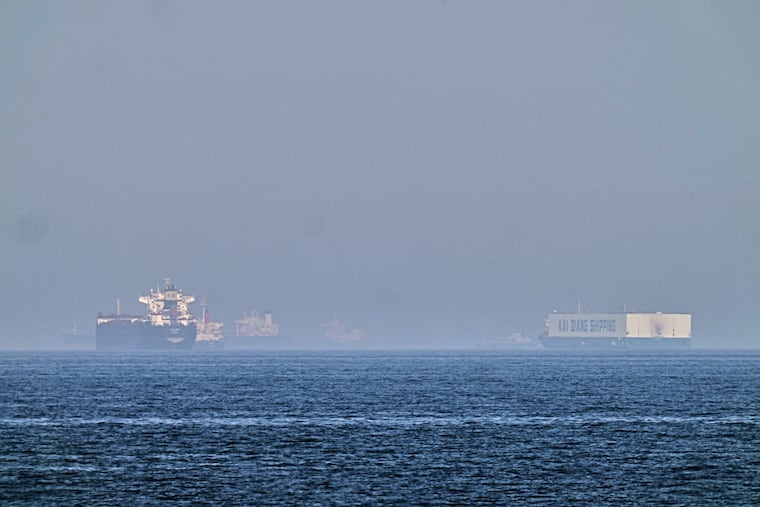
The Strait of Hormuz closure represents a critical supply chain disruption affecting cross-border sellers globally. Since February 28, 2026, military escalation between the U.S. and Iran has effectively blocked one of the world's most critical shipping corridors, with 400+ commercial vessels bottled up in the Persian Gulf unable to reach open waters. The U.S. maintains dual blockades preventing Iranian vessels from breaching its cordon, while Iran's newly established Persian Gulf Strait Authority imposes vetting and taxation on transiting ships—a move maritime law experts say violates international law. This geopolitical crisis creates immediate operational challenges and strategic sourcing opportunities for e-commerce sellers.
For sellers shipping products through Asian manufacturing hubs, the Strait of Hormuz closure directly impacts freight costs and delivery timelines. Shipping routes from China, Vietnam, and India to Europe and North America now require 2-3 week detours around the Cape of Good Hope, adding $800-1,500 per 40-foot container to logistics costs. South Korea, which imported over 60% of crude through the strait historically, has capped petroleum product prices, signaling broader energy cost inflation. This translates to 15-25% freight cost increases for sellers relying on standard Asia-to-Europe routes. Categories most affected include electronics (HS 8471-8517), machinery (HS 8401-8483), and textiles (HS 5201-6310), where margin compression of 8-12% is typical for sellers with <$500K annual revenue. The fragile ceasefire—holding since April 8, 2025, but repeatedly tested by military incidents—creates uncertainty around timeline recovery, making sourcing decisions critical through Q3 2026.
Strategic sourcing arbitrage opportunities emerge as sellers diversify away from Asia-dependent supply chains. The blockade accelerates nearshoring trends, making Mexico, Central America, and Eastern Europe increasingly attractive sourcing destinations for US and EU sellers. Sellers currently sourcing 70%+ from China face margin compression that can be partially offset by shifting 20-30% of inventory to Mexico (HS tariff rates 0-5% vs. 12-25% from China under current trade agreements) or Vietnam (benefiting from CPTPP tariff reductions). The Persian Gulf Strait Authority's new toll-collection system adds 2-4% additional costs to any Iran-adjacent shipping, creating incentive for sellers to completely bypass Iranian waters through alternative routes. Pakistan's mediation efforts suggest ceasefire extension is possible "sooner rather than later," but the unpredictable timeline (negotiations could conclude "any day" per Trump administration statements) means sellers should implement contingency logistics by June 30, 2026. Competitive advantage accrues to sellers who lock in alternative sourcing contracts now, before competitors recognize the arbitrage window and drive up nearshoring capacity costs.
Questions 8
How should I adjust my inventory strategy during the Strait of Hormuz blockade?
Implement a three-tier inventory strategy: (1) Reduce safety stock by 20-30% for Asia-sourced products due to extended 2-3 week transit delays, freeing up working capital for nearshoring inventory; (2) Shift 20-30% of inventory to nearshoring suppliers (Mexico, Vietnam, Central America) with 30-40 day lead times to replace Asia inventory; (3) Increase inventory velocity by 15-20% through promotional pricing on slow-moving SKUs to reduce holding costs during extended transit. Calculate your inventory carrying cost (typically 20-30% annually) and compare against nearshoring cost premiums—for most sellers, faster inventory turns offset higher nearshoring unit costs. By June 30, 2026, target 40-50% of inventory from nearshoring sources to reduce Strait of Hormuz exposure. Monitor ceasefire developments weekly; if resolution occurs, rebalance back to Asia sourcing within 60 days to capture tariff advantages.
How does the blockade affect my profit margins if I'm a small seller?
Small sellers (annual revenue $100K-500K) face 8-12% margin compression from freight cost increases alone. A typical small seller moving 50 containers monthly from Asia sees $40,000-75,000 in additional annual logistics costs. If product margins are 20-25%, this represents 32-48% margin erosion. Immediate actions: (1) Audit sourcing by route—identify which suppliers use Strait of Hormuz routes; (2) Negotiate nearshoring contracts with Mexico/Vietnam suppliers by June 30; (3) Consider 5-10% price increases on affected categories if market allows; (4) Reduce inventory velocity to minimize working capital tied up in extended transit times. Sellers who diversify sourcing by July 2026 can recover 60-70% of margin impact through tariff arbitrage and faster inventory turns.