




The Fiscal Gambit Unraveling Trump's Tariff Revenue Promises
- Revealing the Complex Economics Behind Trade Policy Funding Strategies










Overview
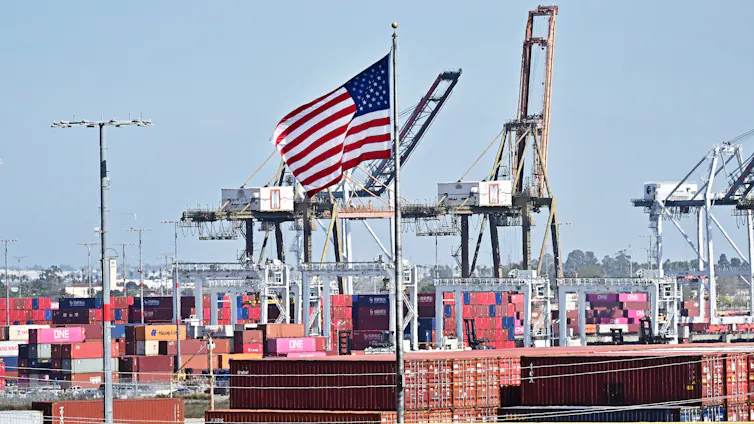
Tariff revenues have emerged as a complex and increasingly volatile fiscal instrument in recent trade policy discussions, with the Trump administration's strategic claims now facing significant economic scrutiny. The fragmented news narrative suggests a critical disconnect between political rhetoric and fiscal reality surrounding trade-generated government income.
The core challenge lies in the sustainability and predictability of tariff-based revenue streams. While Trump's administration repeatedly suggested that tariff collections could fund multiple national priorities, the economic evidence points to a more nuanced and potentially unsustainable approach. The phrase "now dwindling tariff revenues" signals a critical inflection point in trade policy economics, where initial expectations of substantial government income are being dramatically reevaluated.
Strategic implications extend beyond simple revenue collection. Tariffs are no longer just a trade policy tool but have become a complex financial instrument with multifaceted economic consequences. The ability to leverage these revenues for diverse national objectives appears increasingly constrained by market dynamics, international trade responses, and the inherent volatility of global economic systems.
The underlying economic logic reveals that tariff strategies are not a straightforward revenue generation mechanism. They represent a delicate balance between protectionist intentions, international trade relationships, and macroeconomic impacts. Businesses and policymakers must recognize that tariff revenues are inherently unpredictable, subject to rapid shifts in global trade patterns, geopolitical tensions, and retaliatory economic measures.
Ultimately, this narrative underscores the complexity of using trade barriers as a fiscal strategy. The Trump administration's approach demonstrates the challenges of converting trade policy into a reliable revenue stream, highlighting the need for more sophisticated, nuanced economic planning that goes beyond simplistic revenue projections.
Questions 3
How do tariff revenues impact national economic strategy?
Tariff revenues represent more than just income—they are a complex policy instrument affecting international trade relationships, domestic economic structures, and global competitive positioning. Their strategic value extends far beyond simple revenue collection.
How reliable are tariff revenues as a funding strategy?
Tariff revenues are highly unpredictable and volatile. They depend on complex global trade dynamics, can trigger retaliatory measures, and are subject to rapid market shifts. Governments should view them as a supplementary, not primary, revenue source.