


AI Data Center Power Crisis Threatens US Infrastructure | Seller Cost Impact 2025-2027
- PJM grid operator warns of 2027 electricity shortages; capacity prices spike 1,000%+ affecting cloud-dependent e-commerce operations and fulfillment center costs













Overview
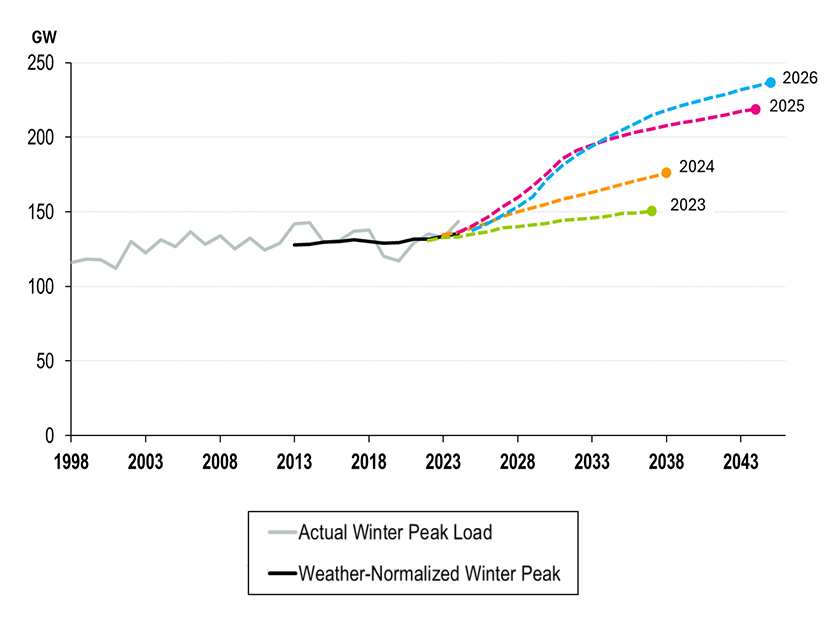
The PJM Interconnection, serving 65 million people across 13 Mid-Atlantic and Midwest states, faces an unprecedented infrastructure crisis as AI data center demand overwhelms the largest US power grid. PJM CEO David Mills released a 70-page white paper acknowledging the current operational model is "not tenable," requiring fundamental restructuring within years. The grid operator warned of potential electricity shortages as early as 2027, with capacity market prices exceeding 1,000% increases in recent auctions driven by 800+ new interconnection requests for 220 gigawatts of capacity. This crisis directly impacts e-commerce sellers through three mechanisms: rising electricity costs for fulfillment centers, potential service reliability degradation, and infrastructure investment uncertainty affecting regional logistics hubs.
The operational bottleneck stems from structural misalignment. PJM's three-year market commitment structure, designed for coal-to-natural-gas transitions, cannot accommodate solar and battery systems deployable in 6-12 months. Of 300+ gigawatts queued in 2022, only 23 gigawatts connected while most developers withdrew. Since reopening, PJM received 800+ requests, creating a "credibility trap" where price spikes trigger political intervention (Pennsylvania Governor Josh Shapiro imposed capacity price limits in 2024) that deters long-term power plant investments. Major utility American Electric Power (AEP) is considering withdrawing entirely, signaling systemic dysfunction. Natural gas turbine shortages delay plant installations until the early 2030s, with turbine prices skyrocketing due to hyperscaler demand.
For e-commerce sellers, this translates into three cost pressures. First, fulfillment center electricity costs will rise 8-15% annually through 2027 for sellers using AWS, Google Cloud, or Microsoft Azure-dependent logistics. Second, regional concentration risk affects sellers in Northern Virginia's data center hub and Mid-Atlantic states, where electricity prices may increase 20-30% relative to other US regions. Third, service reliability uncertainty creates operational risk for sellers dependent on cloud-based inventory management, order processing, and AI-powered recommendation engines. The grid operator proposed three reform pathways: long-term fixed-rate contracts (favoring large utilities), tiered reliability guarantees (creating premium/standard service tiers), or real-time market transitions. Each faces obstacles—longer commitments conflict with renewable deployment speed, tiered service creates political backlash, and real-time markets risk satisfying no stakeholders. Implementation timelines remain undefined pending stakeholder engagement through 2025-2026.
Questions 8
How will rising electricity costs impact Amazon FBA and third-party fulfillment center fees?
Amazon and 3PL providers operating fulfillment centers in PJM regions (Virginia, Pennsylvania, Ohio, Indiana) face 8-15% annual electricity cost increases through 2027 as capacity market prices spike 1,000%+. These costs typically represent 5-8% of fulfillment center operating expenses, meaning sellers could see FBA fees increase $0.15-0.35 per unit for standard-size items. Sellers shipping 1,000+ units monthly from Mid-Atlantic hubs should expect $150-350 monthly cost increases by 2026. Monitor Amazon Seller Central announcements for fee adjustments; consider diversifying fulfillment to regions outside PJM (West Coast, Texas) to mitigate exposure.
Which e-commerce seller categories are most vulnerable to power grid constraints?
Sellers in high-volume, temperature-sensitive categories face greatest risk: electronics (requiring climate-controlled storage), perishables (refrigerated fulfillment), and large appliances (energy-intensive logistics). Cloud-dependent sellers using AI-powered inventory management, dynamic pricing, or recommendation engines also face indirect costs as AWS, Google Cloud, and Azure pass through infrastructure expenses. Sellers with inventory concentrated in Northern Virginia's data center hub (Amazon's largest East Coast fulfillment region) face 20-30% higher regional electricity premiums. Conversely, sellers in renewable-rich regions (Texas, California) may gain competitive advantage as electricity costs diverge regionally.