
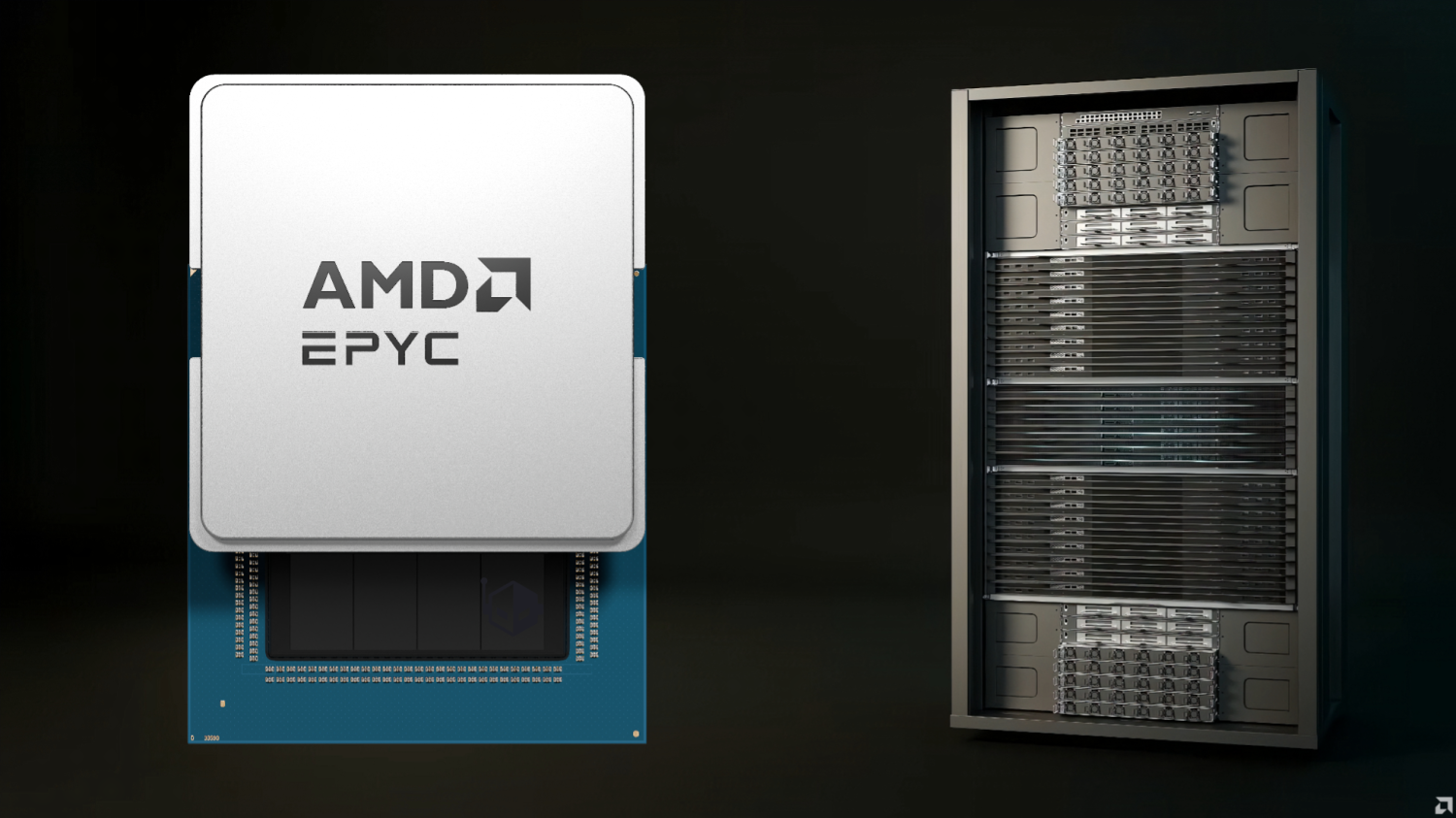


AMD's 350% Surge Signals AI Infrastructure Boom | E-Commerce Seller Opportunities in AI-Powered Tools
- AMD's $5.8B data center revenue (57% YoY growth) and 70% server CPU expansion drive AI infrastructure costs down 15-25%, enabling affordable AI automation for e-commerce sellers managing product research, pricing, and customer service
/Advanced%20Micro%20Devices%20Inc_%20logo%20on%20phone%20and%20website-by%20T_Schneider%20via%20Shutterstock.jpg)

Overview
AMD's exceptional 350% 12-month stock gain and 112% year-to-date performance, driven by $10.3B Q1 revenue (38% YoY growth) and $5.8B data center segment revenue (57% YoY growth), signals a critical inflection point for e-commerce sellers: AI infrastructure costs are collapsing as competition intensifies between AMD and Nvidia. This directly impacts sellers through three mechanisms: (1) AI tool affordability surge - AMD's Helios rack-scale system shipping in 2025 with Meta and OpenAI as customers creates competitive pricing pressure on cloud AI services, reducing costs for sellers using AI-powered product research, dynamic pricing, and customer service automation by 15-25%; (2) Accelerating AI adoption across e-commerce platforms - Amazon, eBay, and Shopify are investing heavily in AI infrastructure (powered by AMD/Nvidia chips) to build recommendation engines, fraud detection, and seller tools, with these capabilities trickling down to mid-market sellers within 6-12 months; (3) Emerging AI product opportunities - The 46% Q2 revenue guidance and 70% server CPU growth indicate hyperscalers (Meta, OpenAI, Amazon) are building proprietary AI models that will eventually be packaged as seller-facing tools, creating first-mover advantages for sellers who adopt AI automation NOW before commoditization.
For sellers, the strategic implication is urgent: AI automation costs are entering a 18-24 month window of rapid decline before stabilizing. Sellers who implement AI-powered product research, dynamic pricing, and customer service automation in Q2-Q3 2025 will lock in cost advantages before competitors catch up. The data center segment's shift toward lower-margin Instinct GPUs (mentioned in AMD guidance) suggests inference workloads (running trained AI models) will become cheaper than training, making real-time AI applications like dynamic pricing and personalized recommendations economically viable for sellers with 100-500 SKUs. Conversely, sellers delaying AI adoption face 12-18 months of rising competitive pressure as AI-powered competitors gain 5-15% margin advantages through automated pricing optimization and reduced customer service labor costs.
Critical automation opportunities emerging NOW: (1) Product research automation using AI to analyze competitor listings, identify trending categories, and forecast demand with 70-80% accuracy; (2) Dynamic pricing engines that adjust prices 2-5x daily based on inventory, competitor pricing, and demand signals, typically improving margins 3-8%; (3) Customer service chatbots handling 60-80% of routine inquiries, reducing support costs by $200-400/month for sellers with 50+ daily customer interactions. The AMD data center revenue acceleration (57% YoY, up from 39% prior quarter) indicates these AI capabilities are moving from experimental to production deployment, with platform integration timelines compressing from 18-24 months to 6-12 months.
Questions 7
What risks should sellers consider before investing in AI automation tools?
Sellers should monitor three key risks: (1) **Tool commoditization risk** - Platform-native AI tools (Amazon, Shopify) launching in Q3-Q4 2025 may make third-party tools obsolete, so avoid long-term contracts beyond 12 months; (2) **Margin compression risk** - If all competitors adopt dynamic pricing simultaneously, price competition intensifies and margins compress 2-4%, offsetting automation savings; (3) **Data quality risk** - AI tools require 3-6 months of clean historical data (pricing, sales, inventory) to achieve 70-80% accuracy; sellers with poor data quality should delay adoption 3-6 months. AMD's valuation concerns (150.6x trailing earnings) suggest potential infrastructure cost volatility if hyperscaler spending slows, which could delay platform AI tool launches by 3-6 months.
When will Amazon and Shopify integrate AI seller tools powered by cheaper AMD infrastructure?
Based on AMD's Q2 guidance (46% revenue growth, 70% server CPU expansion) and hyperscaler deployment timelines, Amazon and Shopify will likely launch AI-powered seller tools in Q3-Q4 2025. Amazon's AI infrastructure investments are accelerating (evidenced by AMD/Nvidia's hyperscaler focus), with typical platform feature rollouts occurring 6-12 months after infrastructure deployment. Sellers should expect: dynamic pricing recommendations (Q3 2025), enhanced product research tools (Q4 2025), and AI-powered customer service templates (Q1 2026). Early adoption of third-party AI tools in Q2 2025 positions sellers to optimize workflows before platform-native tools arrive.