


)



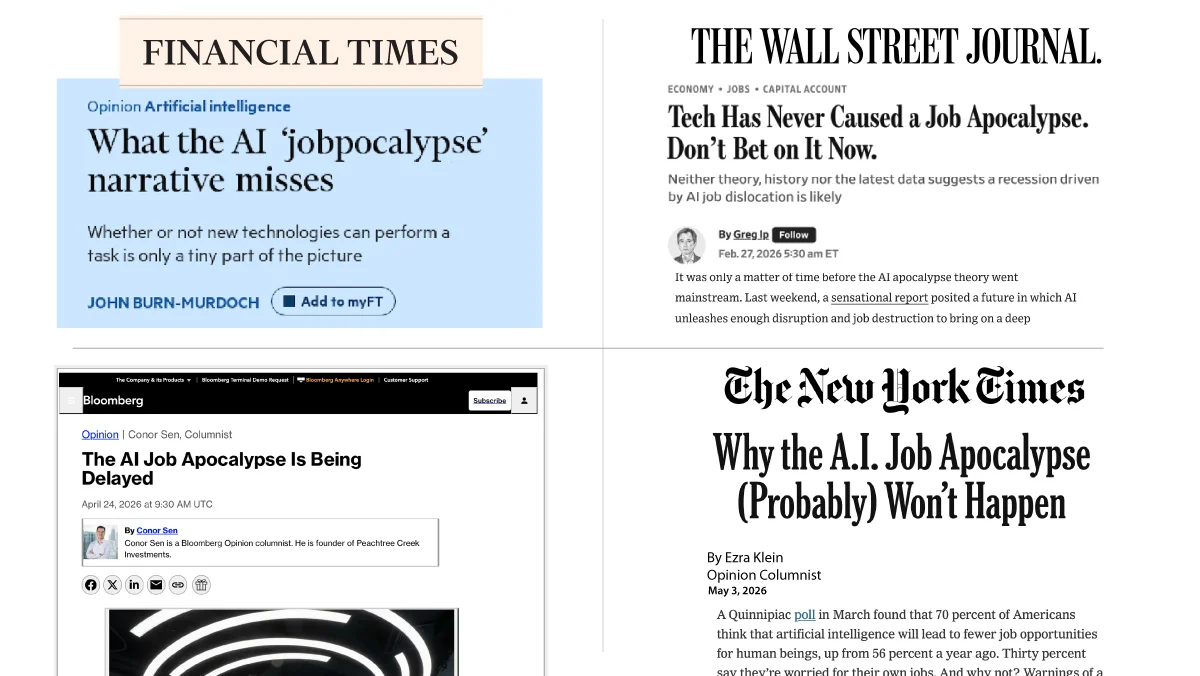
The AI workplace transformation reshaping e-commerce operations is fundamentally about task automation and role restructuring, not wholesale job elimination. McKinsey research confirms AI can automate 57% of work-related activities, yet this capability remains fragmented across specific job components rather than eliminating entire positions. Companies including Block (40% staff reduction), Coinbase (14% cuts), and Cloudflare (600% AI usage increase in 3 months) demonstrate that AI efficiency gains translate to accelerated product cycles—Coinbase engineers now ship products in days versus weeks—rather than proportional headcount reductions. Critically, Incedo reports clients achieve 20-25% productivity improvements without corresponding staff cuts because AI handles only discrete task components.
For e-commerce sellers, this trend signals immediate automation opportunities across product research, pricing optimization, customer service, and inventory management. The distinction between AI-as-productivity-tool versus AI-as-surveillance-system creates a strategic divide: higher-paid professionals (analysts, managers, consultants) benefit from AI removing routine tasks and enabling creative problem-solving, while warehouse and logistics workers experience AI as automated management systems monitoring scheduling and performance through opaque algorithms. One-third of UK employers already deploy monitoring software tracking worker activity, with Amazon and Meta implementing keystroke/mouse movement tracking. This surveillance-productivity divide directly impacts e-commerce operations: sellers can deploy AI for intelligent automation (dynamic pricing, demand forecasting, content generation) while warehouse/fulfillment staff face algorithmic management intensifying work pressure.
The operational reality: Microsoft's 20,000-worker survey across 10 countries reveals companies struggle adjusting employee metrics and incentive structures to AI-enabled workflows, creating near-term uncertainty. However, research demonstrates that involving workers in AI integration improves job quality and enables more effective adoption. For e-commerce sellers, this means immediate ROI opportunities exist in automating specific tasks (product listing optimization, competitor price monitoring, customer inquiry routing) while maintaining human oversight for quality assessment, problem-solving, and strategic decisions. The pattern suggests continuous role evolution rather than sudden displacement, with skills emphasis shifting toward quality assessment, AI tool proficiency, and critical thinking rather than traditional execution tasks. Sellers who restructure teams around AI-augmented workflows—rather than AI-replacement strategies—will capture 20-25% productivity gains while maintaining operational stability and worker engagement.
Measure ROI across four dimensions: (1) Productivity gains: target 20-25% improvements in task completion time without proportional staff reductions, (2) Cost reduction: calculate savings from automating specific tasks (pricing updates, content generation, customer routing), (3) Speed improvements: track product cycle acceleration (days versus weeks for shipping), (4) Quality metrics: monitor error rates, customer satisfaction, and conversion improvements from AI-augmented decisions. Cloudflare's 600% AI usage increase in 3 months provides a benchmark for adoption velocity. McKinsey's 57% automation potential across work activities suggests sellers should identify their highest-impact 20-30% of tasks for initial automation. Calculate monthly savings: if pricing optimization saves 10 hours/week at $50/hour, that's $2,000/month ROI. Track these metrics monthly to justify continued investment and identify expansion opportunities. Avoid measuring success solely by headcount reduction; instead, focus on productivity, speed, and quality improvements.
Microsoft's 20,000-worker survey reveals companies struggle adjusting employee metrics and incentive structures to AI-enabled workflows, creating near-term operational uncertainty. Key risks: (1) Opaque algorithmic management intensifying worker stress and reducing engagement, (2) Insufficient AI skills training creating capability gaps, (3) Surveillance-based AI systems damaging trust and productivity, (4) Role confusion as job titles evolve without clear career paths. Amazon software engineers report being surveilled and pressured to use AI, while Meta plans keystroke tracking—cautionary examples of surveillance-based approaches. The Guardian research emphasizes that work encompasses dignity, trust, and control beyond income. Sellers should monitor: worker sentiment regarding AI implementation, quality metrics for AI-automated tasks, compliance with transparent decision-making requirements, and training effectiveness. Avoid opaque algorithmic management; instead, involve workers in AI integration decisions and maintain human oversight for critical tasks.
The Guardian research highlights a critical divide: higher-paid professionals (analysts, managers, consultants) benefit from AI removing routine tasks and enabling creative thinking, while warehouse and logistics workers experience AI as automated management systems monitoring scheduling and performance through opaque algorithms. For e-commerce sellers, this means deploying AI for intelligent automation (dynamic pricing, demand forecasting, content generation) while avoiding surveillance-based management of fulfillment staff. One-third of UK employers already deploy monitoring software tracking worker activity, with Amazon and Meta implementing keystroke tracking. Research demonstrates that involving workers in AI integration improves job quality and enables more effective adoption. Sellers should prioritize transparent, contestable AI systems affecting pay and performance rather than opaque algorithmic management.
Incedo reports clients achieve 20-25% productivity improvements without proportional staff reductions because AI handles only specific job components rather than complete roles. For e-commerce sellers, this translates to automating discrete tasks like product listing optimization, competitor price monitoring, and customer inquiry routing while maintaining human oversight for quality assessment and strategic decisions. McKinsey research confirms AI can automate 57% of work activities, but this capability remains fragmented across job responsibilities. Real-world examples: Coinbase engineers ship products in days versus weeks using AI, while Cloudflare increased AI usage 600% in three months. Sellers should focus on task-level automation (pricing, content, customer service) rather than role elimination to capture these gains while maintaining operational stability.
E-commerce sellers can automate immediately: (1) Product research and competitive analysis using AI price monitoring tools, (2) Dynamic pricing optimization based on demand forecasting algorithms, (3) Product listing content generation and optimization, (4) Customer service routing and initial inquiry response via chatbots, (5) Inventory forecasting and reorder point calculations. These task-level automations deliver 20-25% productivity gains without requiring staff reductions. Amazon software engineers report using AI for productivity gains, while Anthropic's financial-focused agents handle pitchbooks and credit memos. The key: automate specific tasks (pricing, content, customer routing) rather than entire roles. This approach maintains human oversight for quality assessment while capturing efficiency gains. Sellers should prioritize tools that augment human decision-making rather than replace it.
Block reduced staff 40% citing AI efficiency gains, while Coinbase cut 14% because AI enables engineers to ship products in days versus weeks. Cloudflare increased AI usage 600% in three months. However, PwC's Dan Priest notes most companies haven't experienced mass layoffs, and whole job categories remain secure. Microsoft's 20,000-worker survey across 10 countries reveals companies struggle adjusting employee metrics and incentive structures to AI-enabled workflows, creating near-term operational uncertainty. For e-commerce sellers, this pattern suggests continuous role evolution rather than sudden displacement. Job titles are evolving—software engineers becoming 'builders' with code-writing as smaller responsibility portions. Sellers should restructure around AI-augmented workflows where humans handle quality assessment, problem-solving, and strategic decisions while AI handles execution tasks.
Sellers adopting AI-augmented workflows gain 20-25% productivity improvements, accelerated product cycles (days versus weeks for shipping), and 600%+ increases in AI tool utilization within 3 months. Cloudflare's rapid AI adoption demonstrates this acceleration pattern. The competitive moat comes from restructuring roles around AI augmentation rather than replacement: humans handle quality assessment, problem-solving, and strategic decisions while AI handles pricing optimization, demand forecasting, and content generation. McKinsey research confirms AI can automate 57% of work activities, but fragmented across job components—sellers who master task-level automation capture gains faster than competitors. The 2024 White House economic report emphasizes that the critical choice about AI's workplace impact is being made currently, workplace by workplace. Early adopters who implement transparent, worker-involved AI integration will outpace competitors struggling with metrics and incentive structure adjustments.
Britain's plans to expand AI skills across the workforce lack meaningful implementation: most business leaders acknowledge AI skills as competitive advantages but dedicate insufficient budgets to employee training, and few establish strong governance structures. This creates inequality hardening where better-paid workers receive AI training while lower-paid workers face surveillance and automated management. For e-commerce sellers, the solution involves: (1) Meaningful training in judgment and critical thinking, not just tool usage, (2) Transparent, contestable systems affecting pay and performance, (3) Worker involvement in technology implementation decisions, (4) Clear governance structures defining AI's role in decision-making. Research demonstrates that involving workers in AI integration improves job quality and enables more effective adoption. Sellers should allocate 3-5% of payroll to AI skills training, establish cross-functional AI governance committees, and communicate how AI augments rather than replaces human roles.
Measure ROI across four dimensions: (1) Productivity gains: target 20-25% improvements in task completion time without proportional staff reductions, (2) Cost reduction: calculate savings from automating specific tasks (pricing updates, content generation, customer routing), (3) Speed improvements: track product cycle acceleration (days versus weeks for shipping), (4) Quality metrics: monitor error rates, customer satisfaction, and conversion improvements from AI-augmented decisions. Cloudflare's 600% AI usage increase in 3 months provides a benchmark for adoption velocity. McKinsey's 57% automation potential across work activities suggests sellers should identify their highest-impact 20-30% of tasks for initial automation. Calculate monthly savings: if pricing optimization saves 10 hours/week at $50/hour, that's $2,000/month ROI. Track these metrics monthly to justify continued investment and identify expansion opportunities. Avoid measuring success solely by headcount reduction; instead, focus on productivity, speed, and quality improvements.
Microsoft's 20,000-worker survey reveals companies struggle adjusting employee metrics and incentive structures to AI-enabled workflows, creating near-term operational uncertainty. Key risks: (1) Opaque algorithmic management intensifying worker stress and reducing engagement, (2) Insufficient AI skills training creating capability gaps, (3) Surveillance-based AI systems damaging trust and productivity, (4) Role confusion as job titles evolve without clear career paths. Amazon software engineers report being surveilled and pressured to use AI, while Meta plans keystroke tracking—cautionary examples of surveillance-based approaches. The Guardian research emphasizes that work encompasses dignity, trust, and control beyond income. Sellers should monitor: worker sentiment regarding AI implementation, quality metrics for AI-automated tasks, compliance with transparent decision-making requirements, and training effectiveness. Avoid opaque algorithmic management; instead, involve workers in AI integration decisions and maintain human oversight for critical tasks.
The Guardian research highlights a critical divide: higher-paid professionals (analysts, managers, consultants) benefit from AI removing routine tasks and enabling creative thinking, while warehouse and logistics workers experience AI as automated management systems monitoring scheduling and performance through opaque algorithms. For e-commerce sellers, this means deploying AI for intelligent automation (dynamic pricing, demand forecasting, content generation) while avoiding surveillance-based management of fulfillment staff. One-third of UK employers already deploy monitoring software tracking worker activity, with Amazon and Meta implementing keystroke tracking. Research demonstrates that involving workers in AI integration improves job quality and enables more effective adoption. Sellers should prioritize transparent, contestable AI systems affecting pay and performance rather than opaque algorithmic management.
Incedo reports clients achieve 20-25% productivity improvements without proportional staff reductions because AI handles only specific job components rather than complete roles. For e-commerce sellers, this translates to automating discrete tasks like product listing optimization, competitor price monitoring, and customer inquiry routing while maintaining human oversight for quality assessment and strategic decisions. McKinsey research confirms AI can automate 57% of work activities, but this capability remains fragmented across job responsibilities. Real-world examples: Coinbase engineers ship products in days versus weeks using AI, while Cloudflare increased AI usage 600% in three months. Sellers should focus on task-level automation (pricing, content, customer service) rather than role elimination to capture these gains while maintaining operational stability.
E-commerce sellers can automate immediately: (1) Product research and competitive analysis using AI price monitoring tools, (2) Dynamic pricing optimization based on demand forecasting algorithms, (3) Product listing content generation and optimization, (4) Customer service routing and initial inquiry response via chatbots, (5) Inventory forecasting and reorder point calculations. These task-level automations deliver 20-25% productivity gains without requiring staff reductions. Amazon software engineers report using AI for productivity gains, while Anthropic's financial-focused agents handle pitchbooks and credit memos. The key: automate specific tasks (pricing, content, customer routing) rather than entire roles. This approach maintains human oversight for quality assessment while capturing efficiency gains. Sellers should prioritize tools that augment human decision-making rather than replace it.
Block reduced staff 40% citing AI efficiency gains, while Coinbase cut 14% because AI enables engineers to ship products in days versus weeks. Cloudflare increased AI usage 600% in three months. However, PwC's Dan Priest notes most companies haven't experienced mass layoffs, and whole job categories remain secure. Microsoft's 20,000-worker survey across 10 countries reveals companies struggle adjusting employee metrics and incentive structures to AI-enabled workflows, creating near-term operational uncertainty. For e-commerce sellers, this pattern suggests continuous role evolution rather than sudden displacement. Job titles are evolving—software engineers becoming 'builders' with code-writing as smaller responsibility portions. Sellers should restructure around AI-augmented workflows where humans handle quality assessment, problem-solving, and strategic decisions while AI handles execution tasks.
Sellers adopting AI-augmented workflows gain 20-25% productivity improvements, accelerated product cycles (days versus weeks for shipping), and 600%+ increases in AI tool utilization within 3 months. Cloudflare's rapid AI adoption demonstrates this acceleration pattern. The competitive moat comes from restructuring roles around AI augmentation rather than replacement: humans handle quality assessment, problem-solving, and strategic decisions while AI handles pricing optimization, demand forecasting, and content generation. McKinsey research confirms AI can automate 57% of work activities, but fragmented across job components—sellers who master task-level automation capture gains faster than competitors. The 2024 White House economic report emphasizes that the critical choice about AI's workplace impact is being made currently, workplace by workplace. Early adopters who implement transparent, worker-involved AI integration will outpace competitors struggling with metrics and incentive structure adjustments.
Britain's plans to expand AI skills across the workforce lack meaningful implementation: most business leaders acknowledge AI skills as competitive advantages but dedicate insufficient budgets to employee training, and few establish strong governance structures. This creates inequality hardening where better-paid workers receive AI training while lower-paid workers face surveillance and automated management. For e-commerce sellers, the solution involves: (1) Meaningful training in judgment and critical thinking, not just tool usage, (2) Transparent, contestable systems affecting pay and performance, (3) Worker involvement in technology implementation decisions, (4) Clear governance structures defining AI's role in decision-making. Research demonstrates that involving workers in AI integration improves job quality and enables more effective adoption. Sellers should allocate 3-5% of payroll to AI skills training, establish cross-functional AI governance committees, and communicate how AI augments rather than replaces human roles.
Measure ROI across four dimensions: (1) Productivity gains: target 20-25% improvements in task completion time without proportional staff reductions, (2) Cost reduction: calculate savings from automating specific tasks (pricing updates, content generation, customer routing), (3) Speed improvements: track product cycle acceleration (days versus weeks for shipping), (4) Quality metrics: monitor error rates, customer satisfaction, and conversion improvements from AI-augmented decisions. Cloudflare's 600% AI usage increase in 3 months provides a benchmark for adoption velocity. McKinsey's 57% automation potential across work activities suggests sellers should identify their highest-impact 20-30% of tasks for initial automation. Calculate monthly savings: if pricing optimization saves 10 hours/week at $50/hour, that's $2,000/month ROI. Track these metrics monthly to justify continued investment and identify expansion opportunities. Avoid measuring success solely by headcount reduction; instead, focus on productivity, speed, and quality improvements.
Microsoft's 20,000-worker survey reveals companies struggle adjusting employee metrics and incentive structures to AI-enabled workflows, creating near-term operational uncertainty. Key risks: (1) Opaque algorithmic management intensifying worker stress and reducing engagement, (2) Insufficient AI skills training creating capability gaps, (3) Surveillance-based AI systems damaging trust and productivity, (4) Role confusion as job titles evolve without clear career paths. Amazon software engineers report being surveilled and pressured to use AI, while Meta plans keystroke tracking—cautionary examples of surveillance-based approaches. The Guardian research emphasizes that work encompasses dignity, trust, and control beyond income. Sellers should monitor: worker sentiment regarding AI implementation, quality metrics for AI-automated tasks, compliance with transparent decision-making requirements, and training effectiveness. Avoid opaque algorithmic management; instead, involve workers in AI integration decisions and maintain human oversight for critical tasks.