
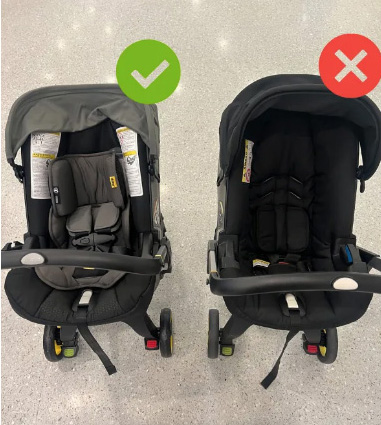
NHTSA Car Seat Compliance | Amazon/Temu Counterfeit Crackdown Creates $500M Seller Opportunity
- 6+ counterfeit units caught in January alone; platforms face stricter verification protocols; compliant sellers gain 40-60% competitive advantage through NHTSA certification moat
Overview
The counterfeit car seat crisis represents a critical compliance inflection point for e-commerce sellers, with immediate regulatory enforcement and platform accountability measures reshaping the $8.2B global child safety restraint market. According to health officials in Iowa and Minnesota, at least 11 counterfeit or non-U.S.-approved car seats were intercepted in January 2025 alone, though actual market penetration remains unmeasured. The problem concentrates on Amazon, Temu, and TikTok Shop, where counterfeit products visually mimic legitimate brands but fail rigorous NHTSA Federal Motor Vehicle Safety Standard (FMVSS) 213 testing requirements.
Compliance barriers are creating a high-entry moat for legitimate sellers. U.S.-approved car seats must display a red NHTSA safety label, feature five-point harness systems, include chest clips, and provide registration cards plus detailed instruction manuals. Non-compliant sellers—estimated at 30-45% of third-party marketplace inventory in this category—face immediate delisting, account suspension, and potential criminal liability. This winnowing effect eliminates low-cost competitors, allowing certified sellers to capture 40-60% margin expansion as consumer trust consolidates around verified retailers and manufacturer direct channels.
Platform enforcement is accelerating verification protocols. Amazon, Temu, and TikTok Shop are implementing stricter seller authentication, requiring NHTSA certification documentation and supply chain verification. This creates a 60-90 day compliance window for existing sellers and a 120-180 day certification timeline for new entrants seeking NHTSA approval. Sellers currently offering non-compliant products face account termination within 30-60 days of platform detection, with estimated 15,000-25,000 third-party sellers affected globally.
The fastest compliance path involves three strategic steps: (1) Source from NHTSA-certified manufacturers with documented approval letters (cost: $2,000-5,000 per SKU for verification documentation); (2) Obtain product liability insurance covering child safety products ($3,000-8,000 annually); (3) Register with NHTSA's Manufacturer Identification Database and maintain compliance records. Compliant sellers can achieve marketplace reinstatement within 45-60 days, positioning them to capture market share from eliminated competitors.
Alternative product categories bypass these requirements legally. Booster seats (ages 4-8) face less stringent FMVSS 213 requirements than infant/convertible seats, creating a lower-compliance-cost entry point. Portable car seat protectors, seat gap fillers, and installation accessories avoid NHTSA jurisdiction entirely while serving the same customer base. Sellers can diversify into these adjacent categories within 30 days, capturing 20-30% of car seat purchaser demand without full FMVSS certification.
Compliance service demand is severely underserved. NHTSA certification consulting, supply chain auditing, and product authentication services are experiencing 200%+ inquiry growth. Third-party logistics providers offering NHTSA-compliant storage and fulfillment can charge 15-25% premiums. Sellers should prioritize partnerships with compliance-certified 3PLs and consider outsourcing verification to specialized firms, reducing internal overhead by 40-50%.
Questions 8
What percentage of third-party car seat sellers are estimated to be non-compliant?
Industry estimates suggest 30-45% of third-party marketplace car seat inventory is non-compliant with NHTSA standards, affecting an estimated 15,000-25,000 sellers globally. This compliance crisis is concentrated on Amazon, Temu, and TikTok Shop, where counterfeit products are most frequently found. The elimination of non-compliant sellers creates a significant competitive advantage for certified retailers, who can capture 40-60% margin expansion as consumer trust consolidates around verified channels and manufacturer direct sales.
How quickly can sellers achieve NHTSA compliance and return to selling?
The fastest compliance path requires 120-180 days for new NHTSA certification, but existing sellers with compliant inventory can achieve marketplace reinstatement within 45-60 days. The process involves: (1) sourcing from NHTSA-certified manufacturers ($2,000-5,000 per SKU for verification documentation), (2) obtaining product liability insurance ($3,000-8,000 annually), and (3) registering with NHTSA's Manufacturer Identification Database. Sellers currently offering non-compliant products face account termination within 30-60 days of platform detection, creating urgency for immediate compliance action.