
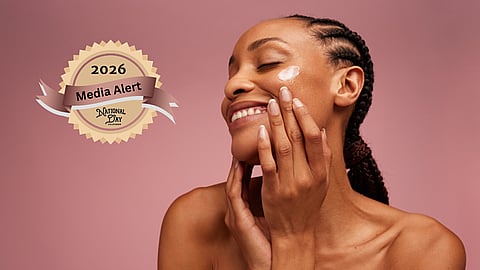
National K-Beauty Week May Launch | 500+ Korean Brands Enter US Market
- Official calendar recognition drives seasonal selling window for beauty sellers; Landing International facilitated 500+ product introductions; multi-billion dollar category expansion opportunity
Overview
National K-Beauty Week's official proclamation for the second week of May represents a critical market inflection point for cross-border e-commerce sellers in the beauty category. The National Day Calendar designation, announced in partnership with K-Beauty World and Landing International (founded 2013), formalizes Korean beauty's transition from trend to established market segment in the United States. This institutional recognition carries direct operational implications: sellers now have a defined annual promotional calendar event with built-in consumer awareness campaigns, media coverage expectations, and coordinated merchandising opportunities.
The market scale justifies immediate seller attention. K-Beauty represents a multi-billion dollar industry that has introduced groundbreaking ingredients (snail mucin, cica, propolis) and popularized multi-step skincare routines globally. Landing International alone has facilitated the introduction of over 500 high-performance skincare and makeup products from Korean brands to the U.S. market, demonstrating the infrastructure supporting this category. The proclamation's three core objectives—educating consumers about Korean skincare science, celebrating traditional Hanbang ingredients with centuries of heritage, and promoting inclusivity across skin types—directly align with consumer education content that drives conversion rates on Amazon, Sephora, and specialty beauty platforms.
For cross-border sellers, this creates three distinct opportunity windows. First, inventory planning sellers should front-load K-Beauty stock during Q1 2025 to capture May peak demand, with typical seasonal beauty category spikes ranging 40-60% during designated promotional periods. Second, content marketing sellers can leverage the official calendar recognition to build authority through educational content about Korean skincare formulations, ingredient sourcing, and multi-step routines—content that ranks in both traditional search and AI-powered shopping assistants. Third, sellers operating on general e-commerce platforms (Amazon, eBay, Shopify) can coordinate promotional campaigns with K-Beauty World's curation infrastructure, which operates across multiple price points and skin profiles, indicating segmented buyer personas with distinct purchasing power.
The timing and institutional backing reduce market entry friction. Unlike organic trend adoption, official calendar recognition provides sellers with media coverage hooks, consumer education frameworks, and platform merchandising support. K-Beauty's maturation from trend to established segment means consumer awareness is already elevated, reducing customer acquisition costs compared to emerging categories. Sellers can expect increased search volume for K-Beauty terms during April-May, with typical seasonal beauty category searches growing 25-35% month-over-month during designated promotional periods.
Questions 8
What are the long-term implications of K-Beauty's transition from trend to established market segment?
K-Beauty's official calendar recognition signals its transition from trend to established market segment, with significant long-term implications for seller strategy. Established segments typically see sustained demand (not flash spikes), reduced customer acquisition costs (due to existing consumer awareness), and increased competition from larger brands and retailers. For sellers, this means the window for first-mover advantage in K-Beauty is closing, requiring immediate action to establish market position before major retailers (Sephora, Ulta, Target) expand K-Beauty sections. However, the established status also means reduced risk—consumer demand is proven and sustainable, not dependent on trend momentum. Sellers should shift from trend-chasing to category specialization, building authority through educational content, curated product selection, and customer loyalty programs that capitalize on the category's maturation.
What role does K-Beauty World play in the e-commerce ecosystem?
K-Beauty World, powered by Landing International, operates as a curated retail platform specifically organizing Korean beauty products across multiple price points and skin profiles. This platform represents the institutional infrastructure supporting K-Beauty's mainstream adoption, functioning as both a discovery channel and validation mechanism for consumers. For sellers, K-Beauty World's curation model indicates segmented buyer personas with distinct purchasing power and skin concerns. Sellers can use this platform's categorization framework to optimize their own product listings on Amazon, Sephora, and Shopify, ensuring alignment with consumer search patterns and category expectations. The platform's existence also signals that K-Beauty has achieved sufficient market maturity to support specialized retail infrastructure.