




eBay Marketplace Stability Secured | Sellers Benefit from Platform Independence & Strategic Focus
- eBay rejects $56B GameStop acquisition (May 12, 2026), maintains operational autonomy, and accelerates focus on high-margin categories like trading cards, collectibles, and luxury goods—creating new seller opportunities


































Overview
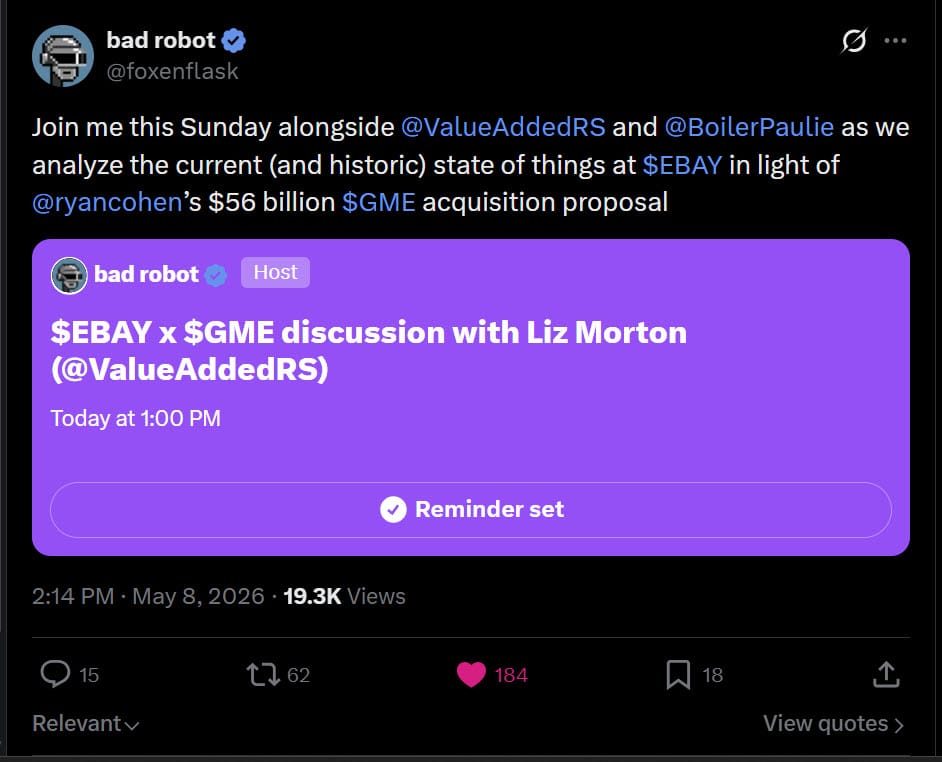
eBay's decisive rejection of GameStop's $56 billion unsolicited takeover bid on May 12, 2026, represents a critical inflection point for cross-border e-commerce sellers. eBay Chairman Paul Pressler declared the proposal "neither credible nor attractive," citing financing gaps ($20B committed by TD Securities against $9B GameStop cash reserves), operational integration risks, and excessive debt burden that Moody's Ratings flagged as credit-negative. This rejection eliminates uncertainty around potential ownership disruption and signals eBay's commitment to maintaining its differentiated global marketplace strategy under current CEO Jamie Iannone's leadership.
The strategic implications for sellers are substantial. eBay's board emphasized confidence in the company's "strengthened execution, enhanced marketplace and seller experience, and consistent capital returns to shareholders." The company's stock has appreciated 24% year-to-date, reflecting successful repositioning against Amazon, Walmart, Shein, and Facebook Marketplace. Critically, eBay highlighted strategic focus on high-value categories—trading cards, collectibles, and used luxury goods—which represent emerging growth vectors for sellers. These categories typically command 15-25% higher margins than commodity electronics and generate strong repeat-purchase behavior. The rejection preserves eBay's current fee structure (12.9% final value fees for most categories) and operational policies, avoiding the cost-cutting measures GameStop proposed (workforce reduction, marketing spend cuts) that could have degraded seller support infrastructure.
Market dynamics reveal why this rejection strengthens seller positioning. GameStop's failed bid exposed the company's weak financial foundation—it attempted to acquire a company nearly 4x its market value while simultaneously selling merchandise on eBay itself (including a $4,950 GameStop cap and $3,151 mug) to finance the acquisition. This desperation signaled to the market that traditional retail players lack credible paths to e-commerce dominance through acquisition. eBay's rejection reinforces that established marketplace operators prioritize strategic autonomy over consolidation, creating stability for the 1.5M+ active sellers on the platform. The company's focus on high-value categories aligns with consumer behavior shifts toward collectibles and authenticated luxury goods—categories where eBay's reputation and escrow systems provide competitive advantages over Amazon and emerging platforms.
For sellers, this creates three concrete opportunities: (1) Category expansion into trading cards and collectibles—eBay's strategic focus signals platform investment in authentication tools, buyer protection, and marketing for these categories, reducing seller risk; (2) Used luxury goods positioning—eBay's emphasis on this segment indicates growing demand and platform support for authentication and grading services, enabling sellers to capture higher-value transactions; (3) Platform stability for long-term planning—the rejection eliminates acquisition-related operational disruption, allowing sellers to confidently invest in inventory, tools, and marketing without fear of policy changes from new ownership.
Questions 8
How does this rejection affect eBay's competitive position versus Amazon and Walmart?
eBay's rejection strengthens its competitive positioning by maintaining strategic focus on differentiated categories where it holds advantages. While Amazon dominates commodity electronics and Walmart emphasizes price competition, eBay's emphasis on collectibles, trading cards, and authenticated luxury goods targets higher-margin segments with less direct Amazon competition. The company's 24% year-to-date stock appreciation reflects investor confidence in this differentiation strategy. For sellers, this means eBay will likely continue investing in category-specific tools (authentication, grading, escrow services) that create competitive moats against Amazon's broader but less specialized approach. Sellers in collectibles and luxury goods should prioritize eBay as their primary platform.
What financing and operational risks did eBay identify in GameStop's proposal?
eBay's rejection letter cited three critical issues: (1) Financing gap—GameStop had $9B cash plus $20B committed financing from TD Securities, leaving a substantial shortfall for the $56B acquisition; (2) Credit concerns—Moody's Ratings assessed the deal as credit-negative due to excessive leverage, and TD's financing required maintaining investment-grade credit ratings; (3) Integration risks—combining eBay's global marketplace operations with GameStop's 1,600 U.S. retail locations presented operational complexity. GameStop's credibility was further undermined by selling merchandise on eBay itself (including a $4,950 cap) to finance the acquisition, signaling financial desperation rather than strategic confidence.