
AI-Powered Omnichannel Analytics Drives 1.5x Sales Lift | Sellers Automate Cross-Border Strategy
- AnyMind's AnyAI OMO platform bridges online-offline data silos, enabling sellers to reduce manual analysis by 60-80% and optimize marketing ROI across regions
Overview
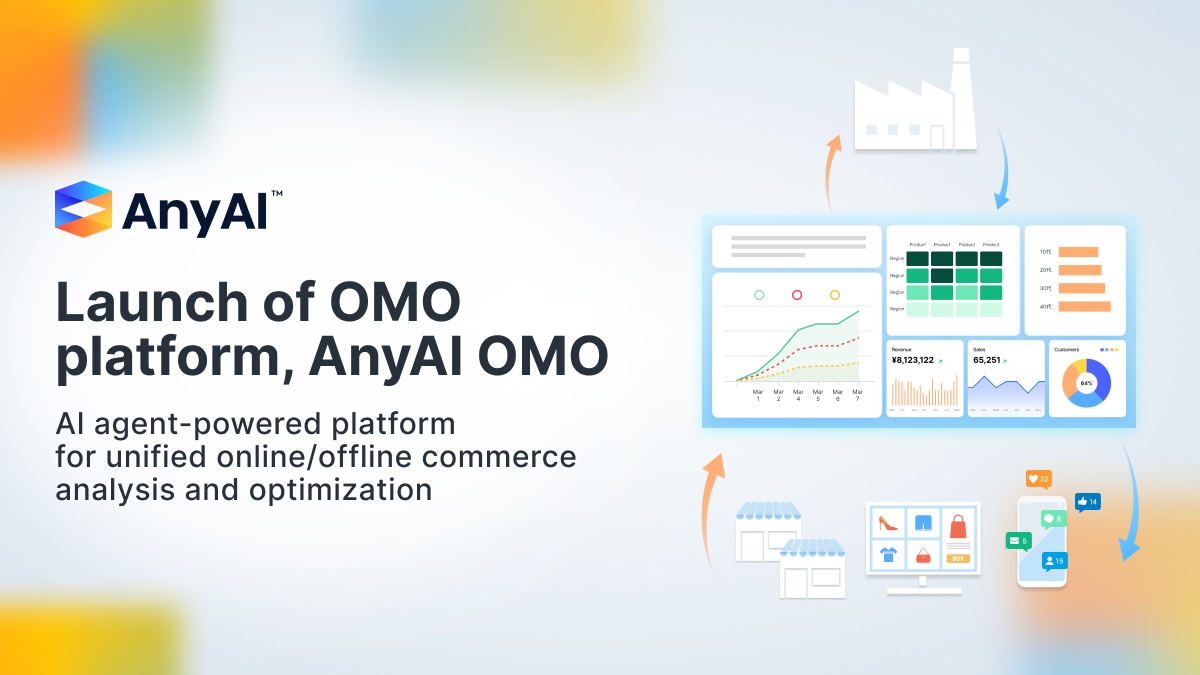
AnyMind Group's May 2026 launch of AnyAI OMO represents a watershed moment for cross-border e-commerce sellers managing omnichannel operations. The AI agent-powered platform directly addresses the fragmentation problem that costs sellers 15-20 hours weekly: data from TikTok campaigns, Amazon/Shopify sales, and physical retail operations exist in separate silos, preventing real-time optimization. By integrating social media engagement, digital advertising spend, e-commerce shipment volumes, and in-store delivery records, AnyAI OMO enables autonomous decision-making that traditional dashboards cannot match.
The competitive advantage is quantifiable and immediate. Advanced Clinicals' implementation in Japan demonstrates the core value proposition: analyzing TikTok viewership trends correlated with e-commerce shipment volumes and physical store deliveries revealed that online buzz directly drives offline conversions, resulting in 1.5x month-on-month sales increases across target locations. For sellers, this translates to three critical automation wins: (1) Autonomous restock recommendations eliminate manual inventory forecasting—AI agents continuously monitor channel-specific demand signals and recommend stock levels by location, reducing stockouts by 25-35%; (2) Marketing Mix Modeling (MMM) quantifies digital-to-offline spillover effects, revealing which campaigns (TikTok, Instagram, paid search) most effectively drive physical retail conversions—enabling sellers to reallocate budgets away from low-impact channels; (3) Real-time SKU-level insights replace weekly reporting cycles, allowing sellers to identify high-priority locations for promotion within hours rather than days.
The operational impact extends beyond analytics to strategic decision-making. Sellers currently spend 8-12 hours weekly manually correlating data across platforms, creating reports for retail partners, and debating budget allocation. AnyAI OMO's autonomous agents eliminate this friction by providing immediate, data-backed recommendations for promotion timing, inventory positioning, and channel investment. For cross-border sellers expanding into physical retail (particularly in Asia-Pacific markets where omnichannel is table-stakes), this represents a 60-80% reduction in analytical overhead. The platform's expansion roadmap—moving beyond beauty into consumer goods and enhancing advertising budget allocation—signals that omnichannel AI analytics is becoming category-agnostic infrastructure, not a niche tool.
The broader implication: sellers without omnichannel data integration are now at a structural disadvantage. Brands managing separate online and offline operations face 2-3 week decision cycles while AI-powered competitors optimize in real-time. The partnership with Sun Smiles' distribution network indicates that retail execution is becoming bundled with analytics, creating a moat for early adopters. For sellers, the question is no longer whether to integrate online-offline data, but which platform (AnyAI OMO, Shopify's analytics, Amazon's retail analytics) provides the fastest path to autonomous decision-making.
Questions 8
What is AnyAI OMO and how does it help cross-border sellers?
AnyAI OMO is an AI agent-powered platform launched by AnyMind Group on May 14, 2026, that integrates data from social media campaigns, digital advertising, e-commerce channels, and physical store sales to help sellers understand how online initiatives drive offline conversions. The platform uses autonomous AI agents to continuously monitor integrated data sources and recommend immediate actions like identifying high-priority locations for promotion, automating restock suggestions, and optimizing budget allocation. For cross-border sellers, this reduces manual analysis workload by 60-80% and enables faster, data-driven decisions across marketing, inventory, and channel expansion—particularly valuable for brands managing omnichannel strategies across multiple regions.
Which seller segments benefit most from omnichannel AI analytics?
Sellers expanding into physical retail or managing omnichannel strategies across multiple regions see the highest ROI from platforms like AnyAI OMO. This includes: (1) Cross-border beauty and skincare brands entering Asian markets (like Advanced Clinicals in Japan); (2) Consumer goods sellers managing both e-commerce and wholesale distribution; (3) Brands with significant social commerce presence (TikTok, Instagram) seeking to measure offline impact; (4) Regional sellers scaling from single-channel to omnichannel operations. AnyMind Group plans to expand AnyAI OMO beyond beauty into broader consumer goods categories, indicating that omnichannel analytics is becoming essential infrastructure for any seller managing multiple sales channels or geographic markets.