
Ocean Freight Rate Collapse | 66% Asia-US Cost Savings for E-Commerce Sellers
- Evergreen Marine Q1 profit plunges 71% as container rates fall to $1,533/FEU; immediate cost advantages for cross-border importers shipping 500+ TEU monthly
Overview
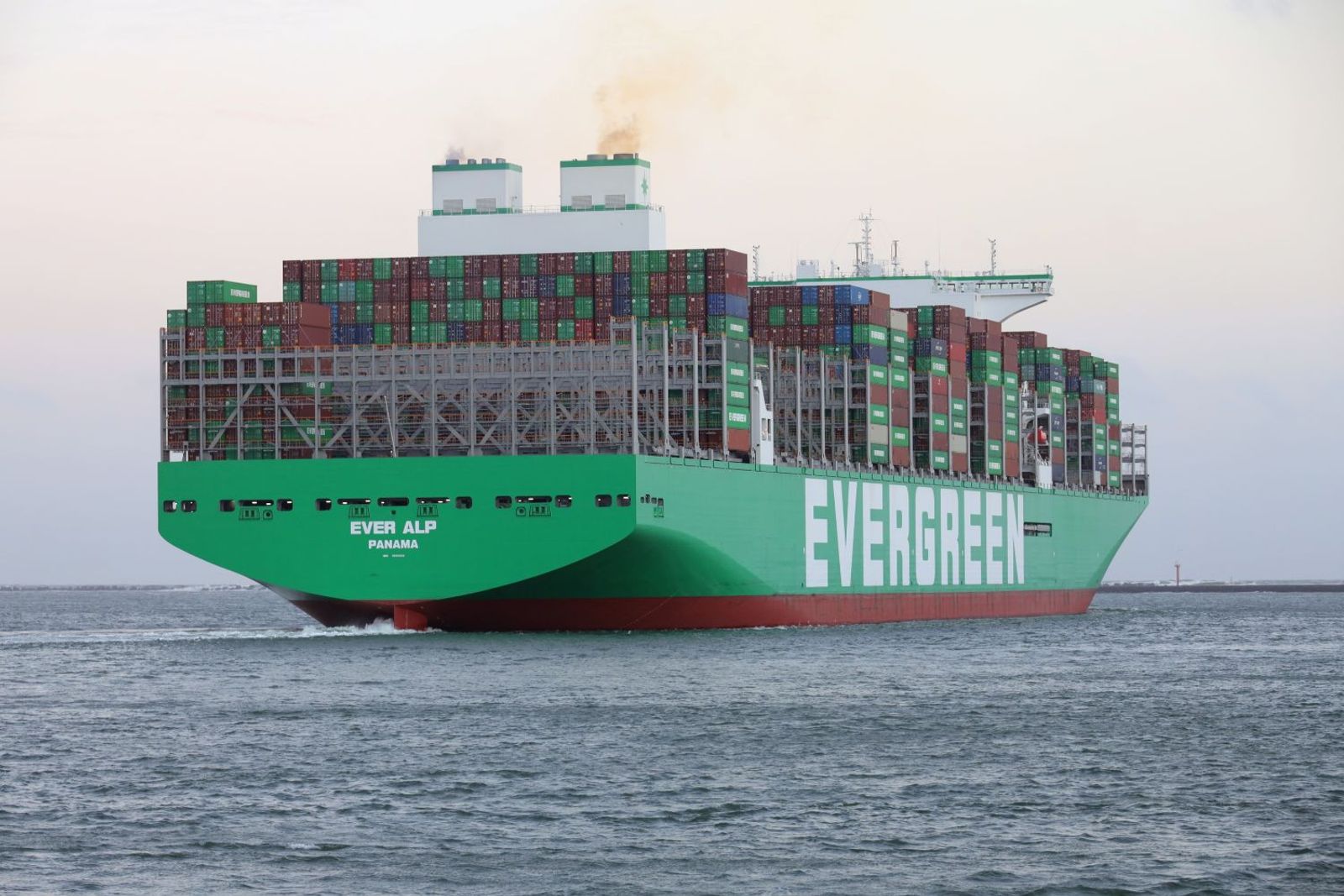
The container shipping market is experiencing unprecedented rate compression that directly benefits cross-border e-commerce sellers importing from Asia to North America. Evergreen Marine, Taiwan's largest container shipping line, reported a devastating 71% decline in Q1 2026 net profit ($263M vs. $897M YoY), driven entirely by freight rate collapse rather than volume loss. The company's average revenue per TEU dropped 22% to $968/TEU, while the Asia-US East Coast route—the critical e-commerce corridor—experienced a catastrophic 66% rate decline to $1,533 per FEU (forty-foot equivalent unit). Container volumes remained stable at 2.6 million TEUs, confirming this is pure rate compression affecting the entire industry.
For sellers importing consumer goods, electronics, apparel, and home products from China, Vietnam, and Southeast Asia, this represents an immediate 15-22% reduction in landed costs. A typical 40-foot container from Shanghai to Los Angeles that cost $4,500-5,200 in 2025 now costs $1,500-1,800, translating to $37-56 per unit savings on 40-unit shipments. This margin expansion is particularly valuable for categories with 25-35% gross margins where freight represents 8-12% of landed cost. Sellers should immediately lock in rates with secondary carriers (ONE, Maersk, CMA CGM) offering competitive pricing, as major carriers like Evergreen face financial stress that could trigger service disruptions, unexpected surcharges, or capacity constraints within 60-90 days.
However, the underlying market weakness signals softer global trade demand and potential carrier consolidation risks. The 66% rate decline on Asia-US East Coast routes indicates severe overcapacity and weakening e-commerce import demand, suggesting this pricing advantage may be temporary (3-6 months). Sellers should execute a dual strategy: (1) immediately increase inventory purchases from Asia-based suppliers for Q3-Q4 peak season, targeting 60-90 day supply of fast-moving SKUs in electronics, home goods, and seasonal apparel; (2) shift 20-30% of inventory from FBA to 3PL warehouses in Los Angeles, Long Beach, and New Jersey to capture lower inbound freight costs before rates stabilize; (3) negotiate 90-day rate locks with carriers before May 2026 to protect against sudden price increases if carriers exit unprofitable routes. Monitor Evergreen's service reliability closely—financial distress often precedes service failures, port congestion, or unexpected detention charges that could offset freight savings.
Questions 8
How does Evergreen's profit collapse affect service quality and transit times?
Evergreen's 71% profit decline typically correlates with reduced vessel frequency, port congestion, and extended transit times within 60-90 days. Financially stressed carriers often reduce sailings to match demand, creating bottlenecks at major ports (Shanghai, Los Angeles, Long Beach). Expect potential 3-7 day transit time increases and higher detention charges at destination ports. Sellers should build 5-7 day buffer into inventory planning and consider air freight for time-sensitive SKUs. Monitor Evergreen's service alerts and port congestion reports weekly; if transit times exceed 25 days (vs. typical 18-20 days), shift volume to healthier carriers immediately.
What inventory actions should sellers take in the next 30 days to capitalize on low freight rates?
Execute three immediate actions: (1) Audit current inventory levels by category and identify fast-moving SKUs (BSR <20K) requiring 60-90 day supply; (2) Contact top 3-5 Asia suppliers and place orders for Q3-Q4 peak season at current freight rates, targeting 20-30% volume increase vs. 2025; (3) Negotiate 90-day rate locks with Maersk, ONE, and CMA CGM by May 31, 2026, locking in $1,500-1,800/FEU pricing. Quantify savings: a seller importing 50 containers monthly saves $150K-180K over 90 days at current rates. Reinvest 30-40% of freight savings into inventory to maximize peak season sales.