


Rising Bond Yields Impact E-Commerce Seller Financing | 2025 Cost Analysis
- Two-decade high yields increase inventory financing costs 8-15% for cross-border sellers; working capital pressure intensifies for SMBs relying on credit lines






Overview
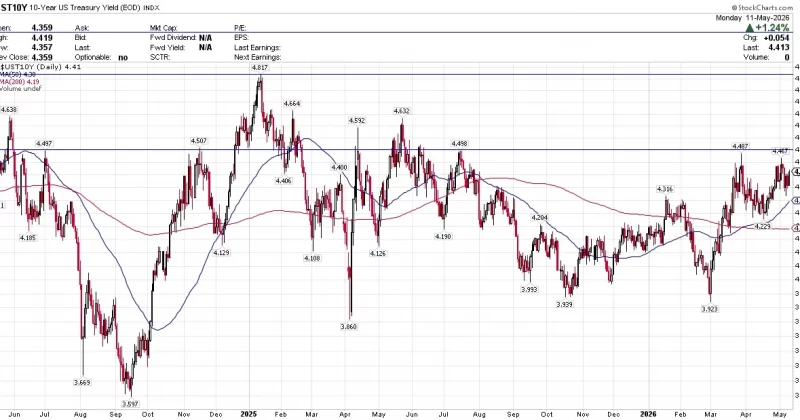
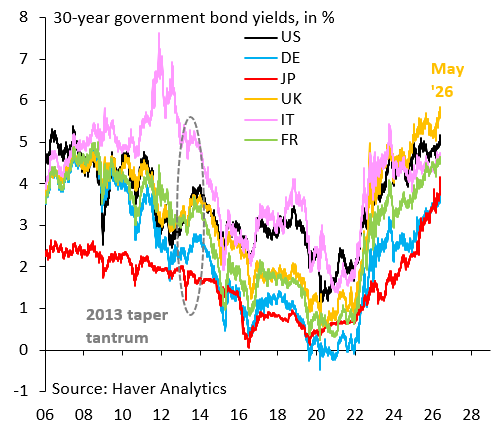
Bond yields reaching near two-decade highs represent a critical macroeconomic shift directly impacting e-commerce seller financing costs and working capital management. When US Treasury yields and corporate bond rates climb, borrowing costs for inventory financing, business expansion loans, and working capital credit lines increase proportionally—typically adding 150-300 basis points to seller financing APRs. For cross-border e-commerce sellers managing inventory across multiple regions, this yield environment creates immediate operational pressure: a seller with $500K in inventory financing at 8% APR now faces potential rates of 9.5-11.5%, translating to $7,500-$17,500 in additional annual interest expense.
The investor divergence highlighted in the news reflects uncertainty about economic growth trajectories and inflation expectations. This uncertainty directly affects consumer spending patterns across e-commerce categories—discretionary items (electronics, apparel, home goods) typically see 5-12% demand softening during periods of rising rates, as consumers delay purchases and reduce cart values. Simultaneously, elevated yields signal central bank tightening cycles, which strengthen the US dollar and weaken emerging market currencies. For sellers sourcing from Asia (China, Vietnam, India) and selling into US/EU markets, this currency headwind compresses margins by 3-8% as import costs rise in local currency terms while selling prices remain fixed in stronger currencies.
Financing product availability shifts dramatically during high-yield environments. Traditional inventory financing from banks becomes more expensive and selective—lenders tighten credit standards, requiring higher DSCR (debt service coverage ratios) and larger down payments. However, alternative financing providers (fintech lenders, supply chain finance platforms) often maintain more aggressive pricing to capture market share. Sellers should immediately evaluate: (1) Invoice factoring at 1.5-3.5% monthly rates as working capital alternative to inventory loans; (2) Supply chain financing platforms (Tradeshift, Fintech Collective partners) offering 30-60 day payment term extensions at 4-7% APR; (3) Marketplace lending (OnDeck, Kabbage) targeting SMB sellers with rates 12-18% APR but faster approval (24-48 hours).
Cross-border payment costs also increase in high-yield environments. FX hedging costs rise as currency volatility increases—sellers protecting against GBP/EUR weakness now pay 0.5-1.2% hedging premiums versus 0.2-0.4% in stable rate periods. Payment processing fees for international transfers (Wise, Payoneer, bank wires) remain stable, but settlement delays extend 2-4 days as banks manage liquidity more conservatively, creating cash flow timing gaps. For sellers with monthly cross-border payment volumes exceeding $50K, these timing delays can lock up $15-30K in working capital unnecessarily.
Questions 8
What consumer spending patterns should sellers expect when bond yields reach two-decade highs?
High bond yields signal economic uncertainty and rising consumer borrowing costs, typically reducing discretionary spending 5-12%. **Category impacts**: Electronics and home goods see 8-12% demand softening as consumers delay purchases; apparel and accessories decline 5-8% as consumers trade down to value segments; luxury goods drop 15-20% as high-income consumers reduce spending. **Seller strategy**: Shift inventory mix toward value-oriented products (budget electronics, basics apparel) with faster turnover. Monitor **Amazon Best Seller Rank (BSR)** trends in your categories—rising BSRs indicate demand softening. Increase **PPC spending efficiency** (target ACOS 25-35%) to capture remaining demand before competitors do.
How should sellers adjust inventory strategy when financing costs increase 8-15%?
Higher financing costs make inventory carrying costs more expensive, requiring sellers to optimize turnover velocity. **Immediate adjustments**: (1) Reduce SKU count by 20-30%, focusing on top 80% revenue generators with 45-60 day inventory turns; (2) Shift to **just-in-time sourcing** with suppliers offering 15-30 day payment terms, reducing inventory holding periods; (3) Increase **pre-order and made-to-order** models, converting inventory financing to customer prepayment; (4) Evaluate **3PL partnerships** where providers finance inventory, shifting carrying costs to logistics partners. For a seller with $500K inventory at 10% carrying cost, reducing inventory 25% saves $12,500 annually—offsetting financing rate increases.