
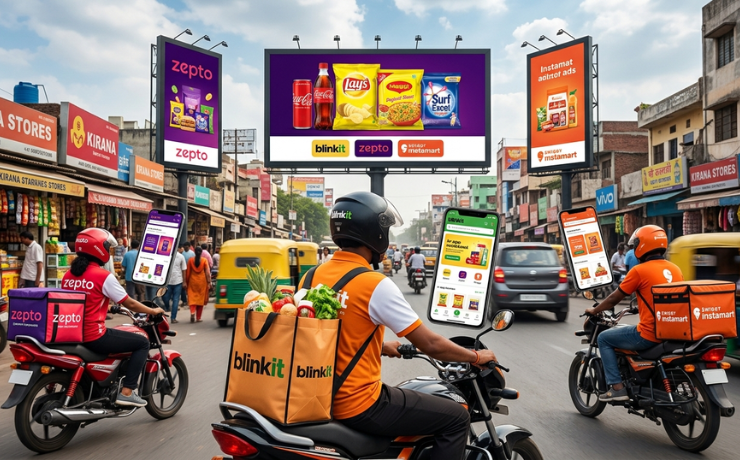
Retail Media Networks on Quick-Commerce Platforms | India's $2B+ Ad Opportunity for Sellers
- Blinkit, Zepto, Swiggy Instamart shift from logistics to high-intent advertising channels; FMCG/D2C brands competing for premium placements with measurable ROI and immediate attribution
Overview
Quick-commerce platforms in India—Blinkit, Zepto, and Swiggy Instamart—are fundamentally reshaping digital advertising by evolving from emergency delivery services into powerful retail media networks. Unlike traditional digital advertising channels, these platforms offer brands unprecedented access to high-intent consumers at the exact moment of purchase decision-making. The shift mirrors global trends visible through Amazon Advertising, Walmart Connect, and Instacart Ads, but India's market demonstrates unique intensity due to rapid behavioral infrastructure adoption and consumer frequency patterns. Consumers now use these apps for late-night cravings, forgotten essentials, impulse purchases, office snacks, and planned grocery shopping—creating discovery and conversion moments that happen almost simultaneously.
The advertising opportunity centers on first-party transaction data and deterministic consumer insights. Platforms leverage behavioral intelligence to understand what consumers buy, when they buy, purchase frequency, price sensitivities, and product affinities—knowledge increasingly valuable as privacy regulations and cookie deprecation disrupt traditional digital advertising globally. FMCG giants, D2C brands, beverage companies, personal care players, and electronics brands are aggressively competing for premium placements including sponsored listings, search placements, homepage banners, and category dominance. Marketers willingly pay premium rates due to immediate attribution and measurable ROI; a top search placement for snacks during peak evening hours can influence purchasing outcomes more immediately than expensive awareness campaigns elsewhere. This creates rare advertising environments where performance optimization is directly measurable and tied to sales velocity.
However, rapid expansion introduces emerging tensions and platform dependency risks. As sponsored inventory expands, questions arise about consumer experience degradation, potential manipulation of discovery mechanisms, and visibility tax dynamics similar to large ecommerce marketplaces. Brands becoming overly reliant on paid visibility risk losing negotiating leverage as bidding wars intensify. The industry is transitioning from experimental line items to serious strategic conversations in boardrooms across India's consumer economy, signaling that retail media networks on quick-commerce platforms will become essential marketing channels for sellers targeting urban Indian consumers with immediate purchase intent and high conversion propensity.
Questions 8
How are quick-commerce platforms in India becoming advertising powerhouses?
Blinkit, Zepto, and Swiggy Instamart have transitioned from emergency delivery services to embedded daily utilities for urban consumers, creating unprecedented advertising opportunities through retail media networks. These platforms leverage first-party transaction data and deterministic consumer insights—knowledge of what consumers buy, when they buy, purchase frequency, price sensitivities, and product affinities. Unlike traditional digital advertising, quick-commerce platforms offer brands access to high-intent consumers at the exact moment of purchase decision-making, enabling discovery and conversion to happen almost simultaneously. This creates rare advertising environments where performance optimization is directly measurable and tied to immediate sales velocity, making them increasingly attractive to FMCG giants, D2C brands, beverage companies, personal care players, and electronics brands willing to pay premium rates for visibility.
Which product categories are competing most aggressively for quick-commerce ad placements?
FMCG giants, D2C brands, beverage companies, personal care players, and electronics brands are aggressively competing for premium placements on quick-commerce platforms. These categories benefit most from high-intent consumer targeting because they align with impulse purchases, forgotten essentials, office snacks, and planned grocery shopping patterns. The competitive intensity reflects the immediate attribution advantage—brands can directly measure which sponsored placements drive sales velocity. Premium placements command higher CPCs because marketers recognize the conversion advantage of reaching consumers during active purchase moments rather than awareness phases.