



China's Real Estate Sector Signals Structural Downturn with 15.9% Investment Collapse
- Unprecedented Contraction Reveals Deeper Economic Transformation for Investors and Developers


Overview
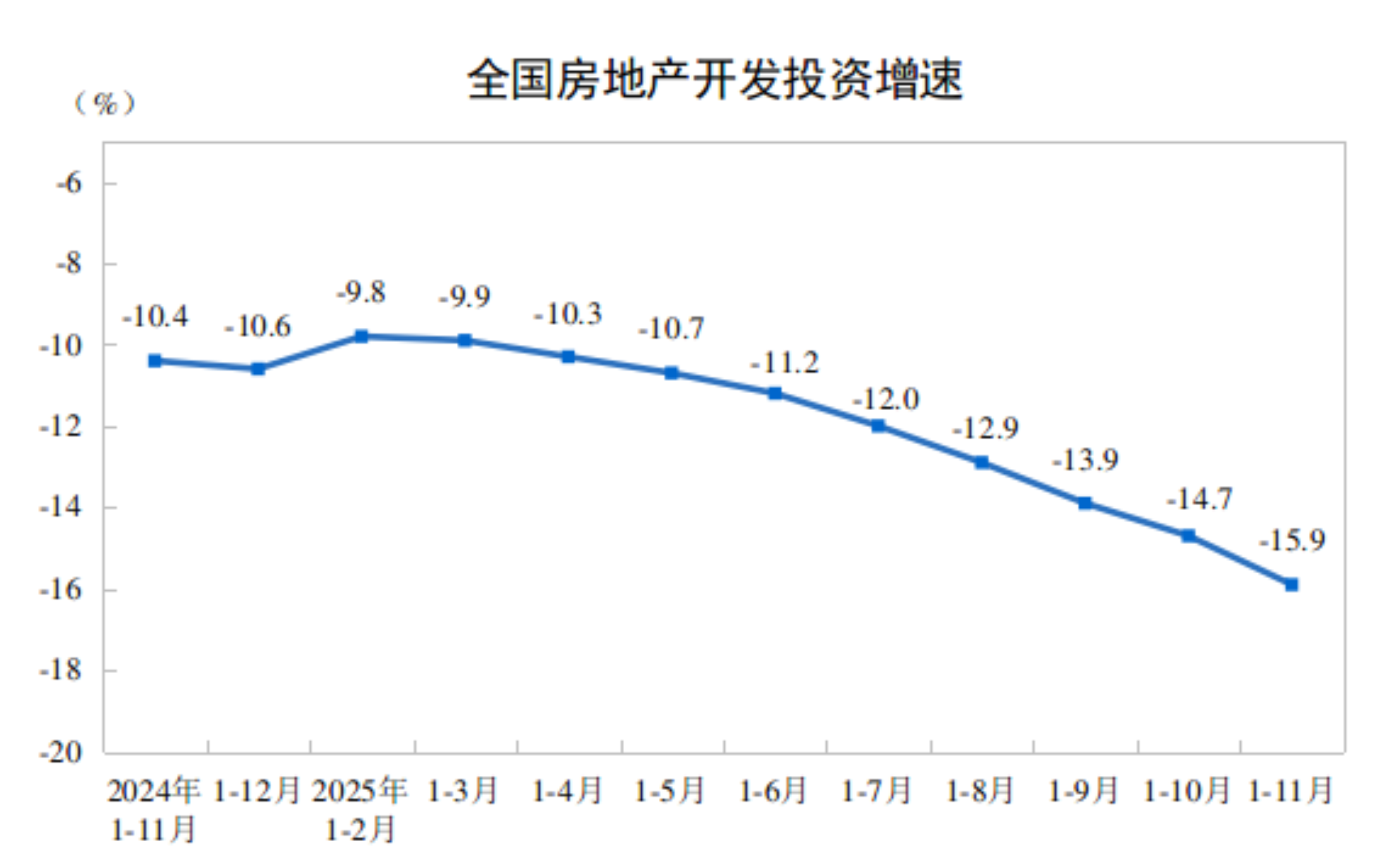
China's real estate sector is experiencing a profound structural transformation, with the National Bureau of Statistics revealing a dramatic 15.9% year-on-year decline in development investment that signals far more than a cyclical downturn. The data exposes a systematic recalibration of the country's economic growth model, moving away from property-driven expansion toward more sustainable development strategies.
Residential investment, which constitutes the core of real estate activity, plummeted by 15% to 6,043.2 billion yuan, reflecting deeper challenges beyond market sentiment. Key performance indicators paint a stark picture: floor space under construction decreased 9.6%, newly started buildings fell 20.5%, and completed buildings declined 18.0%. These metrics suggest a fundamental restructuring of China's urban development paradigm.
The investment climate remains particularly challenging, with the Real Estate Development Climate Index standing at a concerning 91.9 in November. Funding availability for real estate enterprises contracted by 11.9%, with domestic loans, self-raised funds, and individual mortgage loans all experiencing significant reductions. This points to a systemic deleveraging process that extends beyond temporary market corrections.
For cross-border investors and developers, the implications are profound. The persistent decline suggests deeper structural issues potentially stemming from regulatory constraints, economic uncertainties, and strategic market recalibration. Adaptive strategies will be crucial – this includes diversifying investment portfolios, exploring alternative urban development models, and developing more flexible financing mechanisms that can navigate this transformative landscape.
The data signals a critical inflection point: China is not just experiencing a real estate downturn, but is actively reimagining its urban growth trajectory. Stakeholders must view this not as a crisis, but as a strategic reset that will reshape investment opportunities across multiple sectors.
Questions 3
What opportunities exist for investors in this transforming market?
Investors should focus on adaptive strategies like diversifying portfolios, exploring alternative urban development models, and developing flexible financing mechanisms. The market is signaling a need for innovative approaches that align with China's evolving economic priorities.
How are funding constraints impacting the real estate sector?
Funding availability for real estate enterprises has contracted by 11.9%, with reductions across domestic loans, self-raised funds, and individual mortgage loans. This systematic deleveraging indicates a coordinated effort to cool down speculative real estate investments and redirect capital toward more productive economic sectors.