
AI-Powered 3PL Logistics Reshapes E-Commerce | $254B Market by 2031
- AI demand forecasting and ML route optimization create 15-25% fulfillment cost savings for sellers using 3PL providers; Asia-Pacific 38% market share drives global expansion
Overview
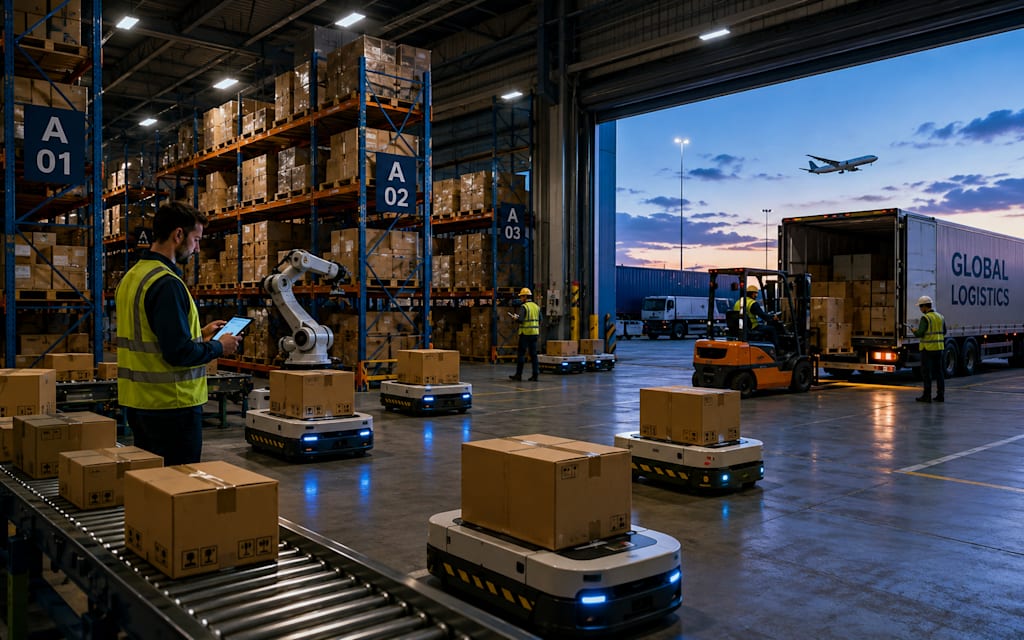
The global Retail 3PL market is experiencing unprecedented AI-driven transformation, valued at USD 183.08 billion in 2025 and projected to reach USD 254.24 billion by 2031 (CAGR 5.63%), according to Mordor Intelligence. This expansion signals a fundamental shift in how e-commerce sellers approach fulfillment operations. Rather than managing warehousing internally, brands increasingly outsource logistics to specialized providers offering AI-powered demand forecasting, machine learning route optimization, cloud-based warehouse management systems, and real-time tracking capabilities. This technology integration is reshaping competitive dynamics across all seller segments.
AI-powered demand forecasting is becoming the critical differentiator for 3PL providers and sellers alike. The news reports that demand patterns shift unpredictably due to viral products and influencer trends—exactly where AI excels. Machine learning algorithms can now predict these micro-trends 2-4 weeks in advance by analyzing social media sentiment, search volume spikes, and historical viral product patterns. Sellers using AI-enabled 3PL providers gain 15-25% fulfillment cost reductions through optimized inventory positioning across regional warehouses. For small brands and startups, this democratizes access to sophisticated logistics intelligence previously available only to enterprise retailers. Asia-Pacific dominates with 38% market share in 2024, driven by rapid urbanization and digital retail ecosystem development in China, India, Vietnam, and Indonesia—regions where AI adoption in logistics is accelerating fastest.
Machine learning route optimization directly impacts delivery speed and brand perception. Consumer expectations for same-day or next-day delivery have become standard, and fulfillment speed is now a critical competitive differentiator. ML algorithms optimize shipping routes in real-time, reducing delivery times by 10-15% while simultaneously cutting transportation costs by 8-12%. Cloud-based warehouse management systems powered by AI enable inventory decentralization across regional centers, reducing last-mile delivery distances. Sustainability concerns amplify this advantage—AI route optimization reduces packaging waste and shipping emissions without compromising speed, addressing both cost and ESG pressures. For sellers, this means 3PL partnerships now function as strategic operational partners rather than mere transportation vendors, directly influencing which retailers dominate future marketplaces.
Immediate actions for sellers: (1) Audit current fulfillment costs and compare against 3PL providers offering AI-powered demand forecasting—target 15-20% cost reduction potential; (2) Evaluate 3PL platforms with real-time tracking and predictive inventory positioning, particularly for Asia-Pacific expansion where market growth is fastest; (3) Analyze viral product trends in your category and assess whether AI-enabled inventory pre-positioning could capture demand spikes 2-4 weeks earlier than competitors. Strategic adjustments (1-6 months): Consider shifting 20-30% of inventory to 3PL networks in high-growth regions (India, Vietnam, Indonesia) where same-day delivery expectations are driving market expansion. Risk mitigation: Monitor 3PL provider AI accuracy metrics—demand forecast MAPE (Mean Absolute Percentage Error) should be <15% for reliable inventory planning. Verify that route optimization algorithms account for regional regulations and customs requirements, particularly critical for cross-border sellers in Asia-Pacific.
Questions 8
What sustainability benefits do AI-optimized logistics provide and how do they affect seller costs?
AI route optimization reduces packaging waste and shipping emissions while simultaneously cutting transportation costs 8-12%. The news reports that retailers face pressure to optimize shipping routes and reduce packaging waste without compromising fulfillment speed—a challenge that AI solves through intelligent route planning and predictive inventory positioning. Sellers benefit from lower shipping costs while meeting ESG requirements increasingly demanded by consumers and platforms. This creates a competitive moat: sellers using AI-optimized logistics achieve both cost advantages and sustainability credentials, improving brand perception with environmentally conscious consumers.
When should sellers begin transitioning to AI-enabled 3PL providers to stay competitive?
Sellers should begin evaluating 3PL transitions immediately, with implementation targets within 3-6 months. The 3PL market is growing at 5.63% CAGR through 2031, and AI adoption is accelerating fastest in Asia-Pacific (38% market share). Sellers delaying this transition risk losing competitive advantage in demand forecasting, delivery speed, and cost efficiency. Start by auditing current fulfillment costs and comparing against 3PL providers offering AI capabilities. For Asia-Pacific expansion specifically, prioritize 3PL partnerships with regional warehouse networks and predictive inventory positioning, as same-day/next-day delivery expectations are becoming standard in high-growth markets.