






Celebrity Trademark Disputes Signal Stricter Merchandise Enforcement for E-Commerce Sellers
- High-profile lawsuit reveals reverse confusion doctrine risks; sellers face increased scrutiny on similar-sounding brand names and merchandise rights


Overview
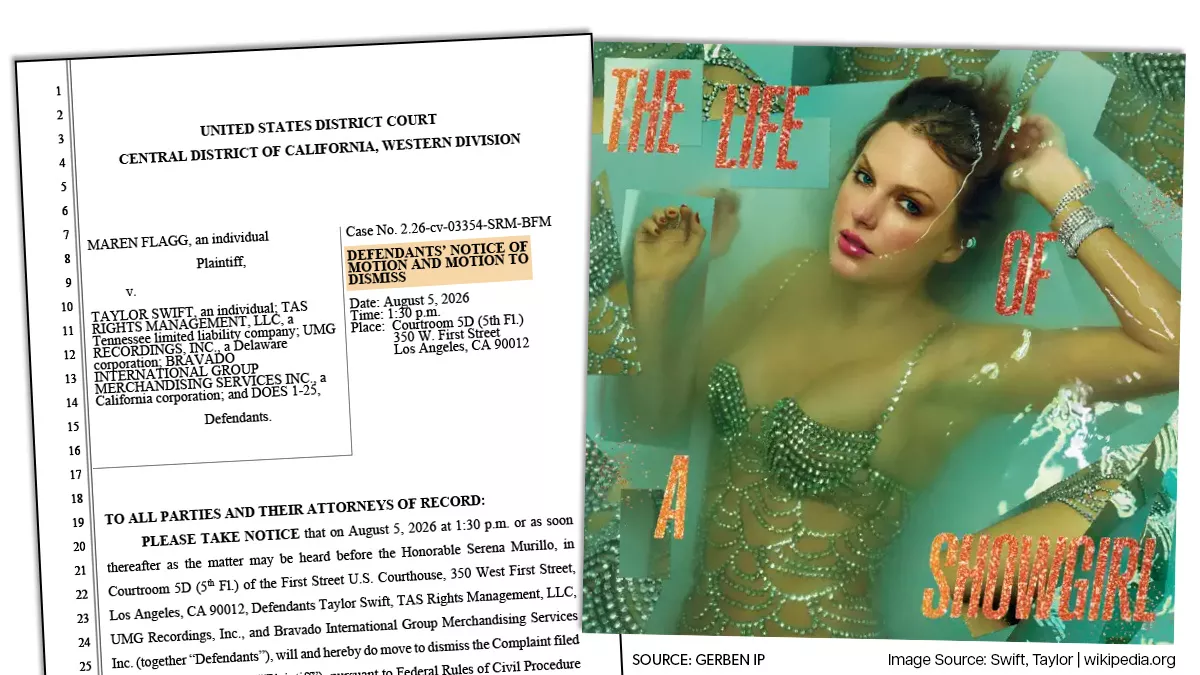
The Taylor Swift vs. Maren Wade trademark infringement case represents a critical inflection point for e-commerce sellers managing celebrity-adjacent merchandise and branded products. Wade's March 2024 lawsuit—claiming Swift's album title "The Life of a Showgirl" infringes her federally registered trademark "Confessions of a Showgirl"—introduces the reverse confusion doctrine as an enforcement mechanism that directly impacts cross-border sellers. Reverse confusion occurs when consumers associate Wade's original trademark with Swift's newer, higher-profile brand, effectively erasing Wade's trademark identity in the marketplace. This precedent signals that federal trademark enforcement is expanding beyond traditional confusion standards to protect smaller trademark holders against larger brands with dominant market presence.
For e-commerce sellers, this case establishes three critical compliance barriers: First, trademark similarity thresholds are tightening. Wade's successful emergency moratorium request on Swift's merchandise sales demonstrates that courts now grant injunctions based on phonetic and conceptual similarity alone—not just identical marks. Sellers offering products with similar-sounding names (e.g., "Confessions of a Fashionista" competing with registered "Confessions of a Showgirl") face accelerated litigation timelines and merchandise seizure risks. Second, Google autocomplete manipulation is now evidence of trademark harm. Wade's argument that autocomplete suggestions for her trademark now return Swift's content establishes digital presence as a measurable damages metric. This means sellers must audit their product titles, backend keywords, and sponsored content to avoid triggering reverse confusion signals in search algorithms. Third, First Amendment defenses are narrowing for commercial merchandise. Swift's argument that her album represents "protected expressive speech" failed to prevent the moratorium, indicating courts distinguish between artistic expression and commercial merchandise sales—a critical distinction for sellers offering branded apparel, collectibles, and fan merchandise.
Compliance cost implications: Trademark clearance searches now require reverse confusion analysis, increasing pre-launch vetting costs from $500-1,200 (standard searches) to $2,000-4,500 (comprehensive reverse confusion assessments). Sellers managing 50+ SKUs with similar brand architectures face $100,000-250,000 in remediation costs if forced to rebrand product lines. The case also accelerates trademark enforcement velocity. Wade's March filing resulted in an emergency moratorium within weeks—significantly faster than typical 6-12 month litigation timelines. This compressed enforcement window means sellers have 30-45 days to respond to cease-and-desist letters before merchandise is delisted or seized, requiring immediate legal counsel ($3,000-8,000 per incident). For cross-border sellers, this creates jurisdictional complexity: US federal trademark enforcement now extends to international marketplaces (Amazon.com, eBay.com) where US-registered trademarks are enforced globally, while EU sellers face parallel EUIPO enforcement under similar reverse confusion standards.
Questions 8
What compliance steps should sellers take immediately after this ruling?
Within 30 days: (1) Audit all product titles and backend keywords for phonetic similarity with registered trademarks; (2) Remove or rebrand products with similar-sounding names; (3) Establish trademark monitoring subscriptions ($50-200/month) for your category; (4) Retain trademark counsel for emergency response protocols. Within 90 days: (1) Conduct comprehensive reverse confusion searches on top 50 SKUs; (2) Update product descriptions to emphasize transformative or non-commercial elements; (3) Implement keyword auditing procedures to avoid competitor trademark terms. Within 6 months: (1) Register your own trademarks across US, EU, UK, Canada; (2) Establish brand protection monitoring on Amazon Brand Registry; (3) Create cease-and-desist response templates with legal counsel. Budget $15,000-30,000 for comprehensive compliance implementation.
How should sellers audit existing product lines for reverse confusion risks?
Conduct a three-step audit: (1) Search USPTO, EUIPO, and WIPO databases for phonetically similar registered trademarks in your product categories; (2) Analyze Google autocomplete suggestions for your product names to identify potential reverse confusion signals; (3) Review Amazon Brand Registry and competitor trademark filings in your category. Prioritize high-revenue SKUs and products with celebrity, entertainment, or lifestyle brand associations. Document all clearance searches and maintain records for 3+ years. Engage trademark counsel ($2,000-4,500) for comprehensive reverse confusion assessments on product lines generating $50,000+ monthly revenue. Implement quarterly monitoring systems to track new trademark filings in your category.