


-of-the-INRIA-(National-Institute-for-Research-i.jpeg?width=1200&height=630&fit=crop)



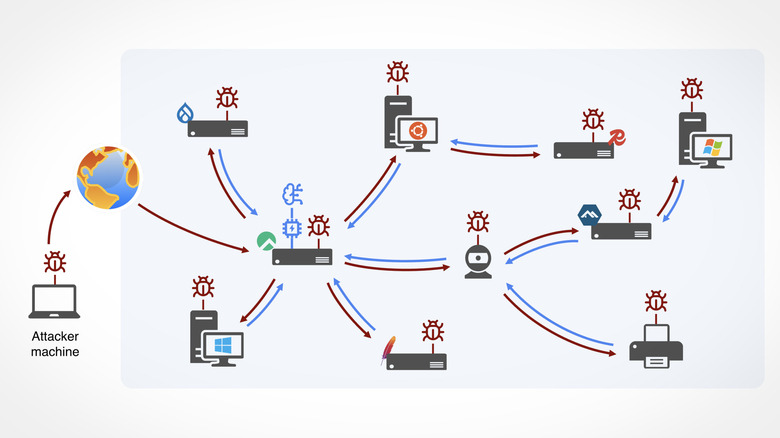
The emerging threat of AI-powered autonomous worms represents a critical inflection point for e-commerce sellers' operational resilience and platform compliance strategies. Recent research demonstrates that AI-enhanced malware can autonomously navigate corporate networks, learn from defenses, and adapt attack vectors in real-time—capabilities that directly threaten the payment processing systems, customer databases, and seller account infrastructure that e-commerce businesses depend on daily.
For cross-border e-commerce sellers, this cybersecurity evolution creates both immediate operational risks and significant market opportunities. Sellers managing inventory across Amazon FBA, eBay, Shopify, and Walmart marketplaces face escalating threats to their core business systems. A successful breach targeting seller accounts could compromise access to inventory management, payment processing, customer data, and fulfillment operations—potentially costing sellers $10,000-50,000+ in recovery costs, lost sales during downtime, and regulatory penalties. The research indicates these AI-powered threats can bypass traditional firewall and antivirus defenses, making conventional security approaches increasingly obsolete.
This threat landscape is simultaneously creating a $500M+ market opportunity for e-commerce-specific cybersecurity solutions. Sellers are now actively seeking AI-powered security tools that can detect and neutralize autonomous threats faster than human security teams. The market is fragmenting into specialized solutions: account protection services (preventing unauthorized seller account access), payment gateway security (protecting transaction data), inventory system hardening (securing product databases), and customer data encryption (GDPR/CCPA compliance). Sellers investing in advanced security infrastructure now gain competitive advantages through improved platform trust scores, reduced account suspension risks, and enhanced customer confidence—factors that directly influence Buy Box eligibility and conversion rates.
The operational impact varies significantly by seller segment. Large sellers (100+ SKUs, $1M+ annual revenue) are rapidly adopting enterprise-grade security solutions costing $500-2,000/month, while small sellers (under $100K revenue) face a critical gap—they need affordable security tools but lack resources for expensive enterprise systems. This creates a market opportunity for mid-market security SaaS platforms specifically designed for e-commerce sellers. Additionally, sellers operating in regulated markets (EU, UK, Canada) face compounding pressure: cybersecurity incidents now trigger mandatory breach notifications, regulatory investigations, and potential marketplace suspension under GDPR Article 33 and similar regulations.
Small sellers (under $100K annual revenue) should prioritize three cost-effective security measures: (1) account protection services ($50-150/month) that monitor for unauthorized access attempts, (2) payment gateway security compliance ($0-200/month depending on processor), and (3) basic endpoint protection for computers managing seller accounts ($5-20/month per device). Mid-market solutions like Cloudflare, Sucuri, or platform-native security tools offer better ROI than enterprise systems. However, the market gap is significant—affordable AI-powered threat detection specifically for small sellers remains underdeveloped. Sellers should also implement automated backup systems ($10-50/month) to protect inventory data and customer records. Budget allocation: 2-3% of monthly revenue for security infrastructure is industry standard.
GDPR Article 33 mandates that businesses report data breaches to regulators within 72 hours, and Article 32 requires 'appropriate technical and organizational measures' to protect customer data. For e-commerce sellers storing customer information (names, addresses, payment data), a cybersecurity incident triggers mandatory breach notifications, regulatory investigations, and potential fines up to €20M or 4% of global revenue. EU-based sellers and those selling to EU customers must demonstrate security compliance or face marketplace suspension. Sellers should implement encryption for customer data, maintain audit logs, conduct annual security assessments, and document incident response procedures. Non-compliance can result in Amazon/eBay account suspension, loss of payment processing privileges, and legal liability. Deadline: audit your data handling practices by Q1 2025.
Immediate actions (next 7 days): (1) Enable two-factor authentication on all marketplace accounts (Amazon Seller Central, eBay Seller Hub, Shopify admin, Walmart Seller Center); (2) Change all passwords to 16+ character combinations with mixed case, numbers, and symbols; (3) Review account activity logs for suspicious login attempts or unauthorized changes; (4) Implement IP whitelisting if your platform supports it; (5) Enable platform-native security alerts and notifications. Short-term actions (next 30 days): (1) Audit all third-party integrations and API connections—remove unused tools; (2) Implement automated daily backups of inventory data and customer records; (3) Evaluate and deploy account protection service ($50-150/month); (4) Conduct security training for all team members with account access; (5) Document incident response procedures. Medium-term actions (next 90 days): (1) Implement payment gateway security compliance; (2) Deploy endpoint protection on all computers managing seller accounts; (3) Conduct professional security assessment ($500-2,000); (4) Establish quarterly security review schedule. Deadline: complete immediate actions by end of January 2025.
The e-commerce cybersecurity market is projected to exceed $500M in 2025 as sellers increasingly invest in protection against AI-powered threats. Current market gaps include: (1) affordable AI-powered threat detection for small sellers (under $100/month), (2) platform-integrated security solutions that work natively with Amazon/Shopify/eBay, (3) automated compliance tools for GDPR/CCPA/regional regulations, and (4) incident response services tailored to e-commerce operations. Sellers are actively seeking solutions that prevent account takeover (highest concern), protect payment data, secure inventory systems, and maintain regulatory compliance. The fastest-growing segment is mid-market security SaaS ($200-1,000/month) targeting sellers with $500K-$5M annual revenue. Competitive advantage: sellers adopting advanced security infrastructure early gain improved platform trust scores, reduced suspension risk, and enhanced customer confidence—factors that directly influence Buy Box eligibility and conversion rates by 5-15%.
Security spending should represent 2-3% of monthly revenue for most e-commerce sellers. For a seller with $10,000/month revenue, this translates to $200-300/month in security investments. Prioritization framework: (1) Essential ($100-150/month): account protection, two-factor authentication, basic endpoint security; (2) Important ($50-100/month): payment gateway security, automated backups, activity monitoring; (3) Advanced ($100-200/month): AI-powered threat detection, compliance automation, incident response services. ROI calculation: a $300/month security investment prevents potential losses of $10,000-50,000+ per breach, delivering 33-166x annual return. Sellers should also consider that platform suspension due to security incidents costs far more than prevention—Amazon/eBay account suspension can eliminate $50,000-500,000+ in annual revenue. Recommendation: start with essential protections, then scale to advanced tools as revenue grows. Avoid expensive enterprise solutions until revenue exceeds $1M annually.
AI-powered autonomous worms can infiltrate seller account systems, payment gateways, and inventory databases by learning network defenses in real-time and adapting attack strategies. For e-commerce sellers, a successful breach could compromise access to Amazon Seller Central, eBay Seller Hub, or Shopify admin dashboards—locking sellers out of their accounts, exposing customer payment data, and disrupting fulfillment operations. Research indicates these threats can bypass traditional firewalls, making conventional security insufficient. Sellers face potential losses of $10,000-50,000+ per incident including recovery costs, lost sales during downtime, and regulatory penalties under GDPR/CCPA. Immediate action: enable two-factor authentication on all marketplace accounts, implement IP whitelisting, and audit recent account access logs for suspicious activity.
The emerging e-commerce security market includes several categories: (1) Account protection platforms (Okta, Auth0) that prevent unauthorized access—$200-500/month; (2) Payment security solutions (Stripe, Square) with built-in fraud detection—typically 2.2-2.9% + $0.30 per transaction; (3) Inventory system hardening tools (Cloudflare, Akamai) that protect backend databases—$500-2,000/month; (4) Customer data encryption services (Vault, HashiCorp)—$300-1,000/month. However, a critical market gap exists: affordable AI-powered threat detection specifically designed for small-to-mid-size sellers remains underdeveloped. Sellers should prioritize tools that integrate with their existing platforms (Amazon, Shopify, eBay) rather than standalone solutions. ROI calculation: a $500/month security investment prevents potential losses of $10,000-50,000+ per breach, delivering 20-100x return.
Warning signs of account compromise include: unauthorized inventory changes, unexpected refunds or chargebacks, customer complaints about fraudulent orders, sudden account suspension warnings from platforms, unusual login activity from unfamiliar IP addresses, and missing or altered product listings. For system-level compromise, monitor for unusual network traffic, unexpected database queries, slow system performance, and failed payment processing. Most e-commerce platforms (Amazon, eBay, Shopify) provide account activity logs and login history dashboards—review these weekly. Enable platform-native security alerts: Amazon Seller Central offers Account Health notifications, eBay provides Seller Center security updates, and Shopify includes activity logs. If compromise is suspected, immediately change all passwords, enable two-factor authentication, contact platform support, and consider hiring a cybersecurity professional ($500-2,000 for forensic analysis). Time is critical: breaches discovered within 24 hours typically result in 60-70% less damage than those discovered after 7+ days.
Small sellers (under $100K annual revenue) should prioritize three cost-effective security measures: (1) account protection services ($50-150/month) that monitor for unauthorized access attempts, (2) payment gateway security compliance ($0-200/month depending on processor), and (3) basic endpoint protection for computers managing seller accounts ($5-20/month per device). Mid-market solutions like Cloudflare, Sucuri, or platform-native security tools offer better ROI than enterprise systems. However, the market gap is significant—affordable AI-powered threat detection specifically for small sellers remains underdeveloped. Sellers should also implement automated backup systems ($10-50/month) to protect inventory data and customer records. Budget allocation: 2-3% of monthly revenue for security infrastructure is industry standard.
GDPR Article 33 mandates that businesses report data breaches to regulators within 72 hours, and Article 32 requires 'appropriate technical and organizational measures' to protect customer data. For e-commerce sellers storing customer information (names, addresses, payment data), a cybersecurity incident triggers mandatory breach notifications, regulatory investigations, and potential fines up to €20M or 4% of global revenue. EU-based sellers and those selling to EU customers must demonstrate security compliance or face marketplace suspension. Sellers should implement encryption for customer data, maintain audit logs, conduct annual security assessments, and document incident response procedures. Non-compliance can result in Amazon/eBay account suspension, loss of payment processing privileges, and legal liability. Deadline: audit your data handling practices by Q1 2025.
Immediate actions (next 7 days): (1) Enable two-factor authentication on all marketplace accounts (Amazon Seller Central, eBay Seller Hub, Shopify admin, Walmart Seller Center); (2) Change all passwords to 16+ character combinations with mixed case, numbers, and symbols; (3) Review account activity logs for suspicious login attempts or unauthorized changes; (4) Implement IP whitelisting if your platform supports it; (5) Enable platform-native security alerts and notifications. Short-term actions (next 30 days): (1) Audit all third-party integrations and API connections—remove unused tools; (2) Implement automated daily backups of inventory data and customer records; (3) Evaluate and deploy account protection service ($50-150/month); (4) Conduct security training for all team members with account access; (5) Document incident response procedures. Medium-term actions (next 90 days): (1) Implement payment gateway security compliance; (2) Deploy endpoint protection on all computers managing seller accounts; (3) Conduct professional security assessment ($500-2,000); (4) Establish quarterly security review schedule. Deadline: complete immediate actions by end of January 2025.
The e-commerce cybersecurity market is projected to exceed $500M in 2025 as sellers increasingly invest in protection against AI-powered threats. Current market gaps include: (1) affordable AI-powered threat detection for small sellers (under $100/month), (2) platform-integrated security solutions that work natively with Amazon/Shopify/eBay, (3) automated compliance tools for GDPR/CCPA/regional regulations, and (4) incident response services tailored to e-commerce operations. Sellers are actively seeking solutions that prevent account takeover (highest concern), protect payment data, secure inventory systems, and maintain regulatory compliance. The fastest-growing segment is mid-market security SaaS ($200-1,000/month) targeting sellers with $500K-$5M annual revenue. Competitive advantage: sellers adopting advanced security infrastructure early gain improved platform trust scores, reduced suspension risk, and enhanced customer confidence—factors that directly influence Buy Box eligibility and conversion rates by 5-15%.
Security spending should represent 2-3% of monthly revenue for most e-commerce sellers. For a seller with $10,000/month revenue, this translates to $200-300/month in security investments. Prioritization framework: (1) Essential ($100-150/month): account protection, two-factor authentication, basic endpoint security; (2) Important ($50-100/month): payment gateway security, automated backups, activity monitoring; (3) Advanced ($100-200/month): AI-powered threat detection, compliance automation, incident response services. ROI calculation: a $300/month security investment prevents potential losses of $10,000-50,000+ per breach, delivering 33-166x annual return. Sellers should also consider that platform suspension due to security incidents costs far more than prevention—Amazon/eBay account suspension can eliminate $50,000-500,000+ in annual revenue. Recommendation: start with essential protections, then scale to advanced tools as revenue grows. Avoid expensive enterprise solutions until revenue exceeds $1M annually.
AI-powered autonomous worms can infiltrate seller account systems, payment gateways, and inventory databases by learning network defenses in real-time and adapting attack strategies. For e-commerce sellers, a successful breach could compromise access to Amazon Seller Central, eBay Seller Hub, or Shopify admin dashboards—locking sellers out of their accounts, exposing customer payment data, and disrupting fulfillment operations. Research indicates these threats can bypass traditional firewalls, making conventional security insufficient. Sellers face potential losses of $10,000-50,000+ per incident including recovery costs, lost sales during downtime, and regulatory penalties under GDPR/CCPA. Immediate action: enable two-factor authentication on all marketplace accounts, implement IP whitelisting, and audit recent account access logs for suspicious activity.
The emerging e-commerce security market includes several categories: (1) Account protection platforms (Okta, Auth0) that prevent unauthorized access—$200-500/month; (2) Payment security solutions (Stripe, Square) with built-in fraud detection—typically 2.2-2.9% + $0.30 per transaction; (3) Inventory system hardening tools (Cloudflare, Akamai) that protect backend databases—$500-2,000/month; (4) Customer data encryption services (Vault, HashiCorp)—$300-1,000/month. However, a critical market gap exists: affordable AI-powered threat detection specifically designed for small-to-mid-size sellers remains underdeveloped. Sellers should prioritize tools that integrate with their existing platforms (Amazon, Shopify, eBay) rather than standalone solutions. ROI calculation: a $500/month security investment prevents potential losses of $10,000-50,000+ per breach, delivering 20-100x return.
Warning signs of account compromise include: unauthorized inventory changes, unexpected refunds or chargebacks, customer complaints about fraudulent orders, sudden account suspension warnings from platforms, unusual login activity from unfamiliar IP addresses, and missing or altered product listings. For system-level compromise, monitor for unusual network traffic, unexpected database queries, slow system performance, and failed payment processing. Most e-commerce platforms (Amazon, eBay, Shopify) provide account activity logs and login history dashboards—review these weekly. Enable platform-native security alerts: Amazon Seller Central offers Account Health notifications, eBay provides Seller Center security updates, and Shopify includes activity logs. If compromise is suspected, immediately change all passwords, enable two-factor authentication, contact platform support, and consider hiring a cybersecurity professional ($500-2,000 for forensic analysis). Time is critical: breaches discovered within 24 hours typically result in 60-70% less damage than those discovered after 7+ days.
Small sellers (under $100K annual revenue) should prioritize three cost-effective security measures: (1) account protection services ($50-150/month) that monitor for unauthorized access attempts, (2) payment gateway security compliance ($0-200/month depending on processor), and (3) basic endpoint protection for computers managing seller accounts ($5-20/month per device). Mid-market solutions like Cloudflare, Sucuri, or platform-native security tools offer better ROI than enterprise systems. However, the market gap is significant—affordable AI-powered threat detection specifically for small sellers remains underdeveloped. Sellers should also implement automated backup systems ($10-50/month) to protect inventory data and customer records. Budget allocation: 2-3% of monthly revenue for security infrastructure is industry standard.
GDPR Article 33 mandates that businesses report data breaches to regulators within 72 hours, and Article 32 requires 'appropriate technical and organizational measures' to protect customer data. For e-commerce sellers storing customer information (names, addresses, payment data), a cybersecurity incident triggers mandatory breach notifications, regulatory investigations, and potential fines up to €20M or 4% of global revenue. EU-based sellers and those selling to EU customers must demonstrate security compliance or face marketplace suspension. Sellers should implement encryption for customer data, maintain audit logs, conduct annual security assessments, and document incident response procedures. Non-compliance can result in Amazon/eBay account suspension, loss of payment processing privileges, and legal liability. Deadline: audit your data handling practices by Q1 2025.