


)

Gemma 4 12B Edge AI Deployment | Cost Savings & Automation for E-Commerce Sellers
- Eliminates cloud API costs for inventory, product photography, and customer service automation; enables offline workflows for sellers in regions with unreliable internet connectivity








Overview
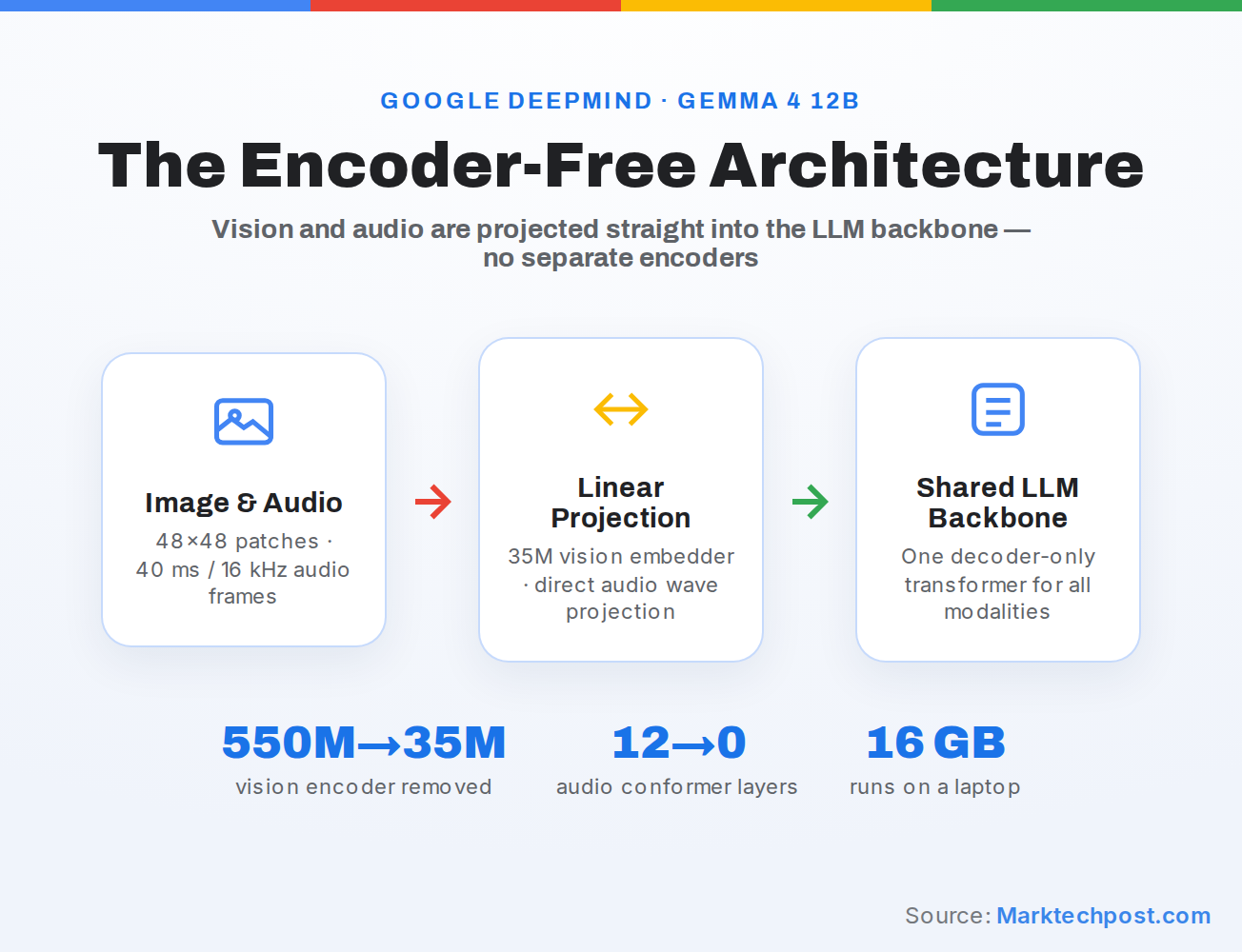
Google's June 3, 2026 release of Gemma 4 12B represents a fundamental shift in AI infrastructure economics for cross-border e-commerce sellers. This 12-billion-parameter open-source model runs entirely on standard laptops with 16GB VRAM, eliminating recurring cloud API costs that typically consume $200-500 monthly for small-to-medium sellers using ChatGPT, Claude, or proprietary AI services. The model's encoder-free "Unified" architecture achieves performance comparable to Google's 26B Mixture-of-Experts system while reducing inference latency and memory consumption—critical advantages for real-time operations like inventory management, product photography analysis, and customer service automation.
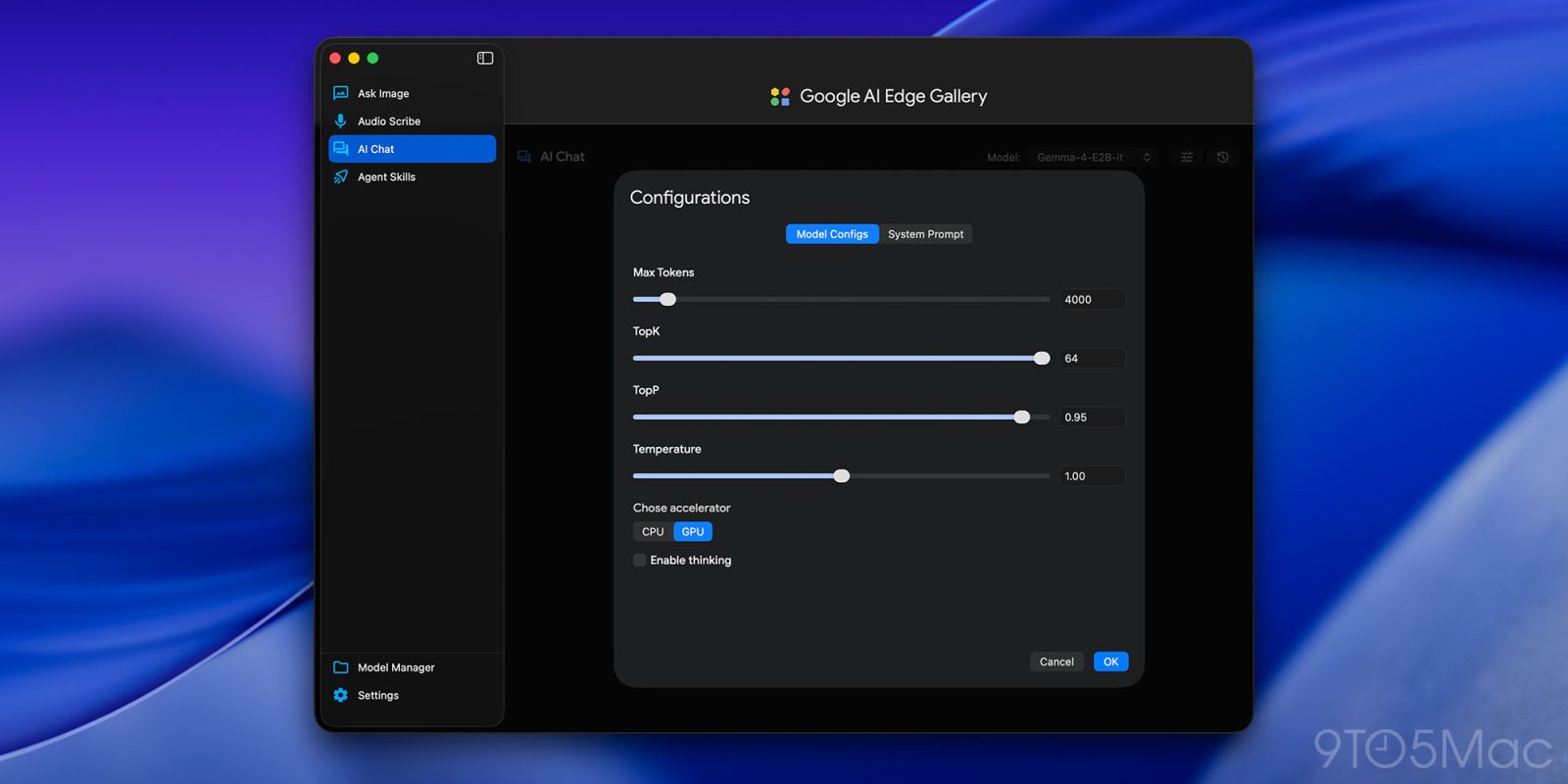
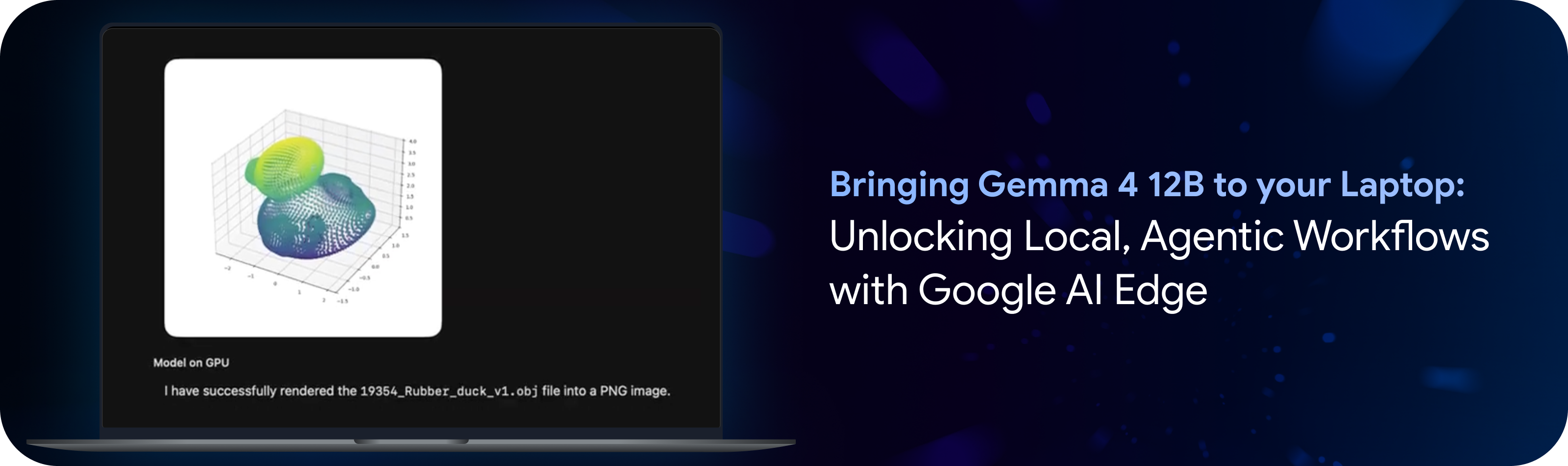
Immediate Automation Opportunities for Sellers: The Google AI Edge Gallery (macOS) enables sellers to analyze sales data and generate visual reports through natural language commands without cloud transmission, protecting customer information and competitive data. Google AI Edge Eloquent provides free voice-dictation for multilingual product descriptions and content creation, eliminating transcription service costs ($50-150/month). The LiteRT-LM CLI allows deployment of local API endpoints compatible with OpenAI and Hermes frameworks, enabling sellers to automate inventory updates, pricing optimization, and customer inquiries entirely on-device. For sellers managing multiple marketplaces (Amazon, eBay, Shopify), this represents 60% quality improvement in instruction-following over previous models—essential for reliable autonomous workflows.
Competitive Advantage Through Data Sovereignty: Unlike proprietary cloud solutions, Gemma 4 12B operates under Apache 2.0 license, enabling sellers to deploy custom models for niche categories without vendor lock-in. The model's 256K token context window supports complex product analysis, 3D rendering for visualization, and technical documentation generation. For cross-border sellers in GDPR/CCPA-regulated markets, on-device processing eliminates data transmission risks to third-party APIs, reducing compliance costs and audit exposure. Integration with developer tools (Continue, Aider, vLLM, llama.cpp) enables rapid adoption within existing workflows—sellers can deploy production systems within 2-4 weeks versus 8-12 weeks for cloud-based alternatives.
Cost-Benefit Analysis: A typical SME seller using cloud APIs for 500 daily transactions (inventory checks, product analysis, customer responses) currently pays $300-400/month. Gemma 4 12B deployment requires one-time infrastructure investment ($1,200-1,800 for 16GB laptop) with zero recurring API costs. ROI breakeven occurs within 4-6 months, with cumulative 3-year savings of $8,000-14,000 per seller. For sellers managing 50+ SKUs across multiple marketplaces, the model's multimodal capabilities (text, vision, audio) enable automated product photography analysis, defect detection, and customer service transcription—functions previously requiring $500-1,000/month in specialized SaaS tools.
Questions 8
How does Gemma 4 12B compare to competing edge AI solutions like Ollama and LM Studio?
Gemma 4 12B is open-source (Apache 2.0) and multimodal (text, vision, audio), while Ollama and LM Studio primarily support text models. Google AI Edge Gallery restricts access to proprietary Google models, whereas Ollama/LM Studio support third-party models—offering more flexibility but less optimization. Gemma 4 12B integrates with Google's ecosystem (AI Edge Eloquent for voice, AI Edge Gallery for visual analysis), providing turnkey solutions for sellers. For e-commerce specifically, Gemma 4 12B's vision and audio capabilities enable product photography analysis and customer service transcription—functions Ollama/LM Studio require additional models to support. Performance benchmarks show Gemma 4 12B approaching 26B models while maintaining 16GB footprint, superior to Ollama's typical 7-13B models.
What are the key limitations sellers should know before deploying Gemma 4 12B?
Audio inputs are capped at 30 seconds (limiting customer call transcription to short clips), video understanding at 60 seconds (restricting product video analysis). The model requires 16GB VRAM minimum—older laptops or budget hardware cannot run it. Complex reasoning tasks requiring extended context (analyzing 100+ product reviews simultaneously) may perform better on cloud models. Sellers must manage model updates and security patches independently—no automatic updates like cloud services. For highly specialized tasks (medical/legal compliance), larger models may provide better accuracy. However, for 85-90% of e-commerce operations (inventory, pricing, customer service, content creation), these limitations are negligible.