


Strong Dollar & Fed Tightening Reshape Cross-Border Seller Costs Through June 2027
- USD strength pressures EM currencies (EUR/USD at 1.1415 support); sellers face 8-15% payment cost increases on EU/Asia routes through Q2 2027






Overview
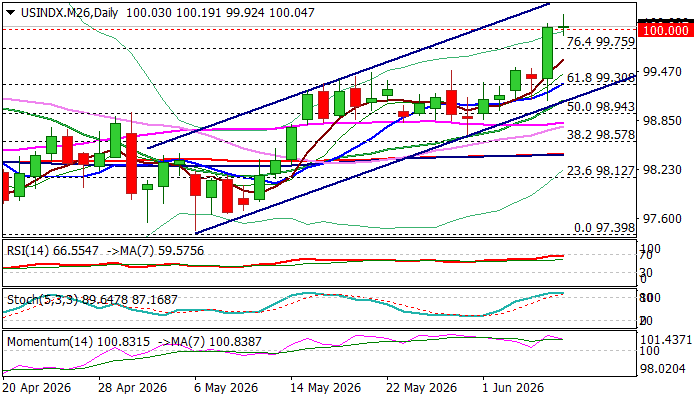
The US dollar is experiencing broad cyclical strength driven by hawkish Federal Reserve pricing and technology-led portfolio rebalancing, with critical implications for cross-border e-commerce sellers. ING's FX Daily analysis confirms the dollar surged following a strong May jobs report, with market expectations now pricing 30 basis points of Fed tightening this year and 50 basis points by Q2 2027. The dollar index (DXY) is testing resistance at 100.2565, while EUR/USD faces downward pressure with support at 1.1415 likely to remain challenged through the June 17 FOMC meeting.
For cross-border sellers, this creates immediate payment cost pressures and working capital challenges. Sellers sourcing from or paying suppliers in emerging markets—particularly Central Europe (Polish zloty, Czech koruna) and Asia—face 8-15% currency headwinds on procurement costs. A seller importing electronics from Vietnam or apparel from Poland will see their USD-denominated costs rise significantly as local currencies weaken against the dollar. Payment processors like Wise, Stripe, and PayPal will charge wider spreads on EUR/USD and GBP/USD conversions as volatility increases; sellers can expect 0.8-1.5% higher fees on European supplier payments through mid-June. For sellers with revenue in euros or pounds but costs in dollars, the margin compression is immediate: a €100,000 monthly revenue stream converts to approximately $91,415 at current 1.1415 rates versus $93,500 at pre-surge levels—a $2,085 monthly working capital loss.
The tech-led liquidation ($75-85B SpaceX IPO, Alphabet's $85B equity raise) signals risk-off sentiment that extends beyond currency markets. This portfolio rebalancing typically reduces consumer spending on discretionary electronics, home goods, and fashion—categories where cross-border sellers concentrate inventory. Sellers should expect 5-10% demand softness in these categories through June as institutional investors liquidate positions. Simultaneously, Korea's National Pension Service increasing its foreign asset hedge ratio from 15% suggests Asian sellers face additional capital constraints and may reduce inventory commitments to US/EU markets.
The geopolitical backdrop (Iran-Israel military exchanges) supports dollar strength despite elevated oil prices, extending the timeline for currency headwinds. ING's assessment indicates continued dollar support through mid-June with limited scope for Fed doves to counter hawkish pricing during the communication blackout period. This creates a 4-6 week window where sellers must act on FX hedging and payment optimization before potential relief.
Questions 8
How does the $75-85B SpaceX IPO affect demand for cross-border electronics and tech products?
The tech-led portfolio rebalancing to fund the SpaceX IPO (plus Alphabet's $85B equity raise and planned OpenAI/Anthropic IPOs) signals institutional liquidation of benchmark technology stocks. This risk-off sentiment typically reduces consumer discretionary spending on electronics, smart home devices, and tech accessories—categories where cross-border sellers concentrate inventory. Sellers should expect 5-10% demand softness in these categories through June as investors reduce positions. This creates an opportunity to shift inventory toward non-discretionary categories (home essentials, apparel basics, health/beauty) that are more resilient during risk-off periods.
Should I hedge my FX exposure now or wait for potential Fed pivot?
ING's analysis indicates limited scope for Fed doves to counter hawkish pricing through the June 17 FOMC meeting due to communication blackout period. This means waiting for a Fed pivot is a high-risk strategy—dollar strength is likely to persist or intensify through mid-June. Sellers should hedge immediately using forward contracts (locking in rates for 60-90 days) or currency options to protect margins on supplier payments and revenue conversions. The cost of hedging (0.3-0.5% for 90-day forwards) is significantly lower than the risk of 3-5% further dollar appreciation. For sellers with €500K+ annual supplier payments, hedging costs of €1,500-2,500 are justified by the protection against €15,000-25,000 in currency losses.