



China-North Korea Trade Corridor Reshapes Supply Chain Risk | Sellers Must Monitor Sanctions Enforcement
- North Korea's $7-13.8B military revenue stream signals geopolitical realignment affecting China-based sourcing; synthetic hair/wig exports surge 40% as sanctions evasion creates supply chain opacity risks for cross-border sellers


Overview
North Korea's unexpected economic resurgence—driven by $7-13.8 billion in military support to Russia since 2023, $800 million in remote computer work, and $2.02 billion in cryptocurrency theft—fundamentally reshapes global supply chain risk calculus for cross-border e-commerce sellers. The regime's 2024 GDP of $26.6 billion, though 70 times smaller than South Korea's $1.86 trillion, now generates substantial hard currency through shadow economy activities that directly intersect with legitimate trade corridors. The critical concern for sellers: North Korea's 95% trade dependence on China and 85% export reliance creates opacity in Chinese supply chains, particularly in electronics, textiles, machinery, and components that feed into e-commerce product categories.
Synthetic hair and wigs now comprise 40% of North Korea's $360 million legitimate exports—a dramatic shift from coal/mineral sales blocked by 2017 UN sanctions. This category concentration signals how sanctions evasion reshapes product sourcing. Sellers sourcing beauty products, hair extensions, or cosmetics from China face elevated compliance risk: suppliers may unknowingly incorporate North Korean materials or labor, exposing sellers to secondary sanctions liability under OFAC regulations. The regime's worker export program ($500 million annually) and remote professional networks ($800 million in 2024) demonstrate how North Korea penetrates global supply chains through intermediaries, making due diligence increasingly complex.
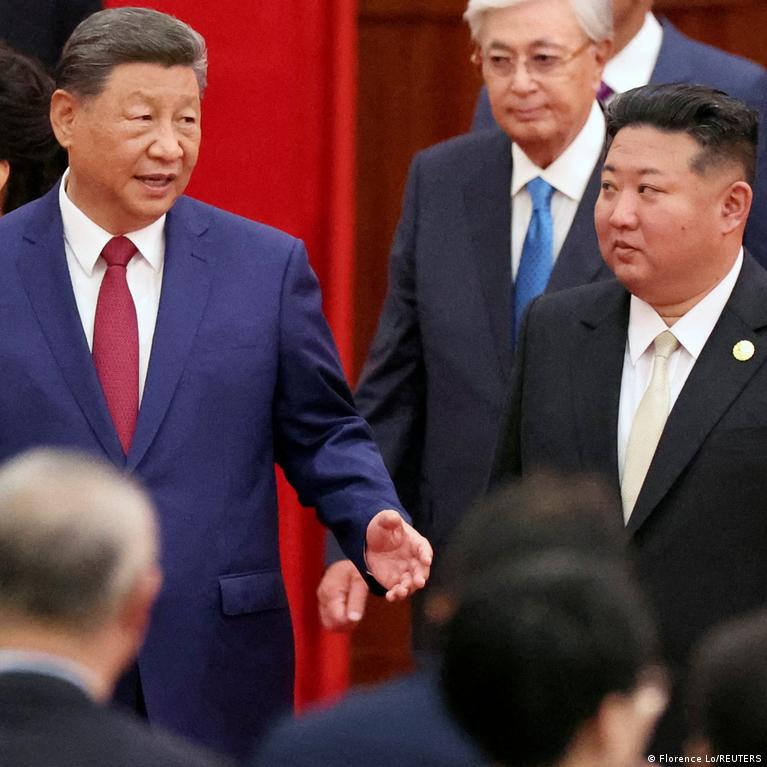
For sellers, the operational impact manifests across three dimensions: First, supply chain transparency costs increase—sellers must implement enhanced OFAC screening, country-of-origin verification, and supplier audits for China-sourced products, adding 5-8% to procurement costs. Second, category-specific risks emerge: beauty/personal care, electronics components, and textiles face heightened scrutiny as North Korean labor or materials may be embedded in finished goods. Third, geopolitical volatility creates sourcing uncertainty—Xi Jinping's June 2026 visit to North Korea and strengthening Russia-North Korea military ties suggest sustained sanctions evasion, making China-based sourcing increasingly unpredictable through 2026-2027.
The strategic implication: sellers must diversify sourcing away from China-North Korea trade corridors. Vietnam, India, and Indonesia present lower-risk alternatives for electronics, textiles, and beauty products, though at 8-15% higher unit costs. Sellers with $500K+ annual revenue should conduct immediate OFAC compliance audits; those with $100K-500K revenue should implement quarterly supplier verification. The window to reposition sourcing closes as US enforcement under Trump administration intensifies—expect increased customs seizures and penalties for non-compliant sellers through Q2 2026.
Questions 8
What are the cost implications of implementing enhanced supply chain compliance?
Enhanced OFAC compliance adds 5-8% to procurement costs through supplier audits ($500-2,000 per supplier), country-of-origin verification ($0.50-2.00 per unit), and documentation systems ($200-500/month). Sourcing diversification to Vietnam/India adds 8-15% to unit costs but reduces compliance risk. For a seller with $500K annual revenue and 40% China sourcing, compliance costs total $20K-40K annually. However, avoiding a single OFAC violation ($250K+ penalty) or account suspension justifies this investment. Calculate ROI: compliance costs are 8-16% of annual revenue but prevent catastrophic penalty exposure.
How does Xi Jinping's June 2026 North Korea visit affect seller compliance?
Xi's visit signals strengthening China-North Korea economic ties and sustained sanctions evasion, indicating the compliance risk environment will persist through 2026-2027. This geopolitical alignment suggests North Korean integration into Chinese supply chains will deepen, making supply chain opacity more likely. Sellers should expect increased US customs enforcement and OFAC scrutiny of China-sourced products. The visit underscores that sourcing diversification away from China-North Korea corridors is strategically necessary. Monitor US-China trade policy developments and adjust sourcing strategies accordingly as geopolitical tensions evolve.