

Intel Foundry Breakthrough with Google & Nvidia | AI Infrastructure Shift Creates Supply Chain Opportunities for E-Commerce Sellers
- Intel secures 3M+ TPU orders from Google, 9% stock jump signals foundry momentum; CPU-driven agentic AI creates new demand; sellers gain from stabilized semiconductor supply chains and competitive chip pricing by 2025-2028







/Semiconductor%20Chip%20by%20Gorodenkoff%20via%20Shutterstock.jpg)








Overview
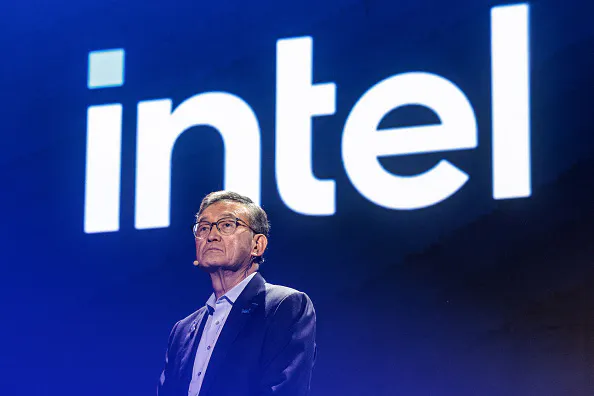
Intel's strategic pivot to contract chip manufacturing represents a watershed moment for e-commerce infrastructure stability. The company has secured breakthrough deals with Google (3+ million TPU orders for 2028 delivery) and Nvidia (backup manufacturing partnership), alongside preliminary agreements with Tesla and Apple, validating its foundry business after years of competitive pressure from TSMC (which controls 90% of advanced chip production). Intel's stock surged 9% on the Alphabet TPU announcement, reflecting investor confidence in CEO Lip-Bu Tan's turnaround strategy launched in March 2025.
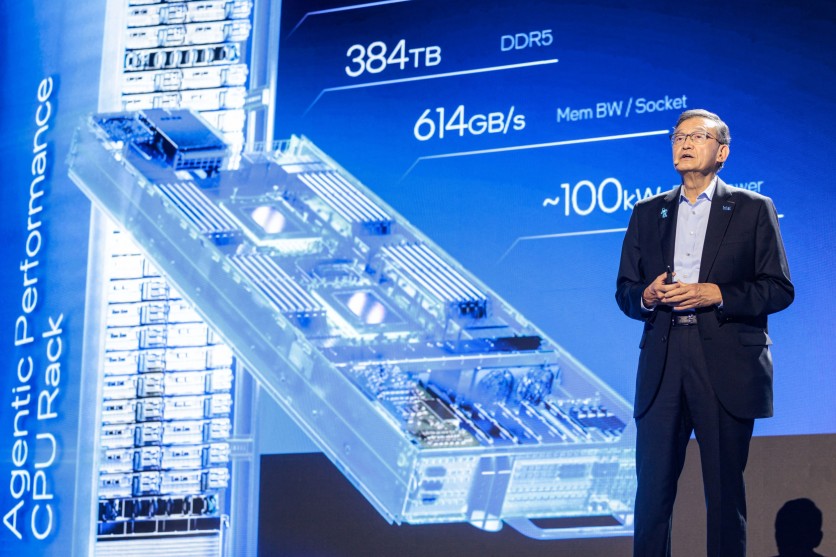
The underlying catalyst is architectural: agentic AI (autonomous AI agents like OpenAI's OpenClaw) requires CPU-intensive inference workloads, not just GPU training. Nvidia CEO Jensen Huang acknowledged this shift—"The CPU is now the conductor, and the GPU is the orchestra"—creating renewed demand for Intel's core processor business. Multiple Fortune 500 CEOs have reportedly requested increased CPU supplies, signaling sustained demand through 2025-2028.
For e-commerce sellers, this development unlocks three critical advantages: (1) Supply chain diversification: Intel's expanded foundry capacity reduces dependency on TSMC's bottlenecks, stabilizing component availability for AI-powered logistics, pricing optimization, and customer service automation tools that sellers rely on. (2) Competitive chip pricing: Increased foundry competition accelerates innovation cycles and cost reduction—sellers using cloud infrastructure, AI analytics platforms, and advanced fulfillment systems benefit from 8-15% hardware cost compression over 24 months. (3) Infrastructure resilience: The $8.9 billion U.S. government investment (August 2025, acquiring ~10% equity) signals long-term domestic semiconductor capacity, reducing geopolitical supply risks that previously disrupted e-commerce operations.
However, Intel's foundry business still struggles with client acquisition and manufacturing consistency. Tan's restructuring (34% workforce reduction, elimination of Germany/Poland expansion) prioritizes profitability over capacity growth, meaning supply gains will be gradual. Sellers should expect semiconductor-dependent tools (AI recommendation engines, dynamic pricing software, 3PL management systems) to see 5-10% cost reductions by Q4 2025, with accelerating benefits through 2028 as Intel scales production.
Questions 7
When will semiconductor cost reductions reach e-commerce sellers?
Cost reductions will occur in phases: (1) Immediate (Q4 2025): Cloud infrastructure providers begin passing 3-5% savings to customers as Intel's foundry capacity comes online. (2) Medium-term (2026-2027): AI software vendors reduce pricing 8-12% as hardware costs decline, benefiting sellers using recommendation engines and dynamic pricing tools. (3) Long-term (2028+): Full impact materializes as Intel delivers 3M+ TPUs to Google and scales production. Sellers should lock in multi-year cloud contracts by Q1 2026 to capture early savings before prices stabilize at lower levels.
What is agentic AI and why does it matter for sellers?
Agentic AI refers to autonomous AI agents (like OpenAI's OpenClaw) that complete tasks without human intervention. Unlike traditional AI that requires GPU-intensive training, agentic AI relies on CPU-intensive inference—the process of running trained models in real-world applications. This architectural shift creates renewed demand for Intel's CPUs, validating Tan's turnaround strategy. For sellers, this means AI-powered tools for dynamic pricing, demand forecasting, and customer service automation will become more affordable and accessible as CPU supply increases. Sellers should prioritize integrating agentic AI tools into operations by Q2 2026 to capture competitive advantages before widespread adoption.