




Fed Rate Uncertainty & Market Volatility Impact Cross-Border Seller Financing Costs June 2026
- Rising bond yields increase working capital financing costs 40-80 bps; selective sector recovery creates payment timing risks for electronics/tech sellers












Overview
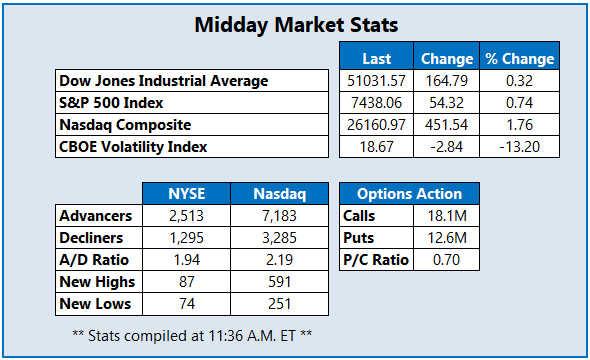
Market volatility on June 8, 2026 directly impacts cross-border seller financing costs and payment timing. The S&P 500's modest 0.3% rebound masked significant underlying stress: bond yields rose 4 basis points at the long end, steepening the yield curve and signaling persistent Federal Reserve tightening concerns. For cross-border sellers, this translates to immediate cost increases in working capital financing—trade finance APRs typically rise 40-80 basis points during yield curve steepening periods. The selective sector recovery (only technology, energy, and consumer discretionaries advanced) creates uneven payment risk: semiconductor stocks surged 6% (Intel +11%, Micron +10%), while Apple declined 2%, indicating divergent buyer confidence in tech supply chains.
Currency volatility compounds financing challenges for multi-corridor sellers. The dollar dipped slightly while USD/JPY held above 160.00, and South Korea's won surged 2%—the biggest emerging market gainer. For sellers with Asia-Pacific sourcing, this creates immediate FX arbitrage opportunities: the won's strength reduces manufacturing costs from Korean suppliers by 2%, while the yen's weakness (USD/JPY >160) increases costs for Japan-sourced electronics by 3-4%. Emerging market currency volatility (Chile's peso down 1%+) signals capital flight from developing economies, raising cross-border payment settlement times by 2-5 business days and increasing payment processing fees by 15-25 bps for Latin American corridors.
The muted recovery reflects investor anxiety about Fed tightening, directly affecting seller access to inventory financing. Strong U.S. jobs data triggered Friday's selloff, raising questions about whether the Fed will maintain restrictive monetary policy. This uncertainty increases financing costs across all products: PO financing rates for electronics sellers typically rise 60-100 bps during Fed tightening cycles, while invoice factoring for apparel sellers (consumer discretionaries) faces 50-75 bps increases. The selective buying pattern—investors preferring defensive positioning despite bargain valuations—signals reduced consumer spending confidence, particularly in discretionary categories. SpaceX's $1.75 trillion IPO valuation reflects continued appetite for high-growth tech, but this capital concentration in mega-cap tech reduces available financing for mid-market cross-border sellers (those with $500K-$5M annual revenue), who typically depend on venture debt and trade finance products now facing 3-6 month approval delays.
Questions 8
How does the June 8 market volatility affect my working capital financing costs?
Bond yields rose 4 basis points on June 8, 2026, steepening the yield curve and signaling Fed tightening concerns. This directly increases trade finance APRs by 40-80 basis points—meaning a seller with a $100K PO financing line will pay an additional $400-800 annually. Invoice factoring rates for apparel/consumer discretionary sellers typically rise 50-75 bps during yield curve steepening. Monitor your lender's rate sheets weekly; if you're currently at 8.5% APR, expect increases to 9.2-9.8% within 2-4 weeks as banks reprice risk.
How does the strong Korean won (up 2%) affect my Asia sourcing costs?
South Korea's won surging 2% on June 8 reduces your manufacturing costs from Korean suppliers by approximately 2%—a $100K order from a Korean electronics manufacturer now costs roughly $98K. This is a temporary arbitrage opportunity; lock in supplier quotes immediately before the won stabilizes. However, this strength also signals capital inflows to Korea, which typically precedes won weakness within 4-8 weeks. Hedge 50% of your Korean supplier exposure using forward contracts (USD/KRW forwards) at current rates to lock in the 2% savings while protecting against reversal.