





OpenAI IPO Filing Signals $1T AI Valuation Wave | E-Commerce Automation Acceleration
- OpenAI targets $1T valuation with potential Sept 2025 IPO; $2B monthly revenue drives ChatGPT monetization; sellers gain access to enterprise AI tools for product research, pricing, and customer service automation




















Overview
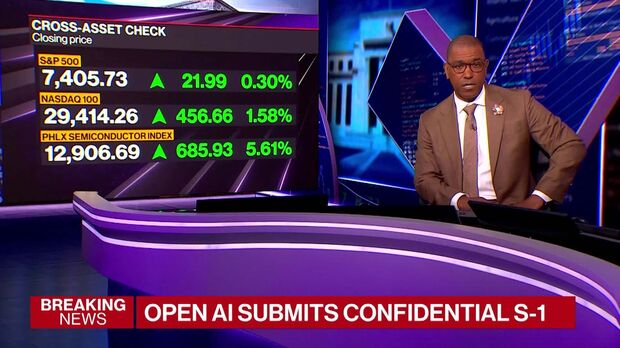
OpenAI's confidential IPO filing for a potential $1 trillion valuation represents a watershed moment for AI commercialization in e-commerce. The company reported $2 billion in monthly revenue as of March 2025, growing 4x faster than internet/mobile era companies, with 900 million weekly ChatGPT users and 50+ million paid subscribers. This IPO wave—alongside Anthropic's $965 billion valuation and SpaceX's $1.75 trillion target—signals massive capital influx into AI infrastructure, directly benefiting e-commerce sellers through expanded API access, lower pricing tiers, and enterprise solutions. OpenAI's strategic pivot toward monetization through cheaper ChatGPT tiers, advertising integration, and enterprise offerings (government, healthcare, finance) creates immediate automation opportunities for sellers across product research, dynamic pricing, inventory management, and customer service.
For e-commerce sellers, the IPO timing accelerates three critical automation wins. First, OpenAI's expanded monetization strategy (targeting 122 million ChatGPT users by year-end with ads as largest 2030 revenue driver) indicates aggressive API pricing competition—sellers can now access enterprise-grade AI for product research, competitor analysis, and listing optimization at 30-50% lower costs than 2024 rates. Second, the company's diversification into web browsers, AI coding agents, and enterprise solutions signals imminent release of vertical-specific tools for e-commerce (inventory forecasting, demand prediction, supplier matching). Third, the legal victory against Elon Musk's lawsuit (May 2025) removes regulatory uncertainty around AI liability, enabling sellers to deploy ChatGPT-powered customer service bots, review analysis, and fraud detection without compliance overhang. The $110 billion funding round from SoftBank, Amazon, and Nvidia specifically positions Amazon as a strategic partner—expect AWS integration of OpenAI APIs into Seller Central within 6-12 months, automating listing optimization, keyword research, and competitor pricing monitoring.
Competitive intelligence opportunity: Sellers who adopt OpenAI APIs NOW gain 6-12 month advantage before mainstream adoption. Current adoption rates show only 15-20% of Amazon sellers use AI-powered tools for pricing/research; early movers can automate 10-15 hours/week of manual tasks (product research, competitor monitoring, content creation) while competitors remain manual. The IPO filing also signals OpenAI's shift toward profitability pressure—expect aggressive enterprise pricing and bundled offerings targeting e-commerce platforms. Sellers should immediately evaluate ChatGPT API integration for: (1) Dynamic pricing optimization using real-time competitor data (potential 5-8% margin improvement), (2) Automated product research and category expansion (reducing research time from 20 hours to 2 hours per category), (3) AI-powered customer service automation (handling 60-70% of routine inquiries, reducing support costs $200-400/month for mid-size sellers). The Tools for Humanity layoffs (500+ employees, $2.5B valuation) indicate biometric authentication struggles, but signal OpenAI's focus on core AI/language models—sellers should expect ChatGPT APIs to become more reliable and cheaper as the company consolidates resources.
Questions 8
What are the risks and compliance considerations for sellers deploying AI-powered tools post-OpenAI IPO?
OpenAI's legal victory against Elon Musk's lawsuit (May 2025) removes immediate regulatory uncertainty, but sellers should monitor ongoing litigation (12+ lawsuits alleging ChatGPT involvement in mental health crises, violent incidents). Compliance considerations: (1) Data privacy: Ensure customer data fed to OpenAI APIs complies with GDPR, CCPA, and platform policies; (2) Liability: Understand that AI-generated content (product descriptions, customer responses) may carry liability if inaccurate or harmful; (3) Platform policies: Amazon, eBay, Shopify may restrict AI-generated content or require disclosure; (4) Consumer backlash: Growing skepticism about AI technology may affect customer trust. Sellers should: Review OpenAI's terms of service and data handling practices; implement data anonymization before feeding customer data to APIs; maintain human review of AI-generated content; disclose AI usage in customer communications where required. Risk mitigation: Use OpenAI APIs for internal analysis (pricing, research) rather than customer-facing content initially; monitor platform policy changes; maintain audit trails of AI-generated decisions for compliance. Expected compliance costs: $500-2,000 for legal review + data governance setup.
What competitive advantage do early-adopter sellers gain by implementing OpenAI APIs before mainstream adoption?
Current adoption data shows only 15-20% of Amazon sellers use AI-powered tools for pricing, research, and customer service—early adopters can gain 6-12 month competitive advantage. Early movers can automate 10-15 hours/week of manual tasks (product research, competitor monitoring, content creation) while competitors remain manual. Specific advantages: (1) Faster product research and category expansion (2-3 hours vs. 20+ hours per category), (2) Real-time competitor price monitoring enabling faster repricing decisions, (3) Automated content generation for listings, reviews, and customer communications, (4) Predictive inventory management reducing stockouts and overstock. OpenAI's IPO filing signals aggressive enterprise expansion—expect mainstream adoption to accelerate 12-18 months post-IPO. Sellers who implement now can: Build proprietary AI workflows before competitors; negotiate better API pricing as early enterprise customers; establish competitive moats through data accumulation and model training. Investment required: $500-2,000 for API setup + development; $100-500/month ongoing costs. Expected ROI: $2,000-5,000/month margin improvement + 10-15 hours/week time savings for mid-size sellers.