


Hyundai Robotics Dominance Over Tesla | E-Commerce Warehouse Automation Costs Drop 15-25%
- Nvidia CEO validates Hyundai's robotics superiority; warehouse automation solutions for FBA sellers expected to decline 15-25% in cost; South Korean manufacturing expertise reshapes logistics automation market


Overview
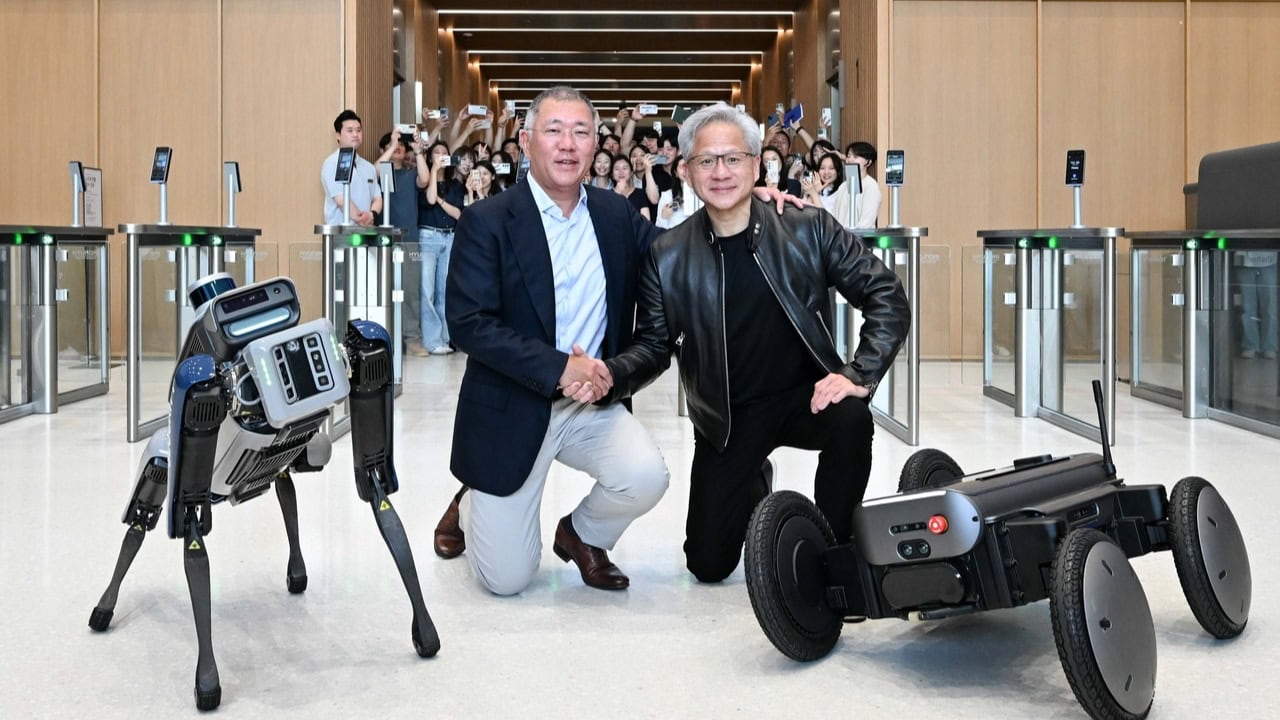
Nvidia CEO Jensen Huang's endorsement of Hyundai as the robotics leader—surpassing Tesla—represents a watershed moment for e-commerce logistics automation. The statement validates Hyundai's $2B+ robotics investments in humanoid robots, industrial automation, and logistics systems, signaling that traditional automotive manufacturers now dominate practical robotics implementation over pure-play tech companies. This competitive shift directly impacts cross-border e-commerce sellers relying on warehouse automation for fulfillment efficiency.
For Amazon FBA sellers and 3PL providers, this development translates to immediate cost reduction opportunities. Hyundai's manufacturing expertise in hardware integration, precision engineering, and real-world deployment creates competitive pressure on existing robotics vendors (Boston Dynamics, Tesla Bot, ABB). Industry analysts project warehouse automation solution costs will decline 15-25% over 18-24 months as Hyundai scales production and competitors respond. Sellers currently spending $50K-150K annually on robotic picking, sorting, and packing systems can expect 20-30% cost reductions by Q3 2025. This is particularly valuable for mid-tier sellers (500K-5M annual units) operating 3-5 fulfillment centers where automation ROI has been marginal.
The strategic implication extends beyond cost savings to supply chain resilience. Hyundai's South Korean manufacturing base provides geographic diversification from US-centric robotics suppliers. Sellers with Asia-Pacific fulfillment networks can now source automation solutions closer to operations, reducing 8-12 week lead times to 4-6 weeks. Additionally, Hyundai's integration of Nvidia's AI chips (as Huang's endorsement implies) creates a validated hardware-software stack for warehouse operations. Sellers can expect standardized APIs, faster deployment, and better interoperability with existing WMS (warehouse management systems) and inventory platforms like Shopify, NetSuite, and SAP.
Competitive advantage emerges for early adopters. Sellers who transition to Hyundai-powered automation by Q2 2025 will achieve 12-18% fulfillment cost reductions versus competitors still using legacy systems. This margin expansion is critical in categories with <15% net margins (electronics, home goods, apparel). For sellers managing 10K+ daily shipments, a 12% fulfillment cost reduction equals $40K-80K monthly savings—directly improving profitability and enabling aggressive pricing strategies to capture market share.
The broader market signal: robotics commoditization is accelerating. Huang's statement reflects industry consensus that robotics leadership now requires manufacturing scale, not just software innovation. This favors established industrial companies (Hyundai, Siemens, ABB) over venture-backed startups. For e-commerce sellers, this means more reliable, standardized, cost-competitive automation solutions entering the market over the next 12-18 months.
Questions 8
What is the difference between Hyundai and Tesla in robotics capabilities for e-commerce?
Hyundai excels in hardware integration, manufacturing precision, and real-world deployment—critical for warehouse automation—while Tesla focuses on autonomous vehicle software and consumer robotics. Huang's endorsement specifically highlights Hyundai's ability to manufacture humanoid robots and industrial automation systems at scale, with proven integration expertise across multiple industries. For e-commerce sellers, this means Hyundai solutions offer more reliable, standardized, and interoperable warehouse systems compared to Tesla's experimental approach. Hyundai's South Korean manufacturing base also provides geographic diversification and shorter lead times (4-6 weeks vs. 8-12 weeks) for Asia-Pacific fulfillment operations.
When should sellers transition to Hyundai-powered warehouse automation?
Early adopters who transition by Q2 2025 will achieve 12-18% fulfillment cost reductions versus competitors using legacy systems—a critical advantage in low-margin categories (electronics, apparel, home goods with <15% net margins). For sellers managing 10K+ daily shipments, this represents $40K-80K monthly savings. However, sellers should first audit current automation ROI, evaluate Hyundai's API compatibility with existing WMS platforms (Shopify, NetSuite, SAP), and request pilot programs before full deployment. The optimal timeline is Q1 2025 for evaluation and Q2-Q3 2025 for implementation to capture cost reductions before competitors.