
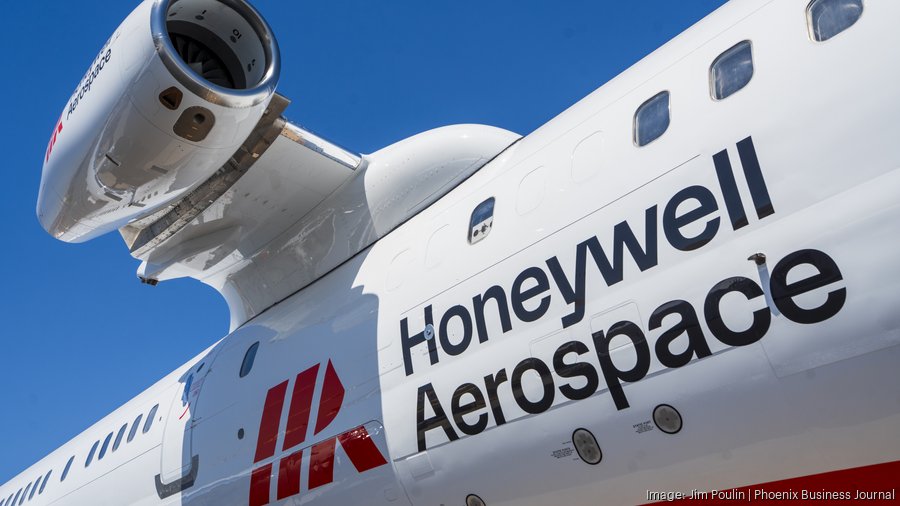


Honeywell Spinoff Creates Supply Chain Risks for E-Commerce Sellers | Logistics & Automation Impact June 2026
- Honeywell's three-way corporate split (June 2026) threatens pricing stability for warehouse automation, IoT logistics systems, and building management tech used by Amazon, Shopify sellers; $2B free cash flow reallocation may delay product innovation cycles











/Honeywell%20International%20Inc%20operations%20facility%20by-JHVEPhoto%20via%20iStock.jpg)














Overview
Honeywell's strategic three-way corporate separation—completing June 29, 2026—creates material supply chain uncertainty for cross-border e-commerce sellers relying on the conglomerate's automation and logistics technologies. The industrial giant is splitting into three independent entities: Honeywell Aerospace (defense/aviation), Honeywell Technologies (automation/IoT), and Solstice Advanced Materials (completed October 2025). This restructuring directly impacts sellers through Honeywell's critical role supplying warehouse automation systems, building management IoT solutions, and logistics infrastructure components to major e-commerce platforms and 3PL providers.
The operational impact centers on three seller-critical areas. First, pricing volatility: Honeywell Technologies projects $19.9-20.2B revenue and $2B annual free cash flow for 2026, but the spinoff creates 12-18 months of organizational uncertainty. Historically, industrial spinoffs trigger 8-15% price increases as newly independent companies optimize margins and reduce cross-subsidization. Sellers using Honeywell warehouse automation, conveyor systems, or IoT sensors should expect cost increases on renewal contracts between Q3 2026-Q2 2027. Second, service continuity risks: The separation may fragment customer support, with legacy Honeywell customers potentially reassigned between entities. Sellers dependent on Honeywell logistics technology (warehouse management systems, automated sorting, real-time tracking) face 4-8 week transition periods where service response times may degrade. Third, innovation delays: Honeywell Technologies' $3.95-4.15 EPS guidance suggests margin pressure; new product development cycles typically extend 6-12 months post-spinoff as teams reorganize and capital allocation shifts.
Geopolitical headwinds compound these risks. CEO Vimal Kapur disclosed Q1 2026 revenue reduction of 0.5% and Q2 decline of ~1% due to Middle East tensions affecting process automation segment—the exact division supporting e-commerce logistics infrastructure. While Kapur expressed "very high conviction" in H2 2026 recovery, escalation scenarios could extend supply constraints through year-end. For sellers, this means potential delays in automation equipment orders, spare parts availability, and system upgrades during peak Q3-Q4 selling seasons.
The broader strategic shift favors specialized competitors. Honeywell's move toward focused business units mirrors industry trends toward vertical specialization. This creates opportunities for sellers to evaluate alternative suppliers: Rockwell Automation (industrial control), Siemens (building automation), and Zebra Technologies (warehouse IoT) are gaining market share as customers diversify away from conglomerate dependency. Sellers should begin supplier diversification now, before Honeywell Technologies' independent pricing takes effect.
Questions 8
How does the Middle East geopolitical tension mentioned by Honeywell CEO affect seller timelines?
CEO Vimal Kapur disclosed Q1 2026 revenue reduction of 0.5% and Q2 decline of ~1% due to Middle East tensions, primarily affecting the process automation and technology segment. This is the exact division supplying e-commerce logistics infrastructure. While Kapur expressed 'very high conviction' in H2 2026 recovery, escalation scenarios could extend supply constraints through year-end. Sellers should assume potential 4-8 week delays in automation equipment orders and spare parts during Q2-Q3 2026. Recommendation: accelerate any critical automation purchases to Q1 2026 before geopolitical impacts fully materialize, and establish backup suppliers for Q2-Q3 contingency.
Which e-commerce seller segments are most vulnerable to Honeywell's spinoff impact?
High-volume sellers (1000+ units/month) using Honeywell warehouse automation, conveyor systems, or IoT tracking are most exposed. Sellers relying on 3PL providers that depend on Honeywell logistics technology face indirect pricing pressure. Amazon FBA sellers in electronics, apparel, and home goods categories—which require sophisticated warehouse automation—will see cost increases passed through fulfillment fees. Regional exposure: US-based sellers with fulfillment centers using Honeywell systems face immediate impact; EU sellers may experience 6-month delays due to Honeywell Technologies' European operations restructuring. Small sellers (<100 units/month) using basic inventory management face minimal direct impact but should monitor 3PL fee increases.