



AI Productivity Paradox 2026 | Why 90% of Sellers' AI Investments Fail to Scale
- 5.8 hours weekly wasted on "botsitting" maintenance; 36% AI session failure rate; 90% of firms report zero productivity gains despite massive AI spending





























Overview
The global AI productivity crisis reveals a critical operational reality for e-commerce sellers: adoption without integration creates overhead, not efficiency. According to the Work AI Institute's 2026 UK study of 1,500 digital workers, while 90% of UK workers now use AI tools, only 18% report meaningful organizational performance improvements. The core problem is "botsitting"—workers spend 5.8 hours weekly maintaining, correcting, and managing AI systems. For every hour obtaining AI output, workers spend roughly another hour making it usable. This 1:1 maintenance-to-output ratio directly impacts e-commerce operations: product research, listing optimization, customer service automation, and pricing analysis all suffer from the same integration bottleneck.
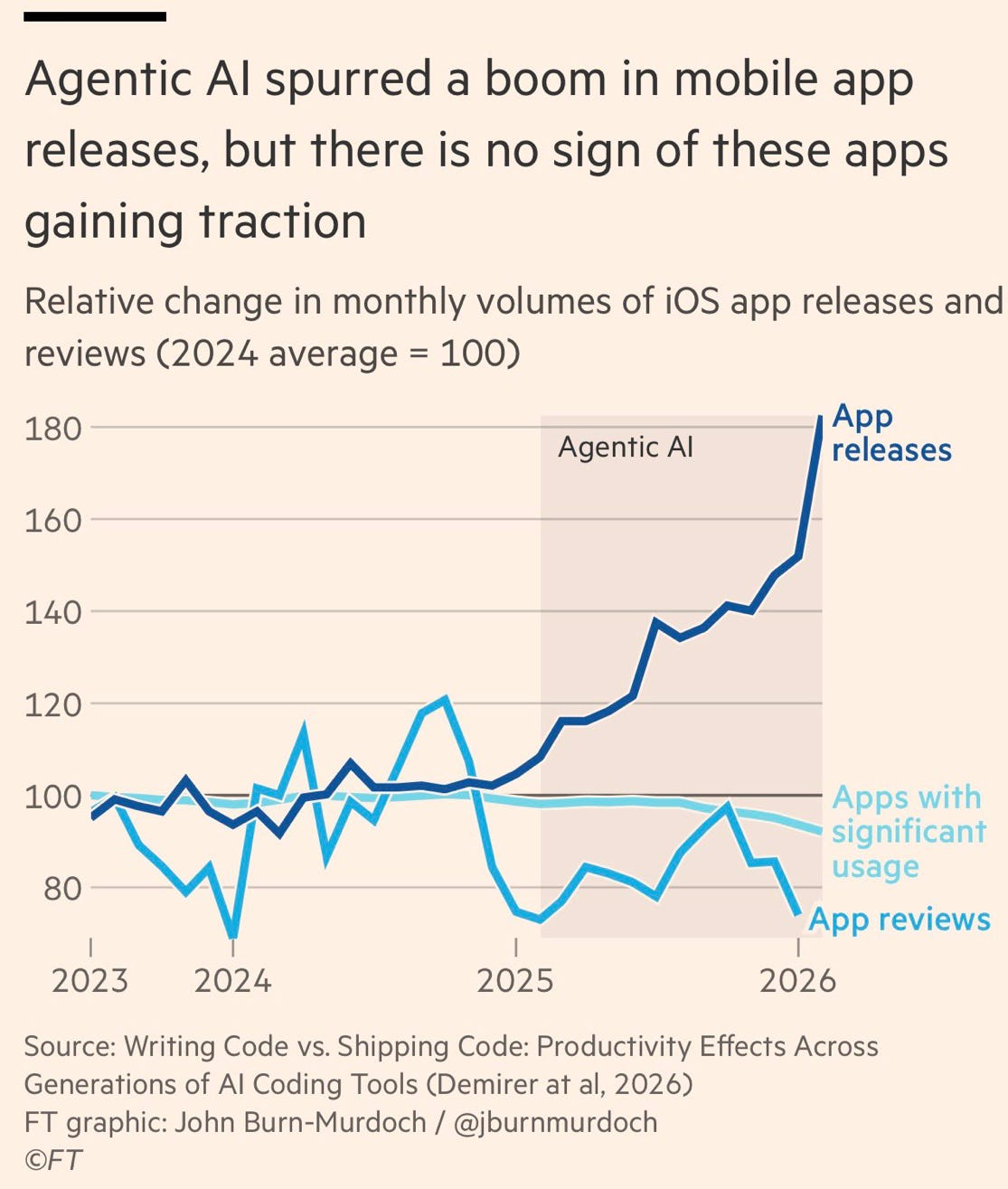
The scale of the problem extends across enterprise operations. A February 2026 National Bureau of Economic Research survey of nearly 6,000 executives found that 90% of firms actively using AI reported zero productivity impact over three years. At Uber, COO Andrew Macdonald acknowledged no correlation between increased AI use and consumer-facing features, highlighting "tokenmaxxing"—accumulating massive AI processing costs ($50,000-$200,000+ monthly for enterprise deployments) without corresponding business value. McKinsey identifies a "gen AI paradox" where isolated productivity boosts in pilot projects fail to scale due to adoption challenges and ineffective implementation. For sellers, this manifests as: AI tools that generate product descriptions requiring 40-60% manual revision; chatbots producing responses needing human verification; pricing algorithms requiring constant recalibration; and inventory forecasts with 30-40% error rates requiring manual adjustment.
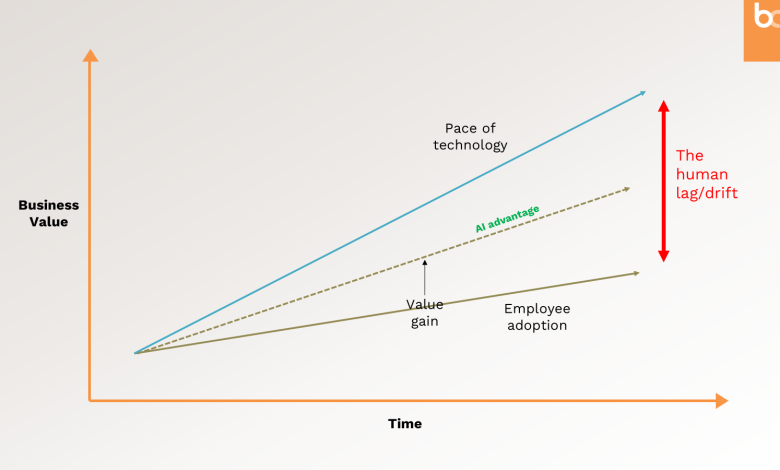
The employment and organizational restructuring lag compounds the problem. Boston Consulting Group reports that AI is reshaping jobs faster than companies restructure work. Companies deploy AI solutions rapidly across retail, supply chain, and customer service sectors but lack frameworks for reskilling teams or redesigning workflows. For cross-border e-commerce sellers, this creates immediate operational risks: supply chain optimization systems lack human oversight structures; customer service automation fails without proper escalation protocols; inventory management AI operates without integration to fulfillment networks. The research reveals 70% of UK AI users admit to passing "good enough" outputs without thorough verification—a dangerous practice in regulated e-commerce areas like product compliance, allergen labeling, and customs documentation. Moody's chief economist Mark Zandi projects meaningful AI productivity impacts won't appear in economic data until late 2020s or early 2030s, suggesting sellers face 3-5 years of investment before seeing returns. Meanwhile, AI-generated content flooding digital ecosystems (books, product listings, reviews) demonstrates the "slop" problem: plausible but unreliable material difficult to distinguish from quality work, directly threatening seller reputation and conversion rates.
Questions 8
Why are sellers' AI productivity gains not translating to business results?
The Work AI Institute's 2026 study reveals a critical integration gap: while AI tools save 12 hours weekly on individual tasks, workers spend 5.8 hours weekly on 'botsitting'—maintaining, correcting, and managing AI outputs. For e-commerce sellers, this means AI-generated product descriptions require 40-60% manual revision, chatbots need constant human oversight, and pricing algorithms require recalibration. The 1:1 maintenance-to-output ratio eliminates net productivity gains. Additionally, 36% of AI sessions fail outright, requiring full restarts. The National Bureau of Economic Research found 90% of firms report zero productivity impact despite massive AI investments, indicating the problem is systemic, not tool-specific.
What is 'tokenmaxxing' and how does it affect seller profitability?
Tokenmaxxing refers to accumulating massive AI processing costs without corresponding business value. At Uber, executives acknowledged no correlation between increased AI use and consumer-facing features. For sellers, this manifests as: enterprise AI deployments costing $50,000-$200,000+ monthly while generating minimal ROI; cloud infrastructure costs for AI tools exceeding labor savings; and pricing optimization systems consuming significant compute resources for marginal accuracy improvements. OpenAI, Anthropic, and other AI providers are losing substantial money and raising prices, indicating the economics are unsustainable. Sellers should audit AI tool spending against measurable business outcomes (conversion rate lift, cost per acquisition reduction, inventory turnover improvement) before scaling deployment.