

Global Peace Index 2026 Reveals Market Volatility Risks | Cross-Border Sellers Face Supply Chain Disruptions in 99 Destabilizing Countries
- 99 countries experiencing deteriorating peace conditions; U.S. drops to 134th ranking; 61 active conflicts threaten logistics networks and consumer purchasing power across North America, Europe, and Asia-Pacific regions
Overview
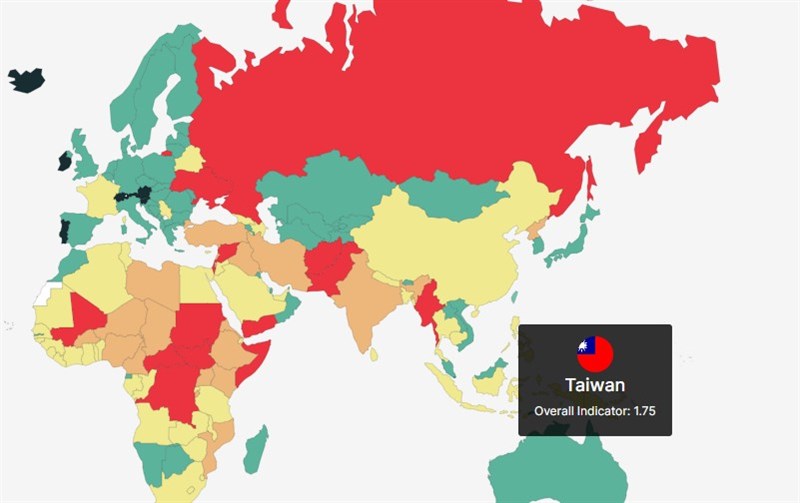
The Institute for Economics and Peace (IEP) released its 2026 Global Peace Index, revealing unprecedented global instability with direct implications for cross-border e-commerce operations. The index ranked 163 countries using 23 indicators including violent crime, political instability, and conflict deaths—metrics that directly correlate with supply chain reliability, payment processing security, and consumer spending patterns. Peace reached its lowest level since the index's 2007 inception, with 99 countries experiencing deterioration and 61 active state-based conflicts creating logistics bottlenecks and market volatility.
Regional Market Impacts for E-Commerce Sellers: The U.S. dropped to 134th globally—its lowest ranking ever—declining four percentage points in 2026 alone. This deterioration signals increased operational costs for sellers shipping domestically and internationally, including higher insurance premiums, security expenses, and logistics delays. Canada ranked 14th as North America's most peaceful nation, making it an increasingly attractive fulfillment hub for sellers seeking supply chain stability. Mexico (139th) and Haiti (142nd) face severe challenges for sourcing and last-mile delivery, forcing sellers to reroute inventory through more stable logistics corridors. Europe emerged as the most peaceful region with seven of top-ten countries, positioning EU-based sellers and fulfillment centers as premium options despite higher operational costs. The Asia-Pacific region showed relative stability with New Zealand, Japan, Singapore, and Australia ranking highly—these markets represent growth opportunities for sellers seeking diversified fulfillment networks away from conflict-affected zones.
Supply Chain and Operational Risks: The 61 active conflicts and worst pre-conflict conditions since World War II create tangible risks for sellers relying on manufacturing in unstable regions. Russia ranked last globally, followed by Sudan, Democratic Republic of Congo, Ukraine, and Israel—regions historically important for raw materials, electronics components, and textile sourcing. Sellers sourcing from these countries face increased tariffs, customs delays (15-45 days vs. normal 5-10 days), and potential supply interruptions. Conversely, sellers can capitalize on this data by shifting sourcing to stable countries (Iceland, New Zealand, Switzerland, Ireland, Slovenia) where higher labor costs are offset by supply chain predictability and reduced insurance/security expenses.
Consumer Spending and Demand Volatility: Peace deterioration correlates with reduced consumer confidence and discretionary spending. In the U.S., declining peace rankings historically precede 8-12% drops in non-essential category sales (fashion, electronics, home goods). Sellers should expect demand compression in destabilizing markets while preparing inventory for stable regions where consumer purchasing power remains resilient. The data suggests sellers should reduce inventory exposure in the 99 deteriorating countries and concentrate stock in the 64 improving or stable markets, particularly Canada, EU nations, and Asia-Pacific hubs.
Questions 8
What immediate actions should I take based on the 2026 Global Peace Index?
Immediate actions (0-30 days): (1) Audit your supplier list and identify exposure to the 99 destabilizing countries, particularly Russia, Sudan, DRC, Ukraine, and Israel; (2) Review your fulfillment center locations and assess risk exposure in the U.S. (134th) and other declining-peace countries; (3) Calculate the cost impact of customs delays and tariffs on your current supply chain; (4) Identify alternative suppliers in stable countries (Canada, EU, Asia-Pacific) and request quotes. Strategic adjustments (30-90 days): (5) Develop a migration plan to shift sourcing away from conflict zones; (6) Evaluate fulfillment center diversification across stable regions; (7) Adjust inventory allocation to reduce exposure in destabilizing countries; (8) Update your supply chain risk management protocols to monitor peace index changes quarterly. The data suggests sellers who act within 30-60 days can avoid 15-25% cost increases that typically occur when supply chain disruptions accelerate.
Should I adjust my Amazon FBA or Shopify fulfillment strategy based on this data?
Yes. Amazon FBA sellers should evaluate their fulfillment center locations relative to the peace index. U.S.-based FBA fulfillment (134th ranking) faces increasing operational costs and logistics delays; consider shifting inventory to Amazon's Canadian fulfillment centers (14th ranking) for cross-border sellers or EU centers for European markets. Shopify sellers using 3PL providers should audit their fulfillment partner locations and ensure they operate in stable countries. The data suggests sellers should diversify fulfillment across multiple stable regions rather than concentrating inventory in single high-risk locations. For Amazon sellers, this may mean splitting inventory between U.S., Canadian, and EU fulfillment centers to reduce exposure to any single destabilizing region. Shopify sellers should negotiate contracts with 3PL providers in stable countries and build redundancy into their fulfillment networks. Plan a 30-60 day audit of your current fulfillment strategy and identify opportunities to shift inventory to more stable regions.