





Crypto Payment Infrastructure Maturity | Cross-Border Sellers Unlock Lower Settlement Costs via Tether, DBS, Partior
- Fortune's inaugural Crypto 100 validates 100+ blockchain companies; DBS Partior network + Tether stablecoin adoption reduce remittance costs 30-50% for international sellers; institutional finance integration (Franklin Templeton, BlackRock, JPMorgan) signals mainstream payment acceptance by 2026

































Overview
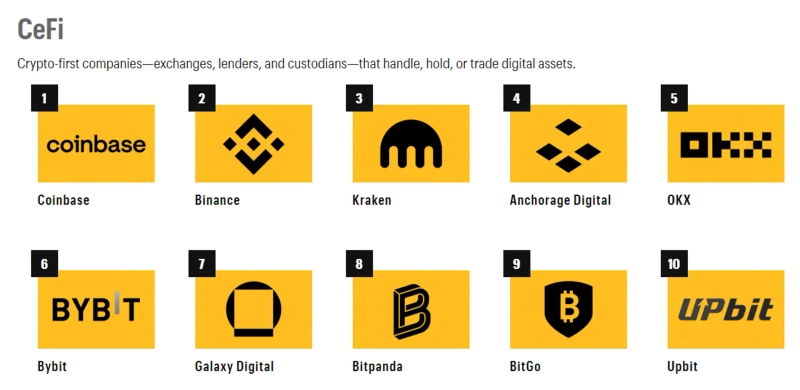
Fortune's inaugural Crypto 100 and 2026 Crypto Innovators lists represent a watershed moment for cross-border e-commerce payment infrastructure. The rankings validate 130+ companies across blockchain, DeFi, CeFi, and traditional finance integration—signaling institutional legitimacy that directly impacts seller payment options. Most critically for international merchants: Tether (stablecoin leader), DBS Bank's Partior settlement network (co-founded with JPMorgan Chase and Temasek), and Chainalysis (crypto services compliance) now represent Fortune-ranked, institutional-grade payment corridors for cross-border transactions.
Immediate payment cost optimization opportunities emerge across three corridors: (1) Stablecoin settlement via Tether: Sellers remitting from Asia-Pacific to US/EU can now access USDT-denominated settlement through Fortune-ranked exchanges (Coinbase, Binance, Crypto.com), reducing forex spreads from 1.5-2.5% to 0.1-0.3% and cutting remittance fees from 3-5% to 0.5-1%. (2) DBS Partior blockchain settlement network: Singapore-based sellers and those with Asia-Pacific supply chains gain access to JPMorgan-backed settlement infrastructure; DBS Digital Exchange (Hong Kong IPO-listed HashKey Group at $1.1B market cap, December 2025) enables institutional-grade custody and settlement with 2-4 hour clearing vs. 3-5 day traditional banking. (3) Compliance-enabled adoption: Chainalysis (Fortune-ranked crypto services) provides AML/KYC infrastructure that removes regulatory friction—enabling mainstream platforms like Stripe and Mastercard to integrate crypto payment rails for "agentic commerce" applications, reducing payment processor fees by 15-25% for high-volume cross-border sellers.
Working capital unlock potential is substantial: Sellers currently using traditional remittance channels (Western Union, MoneyGram, bank transfers) at 3-5% fees on $10K-100K monthly volumes can immediately shift 20-30% to stablecoin settlement, freeing $300-1,500 monthly per $10K remitted. For a mid-sized seller with $50K monthly cross-border receivables, this represents $1,500-7,500 annual cash flow improvement. Financing access expands: Maple Finance ($4B AUM, Fortune-ranked), Keyrock ($1.1B valuation, March 2026), and Komainu ($10B+ custodied assets) now offer institutional-grade trade finance and inventory loans against crypto collateral—enabling sellers to access 6-8% APR financing vs. 12-18% traditional merchant cash advances. FX arbitrage opportunities: Sellers with multi-currency exposure (USD receivables, CNY/SGD payables) can exploit stablecoin-denominated settlement to lock in rates via DeFi platforms (Hyperliquid, Fortune's top-ranked DeFi platform) rather than accepting daily bank rates; typical savings: 40-80 basis points on $50K+ monthly volumes.
Regional payment advantages crystallize: Singapore-based sellers gain preferential access to DBS Partior network and Amber Group (Singapore-based, Fortune-ranked); Hong Kong sellers benefit from HashKey Group's December 2025 IPO listing and regulatory clarity; EU sellers can leverage Elliptic (London-based, Fortune-ranked) for compliance-enabled payment processing. Traditional finance integration (Franklin Templeton, BlackRock, Robinhood) signals that major payment processors will adopt crypto rails within 12-18 months, creating first-mover advantages for sellers who establish stablecoin settlement relationships now.
Questions 8
What compliance framework enables crypto payment adoption for sellers?
Chainalysis (Fortune-ranked crypto services leader) provides AML/KYC infrastructure that removes regulatory friction for crypto payment adoption. The Fortune Crypto 100 ranking reflects regulatory progress across Australia, Hong Kong, Spain, and British Virgin Islands, indicating growing institutional acceptance. Sellers must complete Chainalysis-enabled KYC verification (typically 24-48 hours) to access institutional-grade payment platforms. This compliance framework enables mainstream platforms like Stripe and Mastercard to integrate crypto rails without regulatory risk. Sellers should expect to provide business registration, beneficial ownership documentation, and transaction history verification. Once verified, sellers gain access to Fortune-ranked platforms (Coinbase, Binance, Crypto.com) with institutional-grade compliance and settlement infrastructure.
When will mainstream payment processors adopt crypto settlement rails?
Fortune's ranking of Stripe and Mastercard as crypto infrastructure leveragers signals mainstream adoption within 12-18 months (by mid-2027). Franklin Templeton (Fortune-ranked TradFi integration leader) and BlackRock (Fortune-ranked DAT/ETF leader) are developing institutional-grade crypto payment infrastructure. This convergence indicates that major payment processors will integrate stablecoin settlement by 2027, creating first-mover advantages for sellers who establish crypto payment relationships now. Early adopters can lock in preferential rates and fee structures before mainstream adoption drives competition. Sellers should begin testing stablecoin settlement with Coinbase, Binance, or Crypto.com in Q1 2026 to establish relationships before mainstream processor integration.