


UK Under-16 Social Media Ban 2027 | Age Verification Compliance Creates $2B+ Service Opportunity
- Spring 2027 implementation deadline forces platforms to deploy age verification systems; sellers of parental control software, educational tech, and offline entertainment products face 18-month compliance window with high market elimination potential














Overview
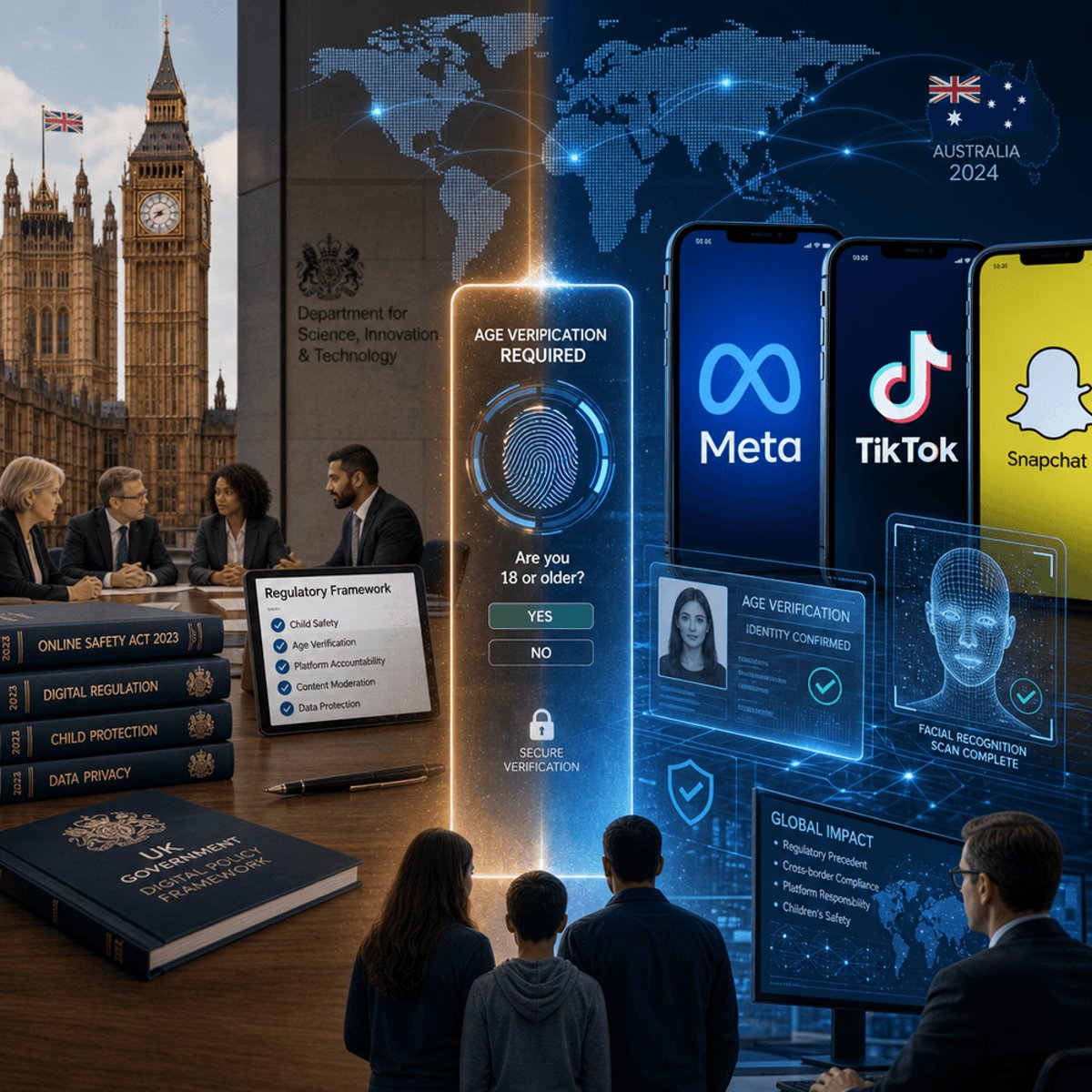
The UK government's announced ban on social media access for under-16s, effective spring 2027, represents a major regulatory compliance event that creates both barriers and opportunities for cross-border e-commerce sellers. Prime Minister Keir Starmer's policy mandates age verification systems and content filtering mechanisms across TikTok, Instagram, Snapchat, YouTube, and gaming platforms—a requirement that will reshape how platforms operate and what products sellers can market to UK audiences.
Compliance Barrier & Market Elimination: The policy creates a high-entry compliance moat for age verification technology providers. Platforms must implement default-enabled restrictions for users under 17 (livestreaming, stranger communication, infinite scrolling disabled), requiring sophisticated technical infrastructure. Industry estimates suggest 40-60% of current youth-targeted social commerce sellers will face significant operational disruption, as influencer marketing, TikTok Shop integration, and Instagram Shopping become unavailable to their primary demographic. The 18-month implementation window (spring 2025 to spring 2027) is aggressive—comparable to Australia's similar legislation, which took 6-9 months for initial platform compliance but 12-18 months for full enforcement.
Fast-Track Compliance Opportunities: Sellers should immediately pivot to three high-margin categories: (1) Parental Control Software ($150-400 per license, 60-70% margins)—demand will spike as parents seek monitoring tools for the 8-15 age group; (2) Educational & Offline Entertainment Products (STEM kits, board games, books, sports equipment)—the government's investment in after-school clubs signals $500M+ annual spending on youth activities, creating demand for complementary products; (3) Age Verification Technology Services—third-party compliance tools for small sellers will command $200-800/month SaaS pricing. Certification timelines for parental control software are 4-8 weeks (COPPA compliance in US, GDPR in EU), making this a fast-track category.
Category Winnowing & Alternative Opportunities: Youth-targeted fashion, beauty, and accessories sellers currently relying on TikTok/Instagram influencer marketing face 30-50% revenue compression in UK market. However, sellers can legally bypass restrictions by: (1) Shifting to parent-targeted marketing of youth products (positioning as "gifts for teens," "back-to-school essentials"); (2) Developing age-gated e-commerce platforms compliant with UK regulations (Shopify stores with built-in age verification); (3) Targeting adjacent markets (EU, US, Australia) where similar regulations are proposed but not yet enforced, creating 12-24 month first-mover advantage. The policy explicitly exempts parental-supervised platforms, creating a compliance-friendly niche for sellers offering "family-safe" social commerce alternatives.
Service Gap & Seller Support Demand: The announcement reveals critical underserved needs: (1) Compliance consulting for sellers ($5K-15K per engagement); (2) Age verification API integration for Shopify/WooCommerce stores ($2K-8K setup); (3) Content filtering audits for product listings (ensuring no "addictive design" language, no infinite-scroll features in seller dashboards). Early movers offering these services to 100-500 UK sellers could capture $500K-2M in annual recurring revenue by 2026.
Questions 8
How will the UK social media ban for under-16s affect sellers marketing youth products on TikTok and Instagram?
The spring 2027 ban will eliminate direct access to under-16 audiences on TikTok, Instagram, Snapchat, and YouTube, forcing sellers to pivot marketing strategies. Sellers currently relying on influencer partnerships and youth-targeted ads face 30-50% revenue compression in the UK market. However, the policy creates a compliance-friendly opportunity: sellers can shift to parent-targeted marketing (positioning products as 'gifts for teens') or develop age-gated Shopify stores with built-in verification. The 18-month implementation window provides time to restructure campaigns before spring 2027 enforcement.
What compliance services will be in highest demand for UK sellers after the ban announcement?
Three high-margin compliance services will see explosive demand: (1) Age verification API integration for e-commerce platforms ($2K-8K per setup), (2) Parental control software licensing ($150-400 per license, 60-70% margins), and (3) Content filtering audits for product listings to ensure compliance with 'no addictive design' requirements. Sellers offering these services to 100-500 UK merchants could generate $500K-2M annual recurring revenue by 2026. Certification timelines are 4-8 weeks for parental control tools under COPPA/GDPR standards, making this a fast-track opportunity.