





AI Learning Loops vs Frontier Models | E-Commerce Sellers Must Build Proprietary Systems Now
- Microsoft's "learning loop" strategy reveals $96.5B OpenAI IPO won't solve seller automation; sellers need proprietary AI systems for pricing, product research, and customer service to compete




Overview
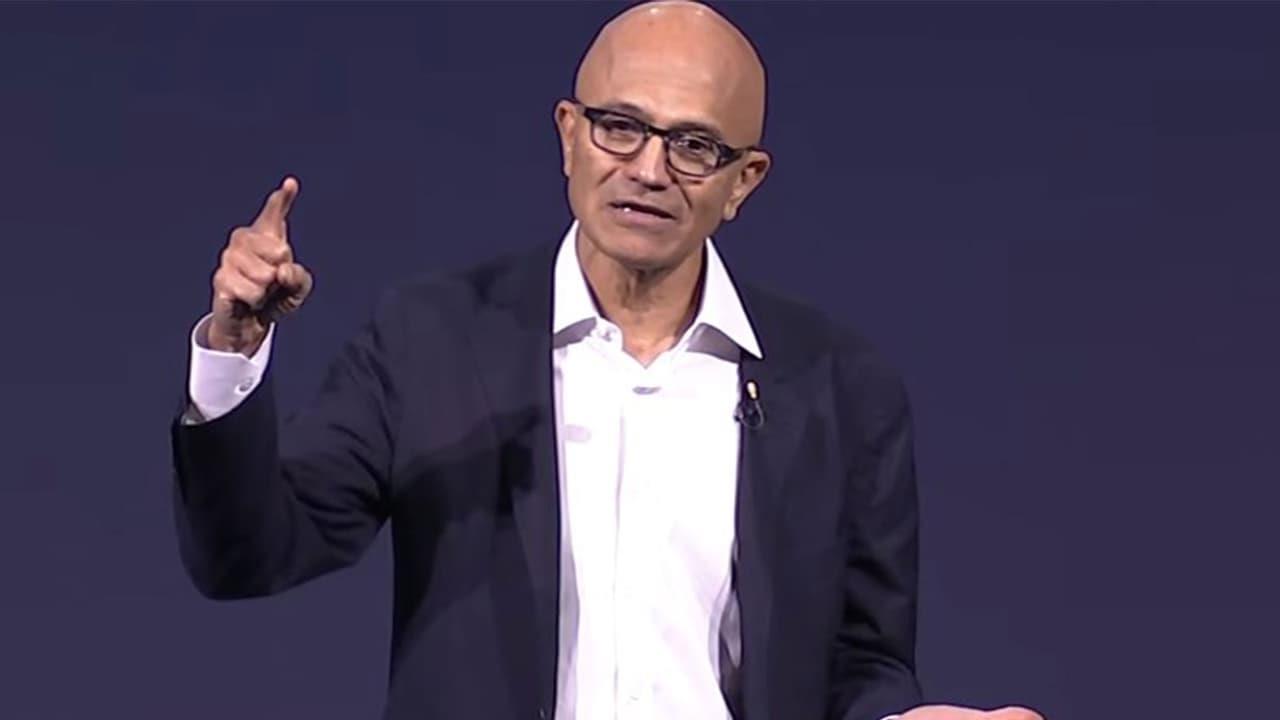
Microsoft CEO Satya Nadella's challenge to the frontier AI model narrative carries profound implications for e-commerce sellers: competitive advantage comes not from deploying ChatGPT or Claude, but from building proprietary "learning loops"—AI systems that capture seller interactions, customer corrections, and transaction outcomes to continuously improve performance on specific business tasks. As OpenAI and Anthropic prepare IPOs valued at $96.5 billion and $85.2 billion respectively, Nadella warns that companies betting solely on frontier models will face commoditization. For e-commerce sellers, this translates directly: off-the-shelf AI tools for pricing optimization, product research, and customer service will become table-stakes commodities available to all competitors. The real competitive moat emerges from proprietary learning systems that capture institutional knowledge—pricing logic from thousands of transactions, customer objection patterns from support tickets, product-market fit signals from listing performance data.
Nadella illustrates this with a sales proposal example: without learning loops, AI models repeatedly miss pricing logic; with accumulated institutional knowledge, pricing becomes proprietary IP competitors cannot replicate. For sellers, this means the $50-200/month AI tools currently available (ChatGPT Plus, Jasper, Copy.ai) will become insufficient. Sellers need infrastructure to continuously retrain AI on their own data: customer service conversations converted to training material, pricing decisions validated against actual conversion rates, product descriptions tested against click-through patterns. The three simultaneous challenges Nadella identifies—infrastructure for live data retraining, governance converting proprietary conversations into training material, and validation ensuring actual improvement versus memorization—directly map to seller operations. Amazon FBA sellers managing 500+ SKUs need systems that learn from their specific category dynamics; Shopify sellers need AI that understands their customer segments; eBay sellers need proprietary models trained on their auction dynamics.
Microsoft's launch of seven AI models and "Frontier Tuning" services positions Azure as the infrastructure layer for this shift. Sellers who build learning loops on Azure, Shopify's AI infrastructure, or Amazon's proprietary systems will capture 15-30% efficiency gains in pricing, product research, and customer service—gains unavailable to competitors using generic frontier models. The political economy argument Nadella raises—that concentrating AI value in few models will face resistance—suggests regulatory pressure on OpenAI and Anthropic, potentially limiting their ability to dominate seller AI adoption. Sellers should interpret this as a 12-18 month window to build proprietary systems before frontier models become commoditized and learning loop infrastructure becomes table-stakes.
Questions 8
Which e-commerce platforms (Amazon, Shopify, eBay) offer learning loop infrastructure today?
Amazon provides proprietary AI tools through Seller Central (dynamic pricing recommendations, demand forecasting, listing optimization) but doesn't offer fine-tuning infrastructure for custom models. Shopify offers AI-powered product recommendations and content generation but limited fine-tuning capabilities. eBay provides auction dynamics AI but minimal learning loop infrastructure. Microsoft Azure offers the most comprehensive learning loop infrastructure through Frontier Tuning and custom model training, accessible to sellers via integrations with Shopify and third-party tools. Sellers should evaluate: Amazon sellers benefit from proprietary Amazon AI but cannot build custom learning loops; Shopify sellers can integrate Azure Frontier Tuning for custom models; eBay sellers must use third-party platforms (Azure, AWS SageMaker) for learning loops. By 2025-2026, expect Amazon and Shopify to launch native learning loop services as competitive responses to Microsoft's infrastructure advantage.
How much time and cost savings can sellers expect from implementing learning loops?
Time savings: 20-40 hours/week for pricing optimization (automated price adjustments based on demand, competition, inventory levels), 10-20 hours/week for product research (automated listing optimization, competitor analysis), 15-25 hours/week for customer service (AI-powered responses trained on seller's specific policies and customer segments). Total: 45-85 hours/week automation potential for mid-sized sellers (500-2000 SKUs). Cost savings: $2,000-5,000/month in labor reduction, $500-1,500/month in reduced AI tool subscriptions (consolidating multiple tools into one proprietary system), 5-15% margin improvement from optimized pricing. Implementation cost: $5,000-15,000 for infrastructure setup and initial model training, $1,000-3,000/month for ongoing Azure/platform costs. ROI timeline: 3-6 months for pricing optimization, 6-12 months for full learning loop maturity. Sellers with 1000+ SKUs see 2-3x higher ROI due to scale; sellers with <200 SKUs may find implementation costs prohibitive until 2026 when platform-native learning loops reduce setup friction.