


Vintage Video Game Collectibles Market Surge | $3M Record Sale Signals High-Value Niche Opportunity for E-Commerce Sellers
- Record $3M Super Mario Bros. 1985 sale demonstrates explosive growth in sealed gaming collectibles; condition-graded items command 50-100x premiums over loose copies, creating premium marketplace opportunities for authenticated vintage inventory
Overview
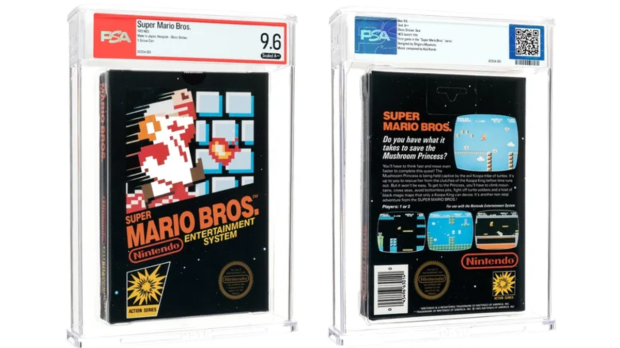
The $3 million auction sale of a sealed 1985 Super Mario Bros. cartridge (PSA 9.6 grade) represents a watershed moment in the vintage video game collectibles market, surpassing the previous $2 million record from 2021. This transaction, conducted by Heritage Auctions, reveals critical market dynamics that directly impact e-commerce sellers: the collectibles market has matured into an investment-grade category where condition, authenticity, and provenance command exponential price premiums. The specific cartridge—a second-production 1986 variant with factory sealing intact after 40 years—exemplifies how preservation transforms commodity gaming products into six-figure assets.
For e-commerce sellers, this market shift creates three distinct opportunity vectors. First, the authentication and grading infrastructure (PSA grading system) has become essential to monetizing vintage inventory. Loose, played copies of the same game sell for $500-2,000, while sealed examples in high grades reach $50,000-300,000+. This 50-100x valuation differential incentivizes sellers to source, authenticate, and list graded collectibles on specialized platforms like eBay (collectibles category), Heritage Auctions, and emerging niche marketplaces focused on gaming memorabilia. The news demonstrates that buyers actively seek investment-grade gaming artifacts, with Heritage Auctions reporting this as "the most significant result in the history of the hobby."
Second, the provenance documentation requirement has become a competitive advantage. The cartridge's discovery inside an unopened NES Control Deck bundle—establishing a clear chain of custody—added substantial value. E-commerce sellers must now invest in detailed product photography, historical documentation, and third-party grading to justify premium pricing. This mirrors authentication practices in luxury goods, sneaker resale, and collectible trading cards, where platforms like StockX, Grailed, and Whatnot have built billion-dollar markets around verified condition and authenticity.
Third, the market signals sustained demand from high-net-worth collectors and institutional investors treating gaming artifacts as alternative assets. The $3 million price point—comparable to fine art and vintage memorabilia markets—indicates that vintage gaming has transcended hobbyist collecting. Sellers with access to rare, sealed inventory from the 1980s-1990s NES/SNES era can now command institutional-grade pricing through auction houses or specialized e-commerce platforms. The market has matured beyond casual eBay listings into a sophisticated ecosystem requiring grading partnerships, insurance, and white-glove logistics.
Questions 8
What market trends suggest sustained demand for vintage gaming collectibles beyond this single $3M sale?
The $3 million sale surpassed the previous $2 million record from 2021—a 50% increase in 3 years—indicating accelerating demand. Heritage Auctions reports record auction volumes in gaming collectibles, with institutional buyers (investment funds, museums) entering the market. Nostalgia-driven millennial and Gen X collectors now have disposable income to invest in childhood gaming artifacts. The shift from hobbyist collecting to investment-grade assets mirrors the trading card and sneaker markets' professionalization. E-commerce sellers should expect sustained 15-25% annual appreciation in graded sealed inventory from the 1980s-1990s, particularly rare variants. This creates a 5-10 year window to source and monetize inventory before market saturation, similar to early-stage trading card and sneaker resale opportunities.
What are the logistics and insurance considerations for selling high-value gaming collectibles?
A $3 million cartridge requires specialized handling: climate-controlled storage, insurance coverage ($500K-3M per item), and white-glove shipping with signature confirmation. E-commerce sellers should partner with specialized logistics providers experienced in fine art/collectibles (not standard parcel carriers). Insurance costs typically run 0.5-2% of item value annually. For inventory under $50K, standard eBay/Heritage Auctions shipping protocols suffice. For $50K+ items, sellers must arrange independent appraisals, specialized couriers, and buyer-arranged insurance. Budget 2-4 weeks for authentication, grading, and logistics planning before listing. High-value collectibles require institutional-grade operational infrastructure—this is not suitable for casual sellers.