




Chinese Market Volatility & Capital Flight | Cross-Border Sellers Face Financing Headwinds
- Alibaba/Tencent revenue misses signal weakening consumer demand; HK$3.6B investor outflows create payment delays and higher working capital costs for China-based suppliers







Overview
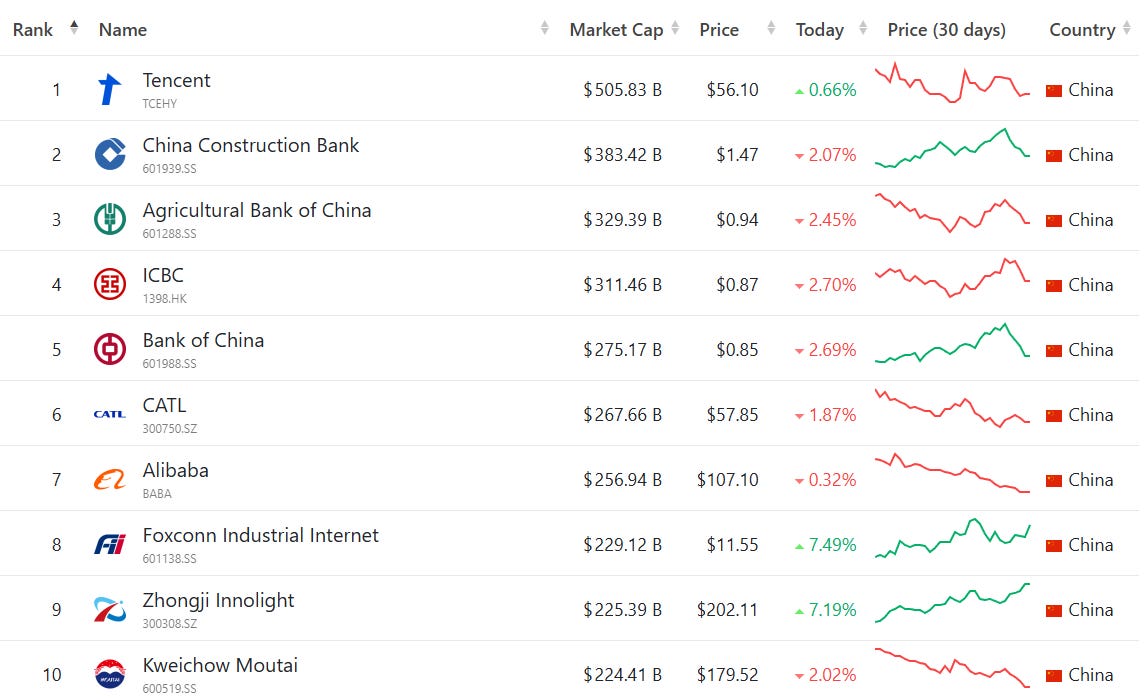
Chinese equity markets are experiencing significant capital reallocation away from technology platforms toward financial institutions, creating immediate cash flow challenges for cross-border e-commerce sellers sourcing from China. The Hang Seng China Enterprises Index (HSCEI) declined 9% year-to-date with the MSCI China Index approaching bear market territory (18% drop from October peaks), while major e-commerce platforms Alibaba and Tencent reported March quarter revenues below estimates. This divergence reflects structural weakness: HSCEI remains dominated by financial services (28%) and consumer stocks (23%) with minimal AI exposure, contrasting sharply with Taiwan's 58% semiconductor weighting and South Korea's 246% earnings growth.
For cross-border sellers, this creates three immediate financial pressures: First, weakening Chinese consumer sentiment directly impacts supplier cash positions—Alibaba and Tencent's revenue misses indicate reduced domestic purchasing power, forcing suppliers to extend payment terms or seek alternative financing. Second, net outflows of HK$3.6 billion through stock connect programs in May (first monthly outflow since June 2023) signal mainland investor retreat, reducing available trade finance and working capital lending. Third, Beijing's crackdowns on illegal cross-border brokerage operations are tightening informal financing channels that many small suppliers rely on for inventory funding.
Payment and financing implications are acute: Sellers relying on supplier credit from Chinese manufacturers face extended payment terms (30-60 days becoming 60-90 days), increasing working capital requirements by 15-25%. Invoice financing costs are rising as lenders reduce China exposure—factoring rates for China-origin goods have increased 50-100 basis points to 4.5-5.5% APR. Currency hedging costs are elevated due to CNY weakness expectations; forward contracts for 6-month USD/CNY exposure now cost 2.2-2.8% annually versus 1.5-1.8% in Q1 2026. Immediate action required: Sellers should lock in supplier payment terms NOW before further tightening, explore alternative financing through Singapore/Hong Kong payment hubs (which offer 3.2-3.8% factoring rates versus 4.5%+ from China-focused lenders), and consider shifting 20-30% of sourcing to Vietnam/India suppliers to reduce China concentration risk and payment delays.
Questions 8
How does Alibaba and Tencent's revenue miss impact my supplier payment terms?
Alibaba and Tencent's March quarter revenue shortfalls directly weaken their supplier ecosystem's cash positions. When these platforms underperform, their vendor networks face reduced order volumes and delayed payments, forcing suppliers to extend payment terms to preserve cash. Sellers sourcing from China should expect supplier payment terms to shift from 30-45 days to 60-90 days over the next 2-3 months. This increases your working capital requirement by 15-25%, requiring immediate action to secure alternative financing or negotiate early payment discounts (typically 2-3% for 15-day payment).
What does the HK$3.6 billion investor outflow mean for my trade financing costs?
The HK$3.6 billion monthly outflow through stock connect programs signals mainland investors are reducing China exposure, directly reducing available trade finance capital. Banks and fintech lenders that depend on Chinese institutional funding are tightening credit availability and raising rates. Invoice factoring for China-origin goods has increased 50-100 basis points to 4.5-5.5% APR, while supply chain financing products now require higher collateral ratios (60-70% versus 50-60% previously). Sellers should lock in financing rates immediately before further tightening; compare rates across Singapore (3.2-3.8%), Hong Kong (3.5-4.2%), and US-based lenders (4.0-4.8%).