

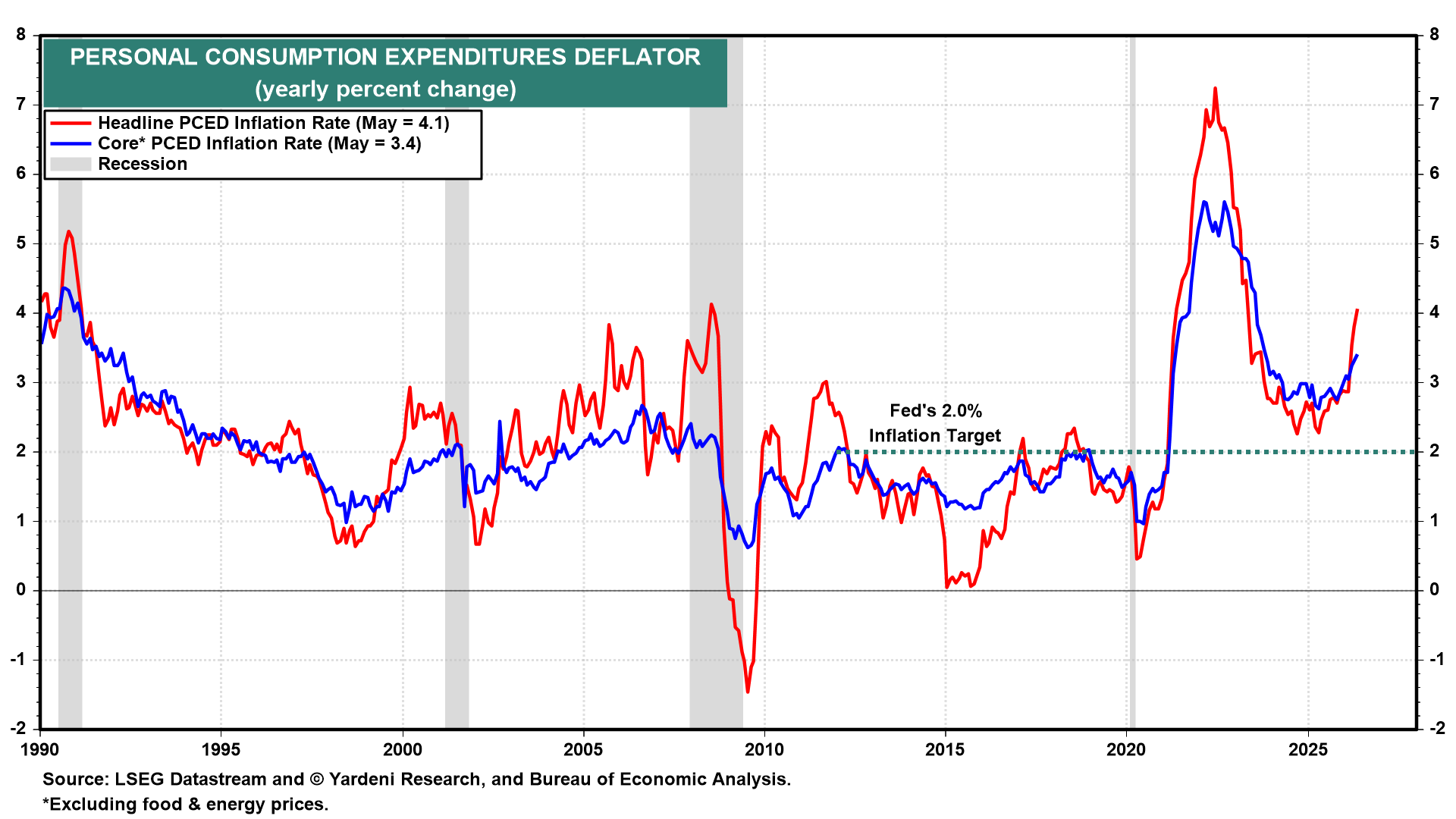


US Inflation Hits 3-Year High | Cross-Border Sellers Face Rising Financing Costs
- 4.1% inflation surge pressures Fed rate hikes; sellers face 75+ bps increases through year-end, impacting working capital costs and payment settlement speeds across major corridors
Overview
The Federal Reserve's preferred inflation gauge surged to 4.1% annually in May 2026—more than double the 2% target—creating immediate financial headwinds for cross-border e-commerce sellers. With markets pricing a 64% probability of Fed rate increases as early as September 2026, and Bank of America Securities projecting 75 basis points of increases through year-end, sellers face a critical window to optimize payment structures, financing costs, and working capital management before borrowing becomes significantly more expensive.
Immediate Payment & Financing Impact: Rising interest rates directly compress seller margins through higher working capital financing costs. Sellers currently using invoice factoring (typical 2-4% monthly rates) or PO financing (8-12% APR) will see costs increase 50-100 basis points within 6 months. For a mid-sized seller with $500K monthly inventory financing, this translates to $2,500-5,000 in additional monthly costs. Cross-border sellers using trade finance products (letters of credit, supply chain financing) face similar pressures, with settlement costs rising from 1.5-2.5% to 2.5-3.5% of transaction value.
Currency & FX Arbitrage Opportunities: The inflation surge stems from multiple sources—Iran conflict energy disruptions, food price climbs, and AI semiconductor demand—creating volatile currency pairs. USD strength typically accompanies Fed rate hike expectations, benefiting sellers with USD-denominated costs (manufacturing in Asia, inventory purchases) but pressuring those with EUR/GBP exposure. Sellers should immediately lock in forward contracts for Q3-Q4 2026 shipments at current rates before September hikes materialize. The Strait of Hormuz reopening mentioned in the news could rapidly reverse energy inflation, creating a 2-4 week window for favorable FX rates before market repricing.
Working Capital Acceleration Strategies: With interest rates rising, sellers must accelerate cash conversion cycles. Immediate actions: (1) Shift from 30-day payment terms to 15-day terms with suppliers (cost: 0.5-1% discount, savings: $2,500-5,000 monthly on $500K inventory), (2) Implement dynamic pricing to reduce inventory holding periods by 5-10 days (unlocks $25-50K working capital per $500K inventory), (3) Evaluate inventory financing alternatives—warehouse receipt financing (1.5-2% vs. 2.5-3.5% traditional) offers 100+ bps savings. Sellers with 60+ day cash conversion cycles should target 45-50 days within 90 days to minimize financing exposure.
Regional Payment Route Optimization: The timing of rate hikes creates corridor-specific opportunities. US-based sellers importing from Asia should prioritize payment methods with fastest settlement: ACH (1-2 days, 0.5% fee) over wire transfers (same-day, 0.75% fee) for non-urgent shipments, saving 25 bps. EU sellers face additional complexity—ECB policy divergence from Fed hikes creates EUR weakness opportunities. Sellers with EUR revenue should consider immediate conversion to USD at current rates (typically 1.08-1.10 range) rather than waiting for post-hike weakness. Hong Kong and Singapore entities benefit from stable currency pegs; sellers should evaluate HK/SG entity structures for import financing, where local rates may lag Fed increases by 2-4 weeks.
Questions 8
How will Fed rate hikes in September 2026 affect my working capital financing costs?
If the Fed raises rates 75+ basis points through year-end as Bank of America Securities projects, sellers using invoice factoring will see costs increase from 2-4% monthly to 2.75-4.75% monthly. For a $500K monthly inventory position, this adds $3,750-5,000 in annual costs. Sellers should immediately lock in fixed-rate financing through Q4 2026 before September hikes materialize. Consider switching from variable-rate factoring to fixed-rate supply chain financing (typically 1.5-2.5% for 90-day terms) to protect margins.
What FX opportunities exist before the Fed raises rates in September?
The 4.1% inflation surge creates volatile currency pairs, particularly USD/EUR and USD/GBP. USD typically strengthens ahead of Fed hikes, benefiting sellers with USD costs but pressuring EUR/GBP revenue. Sellers should immediately execute forward contracts for Q3-Q4 2026 shipments at current rates (locking in 1.08-1.10 USD/EUR range) rather than waiting for post-hike weakness. The Strait of Hormuz reopening could reverse energy inflation within 2-4 weeks, creating a narrow window for favorable FX rates before market repricing.