
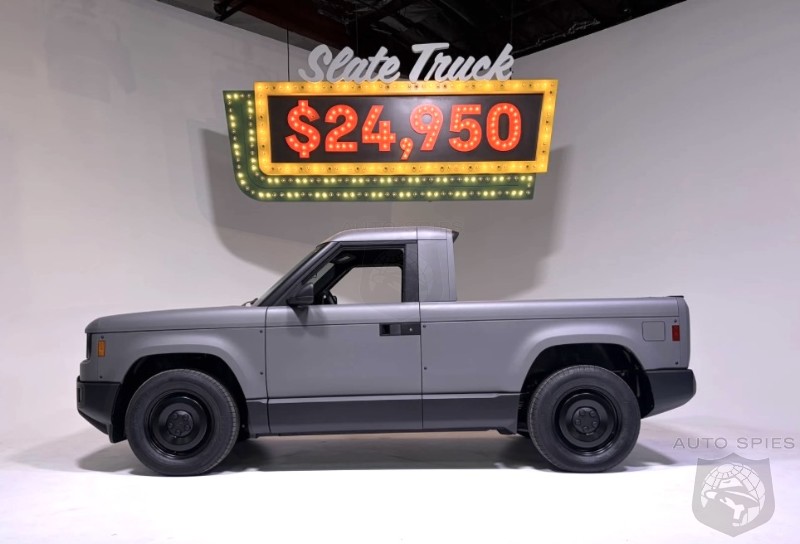
Slate's $24,950 EV Truck Signals Massive Shift in Affordable Vehicle Demand | Seller Opportunity in Accessories & Aftermarket Parts
- 10,000+ preorders in 4 hours reveal untapped market for budget-conscious consumers; sellers can capitalize on $300M+ aftermarket accessory opportunity as Slate enables post-purchase customization
Overview
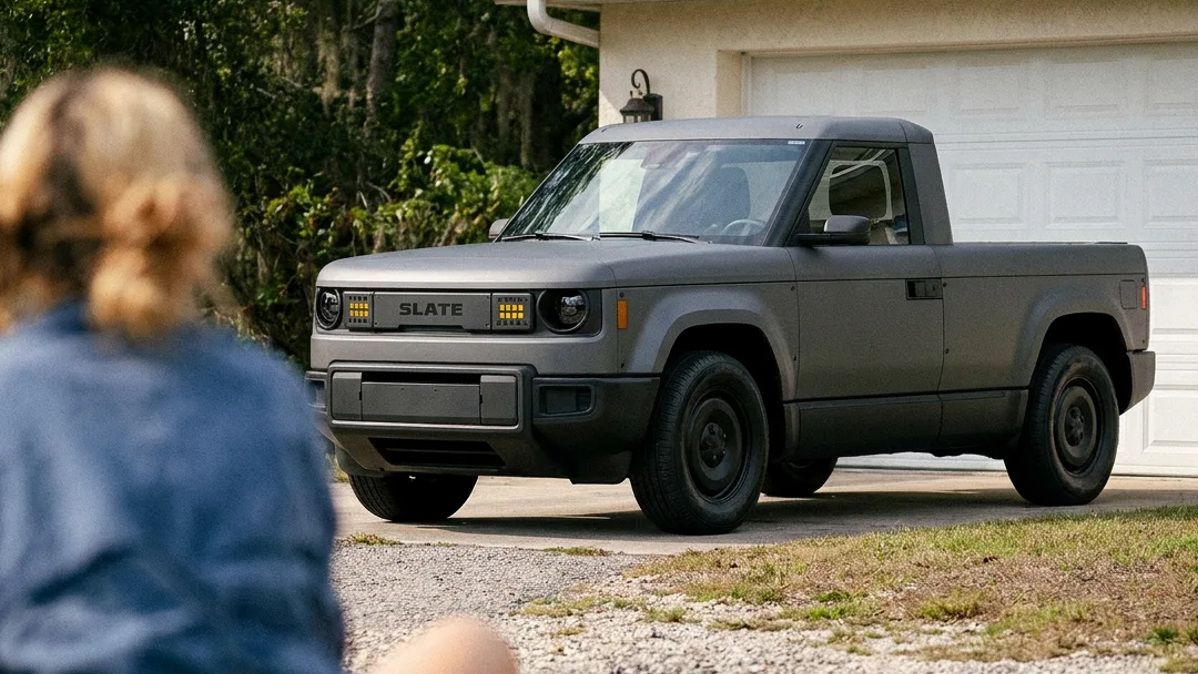
Slate's Jeff Bezos-backed EV truck launch at $24,950 represents a watershed moment in consumer demand for simplified, affordable vehicles—creating immediate e-commerce opportunities in automotive accessories, aftermarket parts, and lifestyle merchandise. The company achieved 10,000 preorders within 4 hours of website launch (non-refundable $300 deposits), demonstrating explosive demand for a 14.6-foot compact truck with stripped-down features (manual windows, analog climate controls, no infotainment). This signals a fundamental shift in buyer psychology: consumers are rejecting complex, feature-bloated vehicles in favor of simplicity and affordability.
For e-commerce sellers, this creates three distinct opportunity vectors. First, the aftermarket accessories market explodes—Slate explicitly designed the truck to accept post-purchase customization through its catalog, meaning sellers can target 10,000+ confirmed buyers immediately with window cranks, climate control upgrades, infotainment retrofits, and storage solutions. Second, the "retro simplicity" trend extends beyond vehicles into lifestyle categories: vintage-inspired home goods, analog gadgets, minimalist tech accessories, and nostalgia-driven merchandise will see demand spikes as this consumer cohort (cost-conscious, anti-complexity) shops across categories. Third, competitive intelligence reveals major automakers' failures in affordable EV launches (Tesla's $25K vehicle never launched, Nissan discontinued budget Leaf, Volvo discontinued EX30 due to tariff pressures in March 2024), indicating that profitability at sub-$30K price points remains elusive—creating supply gaps sellers can fill with compatible aftermarket solutions.
However, market data contradicts the affordability narrative. Average new vehicle transaction prices reached $50,900 in spring 2024, with premium vehicles like the Cadillac Escalade ($122K) and Toyota Sequoia ($84K) selling within 30 days versus the 60-day industry average. JD Power forecasts 1.3 million vehicle sales in June 2024 (3.6% YoY growth), indicating sustained demand despite high prices. This suggests Slate's 10,000 preorders may represent a niche segment rather than mass-market shift. Sellers should interpret this as a high-engagement, price-sensitive audience (likely 25-45 year-old males with $40-70K household income) rather than a broad market transformation. The real opportunity lies in serving this specific demographic across multiple categories—not just automotive, but outdoor gear, DIY tools, vintage collectibles, and minimalist lifestyle products that align with the "less is more" philosophy driving Slate's success.
Questions 7
What makes Slate's $24,950 truck significant for e-commerce sellers?
Slate's truck achieved 10,000 preorders in 4 hours, proving demand exists for affordable, simplified vehicles—a market major automakers abandoned. For sellers, this creates immediate opportunities in three areas: (1) aftermarket accessories for the 10,000+ confirmed buyers, (2) lifestyle products targeting the cost-conscious, anti-complexity demographic, and (3) competitive solutions filling gaps left by failed affordable EV launches from Tesla, Nissan, and Volvo. The truck's design explicitly enables post-purchase customization, meaning sellers can target buyers with window upgrades, infotainment retrofits, and storage solutions. This represents a $300M+ addressable market in accessories alone, with high buyer intent (non-refundable deposits indicate serious commitment).
How does Slate's success contradict broader vehicle market trends?
While Slate achieved 10,000 preorders, average new vehicle prices reached $50,900 in spring 2024, with premium vehicles ($84K-$122K) selling faster (30 days vs. 60-day average). JD Power forecasts 1.3 million vehicle sales in June 2024 (3.6% YoY growth), indicating sustained demand despite high prices. This suggests Slate's success represents a niche segment rather than mass-market shift toward affordability. Sellers should interpret this as a high-engagement, price-sensitive audience rather than a broad consumer preference change. The opportunity lies in serving this specific demographic across multiple categories, not assuming the entire market is shifting toward budget vehicles.