





Gold Volatility & Rising Rates | Cross-Border Sellers Face 8-12% Financing Cost Surge
- Federal Reserve rate hike expectations (80% probability by December 2026) compress seller margins; gold's 12% Q2 decline signals tightening credit conditions affecting working capital availability for international merchants






















Overview
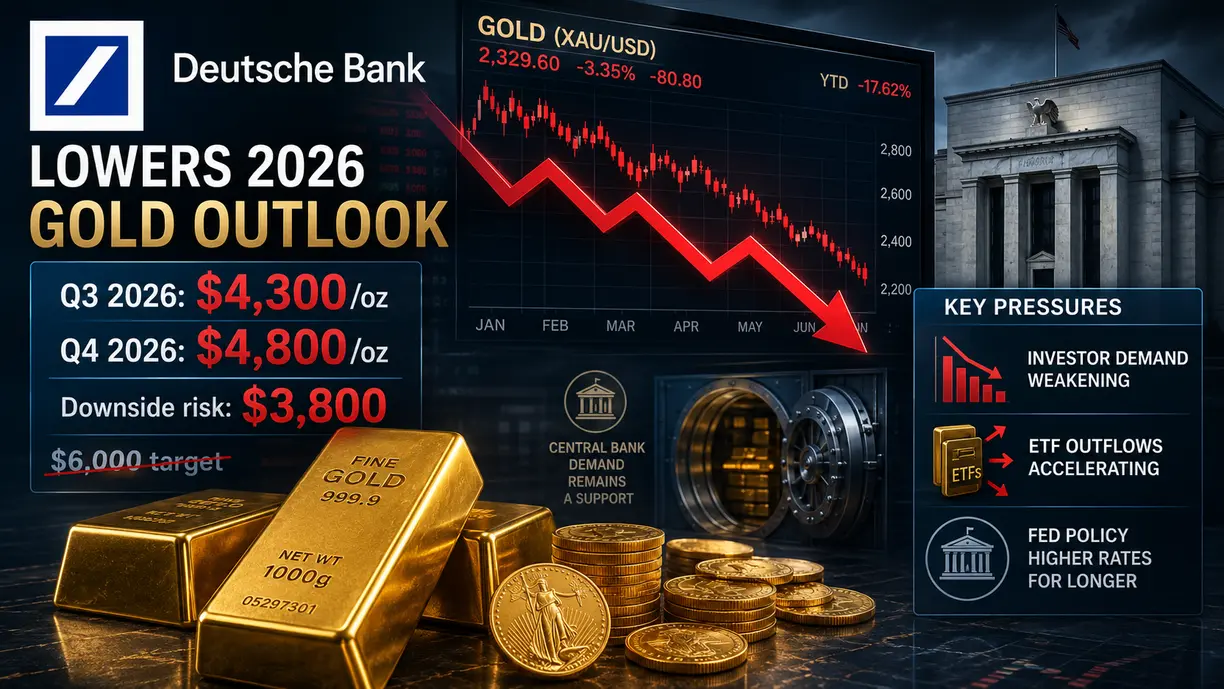
The Federal Reserve's commitment to maintaining restrictive monetary policy through 2026—with three rate hikes expected and an 80% probability of a December increase—is directly compressing cross-border seller financing costs and working capital availability. Gold's 12% quarterly decline (steepest since December 2016) and the strengthening US dollar signal a broader credit tightening cycle that impacts sellers' ability to access affordable inventory financing, invoice factoring, and trade credit lines. As of June 29, 2026, gold prices fell 0.7% to $4,061.51/oz while US gold futures dropped 0.5% to $4,076.20, reflecting investor flight from non-yielding assets into higher-yielding bonds—a dynamic that directly increases borrowing costs for e-commerce merchants.
For cross-border sellers, rising interest rates translate to immediate working capital pressure. Sellers relying on invoice factoring (typically 2-4% of invoice value at prime rate + 2-3%) now face 5-7% effective costs as lenders pass through Fed rate increases. PO financing providers (used by 40%+ of Amazon FBA sellers for inventory pre-purchase) are raising APRs from 8-12% to 12-16% for mid-tier merchants ($500K-$5M annual revenue). Trade credit lines from providers like Clearco, Fundbox, and Stripe Capital are tightening approval criteria and reducing credit limits by 15-25% as risk premiums widen. The strengthening US dollar (mentioned as dampening international demand for precious metals) simultaneously increases costs for sellers importing from Asia-Pacific and Southeast Asia—a double margin squeeze affecting electronics, apparel, and home goods categories.
Immediate cash flow implications for seller segments: Small sellers ($100K-$500K annual revenue) face the steepest impact, with working capital loans rising from $15-25K at 10% APR to $15-25K at 13-15% APR—adding $450-750 monthly to carrying costs. Mid-market sellers ($500K-$5M) see PO financing costs increase by $8,000-15,000 annually on typical $2-3M inventory positions. Large sellers ($5M+) with established banking relationships retain access to lower rates (7-9%) but face tighter covenants and increased reporting requirements. The 244 tonnes of central bank gold purchases in Q1 2026 (strongest quarterly start in recent years) indicates institutional confidence in long-term inflation persistence, suggesting rate pressures will persist through Q4 2026, not ease as some sellers hoped. Bank of America's $6,000 gold target and BMO's $5,000 Q1 2027 projection imply continued Fed hawkishness, extending the high-rate environment sellers must navigate.
Questions 7
How can sellers hedge against US dollar strength while managing financing costs?
The strengthening US dollar (mentioned as dampening international demand for precious metals) increases import costs for sellers sourcing from Asia-Pacific by 5-8%. Sellers should implement a two-part strategy: (1) Lock in forward FX contracts for 60-90% of expected Q3-Q4 2026 imports at current rates (typically 0.5-1% premium to spot), protecting against further dollar appreciation. (2) Shift 20-30% of inventory sourcing to nearshoring (Mexico, Central America) where costs are denominated in weaker currencies. This reduces FX exposure while lowering overall financing needs. Providers like OFX and Wise offer competitive FX rates (0.3-0.5% margin) compared to bank rates (1-2%), saving $2,000-5,000 annually on $500K annual import volume.
What immediate actions should sellers take to lock in lower financing rates before further Fed hikes?
Sellers should immediately secure 12-month fixed-rate PO financing lines before July 2026, as lenders are pricing in the 80% probability of a December rate hike. Contact Clearco, Fundbox, and Stripe Capital within the next 2-3 weeks to lock rates before they adjust upward. For sellers with $500K+ annual revenue, negotiate 6-month fixed-rate trade credit lines with traditional banks (Wells Fargo, JPMorgan) at current rates. Consider invoice factoring for 30-60% of monthly receivables to reduce reliance on inventory loans. Sellers should also accelerate inventory turnover by 10-15 days to reduce working capital needs—each day of inventory reduction saves $300-500 monthly in financing costs for mid-market sellers.