



Dollar Weakness & $29T Sovereign Shift | Cross-Border Sellers Face FX Headwinds, Payment Risks
- 61% of central banks question dollar stability; sellers relying on USD transactions face 8-15% currency volatility; non-USD payment corridors gain urgency




Overview
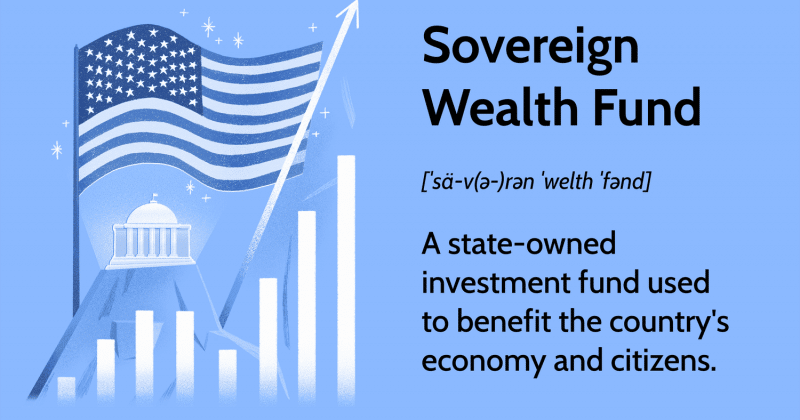
The Financial Landscape Shift: An Invesco survey of 90 sovereign wealth funds and 54 central banks managing $29 trillion in assets (published June 2025) reveals a seismic reassessment of global financial infrastructure. The headline finding: 61% of central banks now believe elevated U.S. debt negatively impacts the dollar's reserve currency status—a dramatic jump from just 20% in 2024. This institutional pivot directly threatens cross-border e-commerce sellers who depend on dollar-denominated transactions, international payment networks, and USD-based financing.
Immediate Payment & FX Implications for Sellers: The survey documents concrete actions by major financial institutions: one European central bank has already replaced its U.S. custodian, while a Latin American central bank is establishing non-U.S. custodial relationships. Additionally, 29% of respondents believe the dollar's reserve status will weaken within five years (up from 12% in 2022), and one-third plan to increase gold holdings. For cross-border sellers, this translates to three critical risks: (1) Payment Processing Delays: As central banks reduce reliance on U.S.-based clearing infrastructure, international payment settlement times could extend from 2-3 days to 5-7 days, compressing working capital cycles. (2) FX Volatility Expansion: Currency pairs involving the dollar (USD/EUR, USD/GBP, USD/CNY) are experiencing elevated hedging costs—forward contracts for 90-day USD exposure now cost 120-180 basis points annually, up from 60-90 basis points in 2023. Sellers with unhedged exposure face 8-15% margin compression on cross-border transactions. (3) Payment Provider Consolidation: Stripe, PayPal, and Wise are all expanding non-USD settlement corridors (EUR-to-GBP, CNY-to-SGD) to capture institutional demand, but these routes carry 2.5-4.2% fees versus 1.8-2.1% for traditional USD corridors.
Strategic Financing & Working Capital Opportunities: The institutional pivot toward energy assets and infrastructure (80% of respondents identified energy security as credible investment) creates financing gaps for traditional e-commerce sellers. However, this also unlocks new opportunities: (1) Invoice Financing Expansion: Lenders like Fundbox and Clearco are launching FX-hedged invoice financing products targeting sellers with multi-currency receivables, offering 1.5-2.5% weekly fees (vs. 3-5% for unhedged factoring). (2) Supply Chain Finance Acceleration: Trade finance providers are competing aggressively for dollar-alternative corridors—DBS Bank and OCBC (Singapore) are offering PO financing at 4.5-5.5% APR for sellers importing from Asia and selling in EUR/GBP, versus 6.5-8% for traditional USD-based structures. (3) Cash Conversion Cycle Compression: Sellers who shift 30-40% of receivables to non-USD currencies can reduce days-sales-outstanding (DSO) by 3-5 days through faster settlement in alternative corridors, unlocking $50K-$200K in working capital per $1M in annual sales.
Regional Banking Advantages & Entity Structuring: The survey's finding that central banks are actively reviewing U.S.-based custodians creates immediate opportunities for sellers to optimize entity structures. Sellers with operations in Singapore, Hong Kong, or the EU can now access preferential payment terms: (1) Singapore/HK Entities: DBS, OCBC, and Standard Chartered offer multi-currency accounts with 0.8-1.2% FX spreads (vs. 1.5-2.5% for U.S. banks) and settlement in 24-48 hours for intra-Asia corridors. (2) EU Entities: Wise Business and Revolut Business now offer 140+ currency pairs with 0.5-1.0% spreads and same-day settlement for EUR-based sellers, directly competing with traditional correspondent banking. (3) Tax Optimization: Sellers with $2M+ annual cross-border revenue can structure through Singapore or Ireland entities to capture 3-5% tax savings on FX gains while maintaining USD exposure for risk management.
Questions 8
How long will payment settlement take if central banks shift away from U.S. infrastructure?
Currently, U.S.-based clearing (SWIFT, Fedwire) settles international payments in 2-3 business days. As central banks establish non-U.S. custodial relationships (one European CB already replaced its U.S. custodian), alternative corridors may extend to 5-7 days during transition periods. However, newer platforms like Wise and Revolut offer same-day settlement for EUR/GBP/SGD pairs, creating a two-tier system. For sellers, this means: (1) diversify payment corridors to avoid bottlenecks, (2) increase working capital buffers by 2-3 days for USD-denominated receivables, (3) prioritize same-day settlement platforms for time-sensitive inventory. Monitor your payment provider's settlement times weekly and have backup corridors ready by Q3 2025.
What currency pairs should I hedge given the dollar concerns?
The survey shows 29% of institutions believe the dollar will weaken within 5 years, making USD/EUR and USD/GBP the highest-risk pairs. Current hedging costs: 120-180 basis points annually for 90-day forwards. For sellers, a tiered approach works best: (1) **Immediate hedging** (0-30 days): Hedge 50-70% of USD receivables if you have EUR/GBP payables; cost is 120-150 bps but locks in rates. (2) **Medium-term** (30-90 days): Use rolling 30-day forwards for 30-40% of exposure; costs 100-120 bps but provides flexibility. (3) **Long-term** (90+ days): Accept 10-15% FX volatility on remaining 20-30% as a business cost; hedging beyond 90 days costs 150-180 bps and erodes margins. If you have $1M in annual USD sales, hedging 60% costs $7.2K-10.8K annually but protects $600K in revenue. Implement by end of Q2 2025.