


SpaceX Stock Decline Threatens Starlink Expansion | Critical for Remote Logistics Sellers
- 24% stock drop from IPO high signals reduced capital for satellite internet infrastructure expansion affecting last-mile delivery in underserved markets



Overview
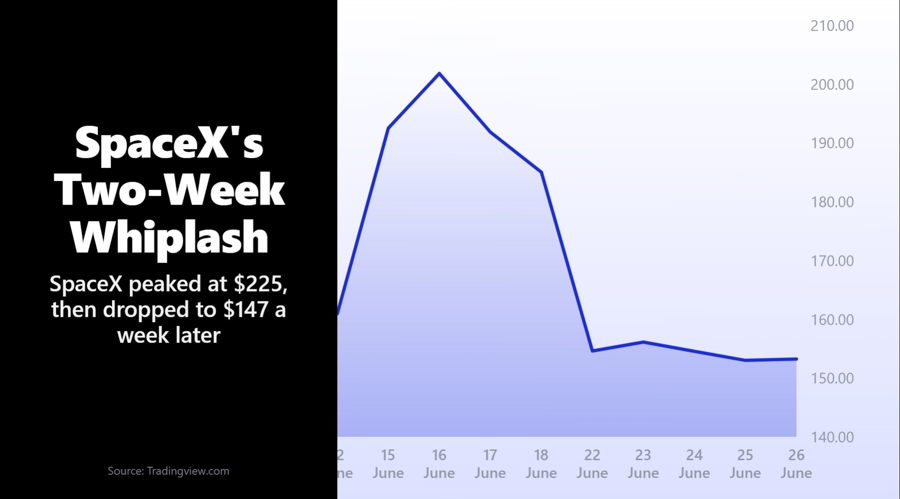
SpaceX's 24% stock decline from its June 16, 2026 IPO peak represents a critical infrastructure risk for e-commerce sellers relying on satellite-based logistics solutions. The aerospace company's underperformance—despite Russell 1000 inclusion and scheduled Nasdaq 100 entry on July 7, 2026—signals investor concerns about valuation and market conditions that directly impact capital allocation for Starlink expansion, the satellite internet service critical for cross-border commerce connectivity in remote regions.
For logistics-dependent e-commerce businesses, SpaceX's financial health directly influences last-mile delivery capabilities. Starlink provides critical satellite internet infrastructure that enables supply chain connectivity in areas where traditional broadband is unavailable or unreliable. The company's IPO underperformance may constrain capital available for infrastructure expansion, potentially delaying service rollouts to emerging markets where e-commerce logistics providers depend on satellite connectivity. Sellers operating 3PL networks in rural areas, developing markets, or regions with limited terrestrial internet infrastructure face potential delays in service expansion timelines. The stock's sharp pullback despite technical support factors (index inclusions typically generate institutional buying pressure) suggests market skepticism about SpaceX's near-term profitability and growth trajectory—directly affecting the company's ability to invest in commercial satellite internet expansion that benefits cross-border commerce operations.
The timing of this underperformance creates operational uncertainty for sellers planning logistics infrastructure investments. SpaceX's capital allocation priorities may shift toward core aerospace operations rather than Starlink commercial expansion, potentially affecting service availability and pricing for e-commerce logistics providers. Sellers relying on satellite-based connectivity for inventory tracking, order fulfillment, and supply chain visibility in underserved regions should monitor SpaceX's quarterly earnings and capital expenditure guidance. The company's market valuation influences its ability to compete with terrestrial broadband providers and expand service coverage—critical factors for sellers operating in Southeast Asia, Latin America, Africa, and other regions where satellite internet represents a viable logistics infrastructure solution. Additionally, SpaceX's stock performance may affect investor confidence in space-based infrastructure companies broadly, potentially impacting funding availability for competing satellite internet providers that sellers might consider as alternative logistics partners.
Strategic implications extend to supply chain resilience and geographic diversification. Sellers currently dependent on Starlink for remote logistics operations should evaluate alternative connectivity solutions and 3PL providers with diversified infrastructure. The stock decline may create near-term pricing pressure as SpaceX prioritizes cash flow over expansion, potentially offering cost advantages for early adopters. However, longer-term service expansion uncertainty warrants contingency planning for sellers in markets where satellite internet represents primary connectivity infrastructure. Monitoring SpaceX's capital expenditure announcements and quarterly guidance will provide early signals about Starlink's commercial expansion trajectory and its implications for cross-border logistics operations.
Questions 7
What is the relationship between Russell 1000 inclusion and SpaceX's stock performance?
SpaceX's addition to the Russell 1000 index after June 2026 and scheduled Nasdaq 100 inclusion on July 7, 2026 typically provide positive momentum through increased institutional demand and broader market exposure. However, the stock's sharp pullback despite these technical support factors indicates investor concerns about valuation or market conditions are outweighing index-driven buying pressure. This suggests institutional investors view SpaceX's current valuation as unattractive relative to growth prospects, signaling skepticism about near-term profitability and Starlink's commercial viability. For sellers, this indicates the market questions SpaceX's ability to generate returns from Starlink investments, potentially constraining capital allocation for infrastructure expansion that benefits cross-border commerce operations.
How do SpaceX's capital constraints affect competing logistics infrastructure providers?
SpaceX's stock underperformance may benefit competing satellite internet providers and terrestrial broadband companies by reducing competitive pressure and creating customer acquisition opportunities. Sellers should evaluate alternative providers including Viasat (established satellite coverage), OneWeb (emerging constellation), and Amazon Project Kuiper (future competitor). Terrestrial broadband providers may accelerate expansion into underserved markets as SpaceX's capital constraints limit Starlink rollout pace. For sellers, this creates a window to negotiate favorable terms with multiple providers and avoid over-dependence on SpaceX infrastructure. However, the broader implication is that satellite internet expansion across emerging markets may slow, potentially limiting logistics infrastructure improvements in regions where terrestrial broadband remains unavailable or unreliable.