




Automotive Brand Consolidation & EV Market Shift | Seller Opportunities in Auto Accessories & Aftermarket Parts
- Murphy Automotive analysis predicts 7+ brand failures by 2031; hybrid demand surge creates $8-12B aftermarket opportunity for cross-border sellers in auto parts, accessories, and EV charging infrastructure
Overview
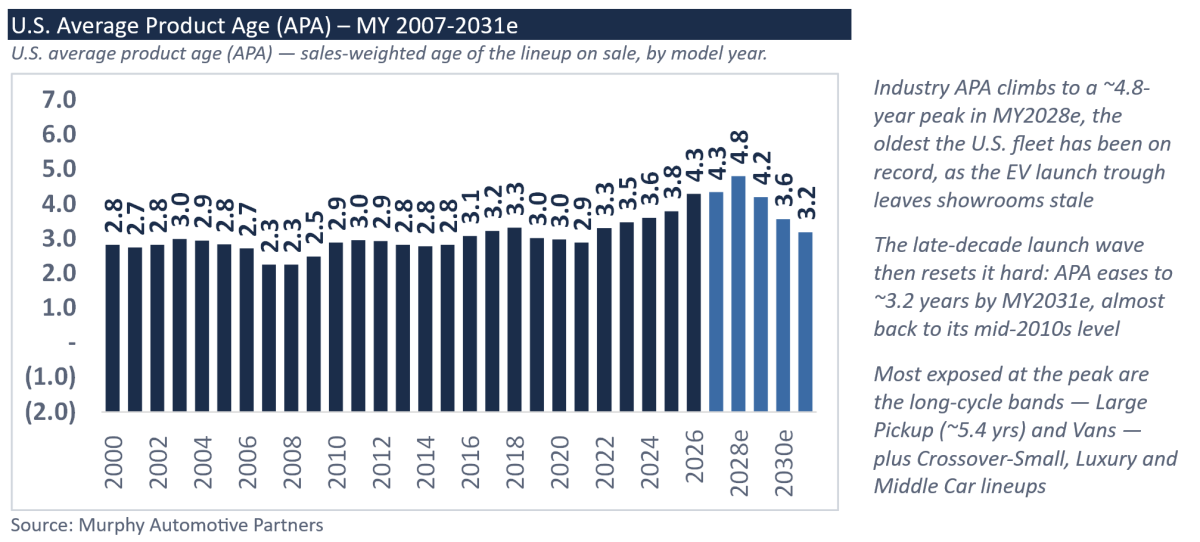
The automotive industry faces a critical inflection point as Murphy Automotive Product Pipeline (MAPP) research reveals that not all car brands will survive the current product drought affecting 2026+ model years. The analysis, released by veteran analyst John Murphy (formerly Bank of America), identifies approximately 7 brands at significant risk of consolidation or market exit through 2031, with potential casualties including Stellantis divisions (Chrysler, Dodge), Infiniti, Polestar, Lotus, Lucid, and Rivian. This creates cascading implications for cross-border e-commerce sellers.
Key Market Dynamics: The 2026 model year saw "the worst drought in history" for new vehicle launches, with conditions expected to worsen before recovery. Murphy's research emphasizes that product freshness—not EV hype—will determine survival, revealing that gasoline-electric hybrids are expanding market share while pure electric vehicles experience stagnation. New vehicle launches typically boost pricing and volume for 3 years, while midcycle refreshes provide limited support. Political uncertainty (Biden's EV promotion vs. Trump administration deprioritization) combined with Chinese automakers' superior speed-to-market creates competitive pressure on established North American and European manufacturers.
E-Commerce Seller Implications: This automotive disruption creates three distinct opportunity vectors for cross-border sellers. First, brand consolidation and restructuring will trigger massive inventory liquidation of OEM parts, accessories, and branded merchandise from failing brands—creating arbitrage opportunities on Amazon, eBay, and Shopify for sellers sourcing closeout inventory. Second, the hybrid vehicle surge (expanding market share vs. stagnating EVs) drives demand for hybrid-specific aftermarket parts, performance upgrades, and maintenance accessories—categories where Chinese suppliers currently dominate but face tariff uncertainty. Third, EV infrastructure expansion (despite slower EV adoption than predicted) continues driving demand for charging cables, adapters, battery accessories, and smart home integration products—high-margin categories with 40-60% growth potential through 2026.
Tariff and Regulatory Risk: Uncertainty surrounding tariffs and regulations directly impacts sellers sourcing auto parts from China and Asia. Stellantis' "disorganized" strategy of launching numerous models across 14 brands presents supply chain volatility. Sellers should monitor brand-specific supplier announcements and consider diversifying sourcing away from at-risk manufacturers' supply chains. The Trump administration's deprioritization of EV subsidies may reduce consumer EV purchases but simultaneously increases hybrid and gasoline vehicle demand—shifting parts category demand toward traditional powertrains and hybrid-specific components.
Questions 8
What is the timeline for automotive industry recovery and product launches?
The 2026 model year experienced the lightest vehicle launch schedule in years, with conditions expected to worsen before recovery occurs. Murphy's analysis examines launches through 2031, indicating a 5-year recovery window. New vehicle launches typically boost pricing and volume for approximately 3 years, while midcycle refreshes provide limited pricing support with continued volume decline. For sellers, this means aftermarket parts demand will peak 1-2 years after major new model launches. Sellers should monitor Murphy Automotive Partners' complete report (available late July 2025) for specific brand launch timelines and adjust inventory planning accordingly. The 5-year horizon suggests sustained demand for parts and accessories through 2030.
How does Chinese automaker competition affect Western auto parts suppliers?
Chinese automakers have demonstrated superior speed in bringing new vehicles to market compared to established North American, European, and Asian manufacturers. This competitive advantage extends to parts and accessories sourcing, where Chinese suppliers already dominate cost-competitive categories. The analysis indicates that Chinese automakers are aggressively pursuing EV expansion into European and global markets, creating demand for Chinese-sourced EV charging infrastructure, battery accessories, and smart integration products. Sellers sourcing from Chinese suppliers gain cost advantages but face tariff and regulatory uncertainty. Sellers should monitor Chinese brand market share gains in target regions (EU, US, Asia Pacific) and adjust product mix accordingly—prioritizing categories where Chinese suppliers have established supply chains.