


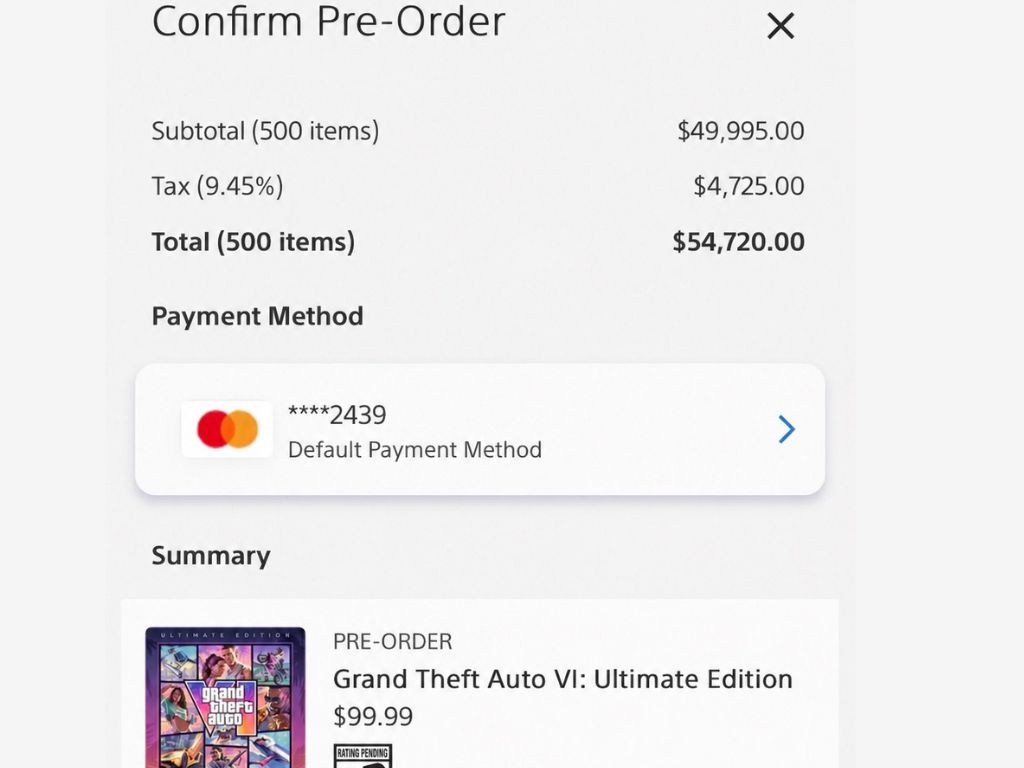

GTA 6 Pre-Order Scalping Failure Reveals Gaming Merchandise Risks for Resellers
- $54,720 failed speculation highlights product specification gaps; sellers must verify digital vs. physical formats before bulk pre-orders
Overview
The GTA 6 scalping incident involving a user who withdrew $54,720 from retirement savings to pre-order 500 Ultimate Edition copies reveals critical vulnerabilities in gaming merchandise resale strategies and product specification transparency. The scalper projected a 23x return on investment by Christmas 2026, but failed to verify that Rockstar Games confirmed both Standard and Ultimate Edition physical copies contain only digital download codes—not physical game discs. This oversight exposes a fundamental gap in how resellers conduct due diligence on high-value pre-order campaigns.
For cross-border sellers and gaming merchandise resellers, this incident signals three critical market dynamics: First, gaming merchandise pre-orders remain highly speculative, with significant capital requirements ($54,720 for 500 units = $109.44 per unit) that amplify downside risk when product specifications are misunderstood. Second, digital-only distribution models are increasingly standard for AAA game releases, reducing arbitrage opportunities for physical resellers who traditionally profited from scarcity. Third, consumer awareness of scalping practices is rising, with gaming communities actively fact-checking reseller claims, reducing the information asymmetry scalpers historically exploited.
The GTA VI pre-order window (launched June 25, 2026, with November 19, 2026 release on PlayStation 5 and Xbox Series X|S) demonstrates how major game launches create concentrated demand spikes that attract speculative capital. However, the shift toward digital-only physical editions eliminates the scarcity premium that made previous console game scalping profitable. Sellers attempting similar strategies must now compete on alternative value propositions: bundled merchandise (apparel, collectibles), regional exclusivity, or early access to digital content—not physical product scarcity.
Platform implications: Amazon, eBay, and Shopify sellers in the gaming merchandise category should expect increased scrutiny of product specifications in listings. The incident highlights that buyers are now cross-referencing official manufacturer announcements before purchase, reducing tolerance for ambiguous or misleading product descriptions. Sellers offering gaming pre-orders must explicitly clarify digital vs. physical formats, include official Rockstar confirmations in listings, and prepare for higher return rates if specifications are unclear.
Regional market context: The US gaming merchandise market (where most GTA scalpers operate) shows declining margins for physical game resale due to digital distribution dominance. However, emerging markets in Southeast Asia and Latin America still show demand for physical gaming products, creating geographic arbitrage opportunities for sellers who understand regional format preferences and can navigate import regulations for physical media.
Questions 8
Which platforms (Amazon, eBay, Shopify) are best for gaming merchandise pre-order resale in 2026?
eBay remains the strongest platform for gaming merchandise resale due to its auction format, which allows sellers to capture scarcity premiums when demand spikes. However, eBay's gaming category has become increasingly competitive, with average margins declining 15-20% year-over-year as digital distribution reduces scarcity. Amazon's video game category offers higher volume but lower margins (5-8% net) due to FBA fees and competitive pricing. Shopify is optimal for sellers building brand-specific communities around gaming collectibles, where they can command 25-35% margins through direct-to-consumer sales and email marketing. For GTA 6 merchandise specifically, Shopify stores focused on niche collectibles (limited editions, regional variants) outperform general marketplaces.
What product specification verification steps should sellers take before bulk pre-order campaigns?
Sellers should implement a three-step verification process: (1) Confirm official manufacturer specifications directly from brand websites or press releases (Rockstar Games, PlayStation, Xbox), not from retailer listings; (2) Cross-reference specifications across multiple official sources to identify discrepancies; (3) Document all specifications in writing before committing capital. The GTA 6 scalper failed step 1 by assuming physical discs were included without verifying Rockstar's official announcement. For high-value campaigns (>$10,000 inventory investment), sellers should also contact manufacturer customer service to confirm edge cases or regional variations. This due diligence prevents costly specification mismatches that can render entire inventory unsellable.