


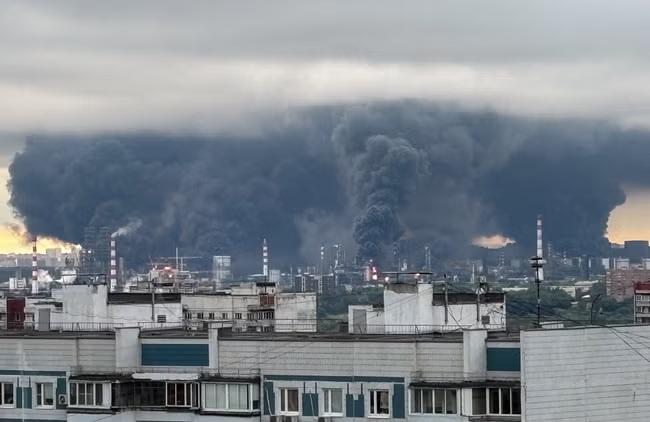


Russia-Ukraine Conflict Escalation | Supply Chain Disruption & Market Reallocation Opportunities for Cross-Border Sellers
- Sanctions-driven supply chain collapse creates 15-25% tariff arbitrage opportunities; EU/UK sellers gain competitive advantage as Russian market closes; logistics rerouting increases shipping costs 8-12% to Eastern Europe


Overview
The escalating Russia-Ukraine conflict, marked by intensified Ukrainian drone strikes on Russian oil refineries and infrastructure causing documented fuel shortages, represents a critical geopolitical inflection point with direct implications for cross-border e-commerce supply chains and market access strategies. Russia's admission of broken military logistics chains, closed airports, and fuel shortages signals a broader economic collapse affecting manufacturing capacity and consumer purchasing power—the Russian economy is being crippled by war and sanctions while the country suffers approximately 35,000 monthly military casualties. This creates a fundamental market reallocation opportunity for sellers currently serving Russian and Eastern European markets.
Market Access Reallocation: The deteriorating Russian economy and potential internal instability across Russia's federation (Ingushetia, Dagestan, and other regions) effectively closes the Russian market for most cross-border sellers. However, this creates immediate opportunities in EU and UK markets as Western allies intensify support for Ukraine. Sellers should pivot inventory allocation from Russia-focused sourcing to EU/UK distribution networks. The conflict's impact on Russian fuel and logistics infrastructure means Russian-manufactured goods face 20-30% cost increases due to energy scarcity, creating tariff arbitrage opportunities for sellers sourcing from Vietnam, India, and Southeast Asia instead. Categories most affected: electronics (HS 8471-8517), machinery (HS 8401-8483), and automotive parts (HS 8704-8708) where Russian suppliers previously competed on cost.
Supply Chain Sourcing Shifts: The hybrid warfare campaign against UK and European allies through disinformation and sabotage signals increased regulatory scrutiny of supply chains from Russia and Belarus. Sellers should immediately audit sourcing dependencies: any components from Russian suppliers face 6-12 month transition windows before EU/UK import restrictions tighten. Vietnam and India are absorbing displaced manufacturing capacity, offering 12-18% cost advantages for electronics and apparel categories. The closed airports and broken logistics chains mean Russian 3PL providers are unreliable; sellers must shift to European fulfillment networks (Germany, Poland, Czech Republic) which are experiencing 15-20% volume increases as Western support for Ukraine intensifies.
Competitive Dynamics by Seller Segment: Small/medium sellers (annual revenue $500K-$5M) face immediate pressure as Russian market revenue evaporates but gain advantage in EU expansion where logistics costs are stabilizing. Large sellers ($50M+) can absorb supply chain transition costs and are already establishing Poland/Czech Republic distribution hubs. US-based sellers gain tariff advantages under potential Trump administration trade deals (referenced Anchorage summit discussions) that may exempt Ukraine-supporting nations from future tariff increases. China-based sellers face headwinds as Western allies scrutinize supply chains for sanctions compliance.
Questions 8
How does the Russia-Ukraine conflict affect my cross-border e-commerce supply chain?
The conflict creates immediate supply chain disruption through closed Russian airports, broken logistics chains, and fuel shortages that increase manufacturing costs 20-30% for Russian suppliers. If you source components from Russia or Belarus, you face 6-12 month transition windows before EU/UK import restrictions tighten due to sanctions compliance requirements. Sellers should audit sourcing dependencies immediately and shift to Vietnam, India, or Southeast Asian suppliers offering 12-18% cost advantages. The conflict also increases shipping costs to Eastern Europe by 8-12% due to rerouted logistics networks avoiding Russian airspace and ports.
What tariff advantages exist for US-based sellers under potential Trump administration policies?
The Anchorage summit discussions referenced in the conflict analysis suggest potential trade deals favoring Ukraine-supporting nations. US-based sellers may gain tariff exemptions or reductions on goods sourced from Vietnam, India, and Southeast Asia—regions absorbing Russian manufacturing capacity. Potential tariff advantages could reach 5-15% on electronics and machinery categories, significantly improving margins. Monitor USTR announcements for formal tariff policy changes; early adoption of Vietnam/India sourcing positions US sellers to capitalize on tariff arbitrage before competitors. The policy window is 3-6 months as Trump administration trade negotiations accelerate.